
As an aluminum-magnesium alloy, 5052 combines good formability with higher mechanical strength and better resistance to moisture, salt-laden air and many industrial atmospheres.
It is widely selected for marine-related equipment, transportation panels, industrial enclosures, coastal architectural components and fabricated products exposed to humid or mildly corrosive conditions.
Compared with common color coated grades such as 3003 and 3105, 5052 is usually specified when the project requires a more robust substrate rather than only a decorative painted surface.
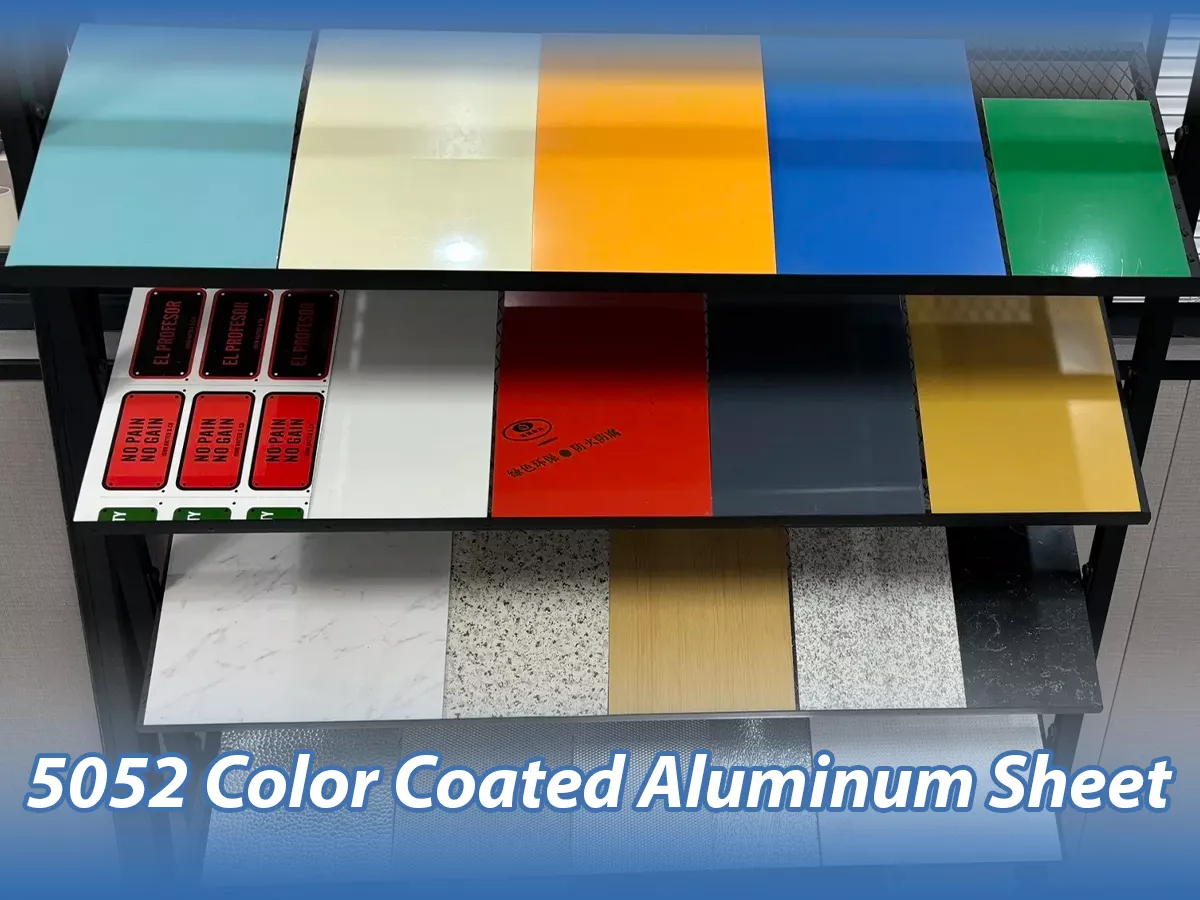
5052 Color Coated Aluminum Sheet & Coil Specifications
Haomei Aluminum can customize 5052 color coated aluminum sheet and coil according to project requirements.
| Item | Available Options |
| Alloy | AA 5052 |
| Product Form | Coil, sheet, slit strip |
| Temper | O, H32, H34 and customized options |
| Thickness | Customized according to application and order requirement |
| Width | Customized according to coil and sheet specification |
| Coating | PE, SMP, HDP, PVDF |
| Coating Side | One-side coated, two-side coated, back coat available |
| Color | RAL colors, Pantone reference, customized colors |
| Surface Finish | Gloss, matte, metallic, embossed, wood grain, stone texture |
| Protective Film | Available upon request |
| Packaging | Export seaworthy packaging, eye-to-wall or eye-to-sky coil packaging |
Before production, Haomei Aluminum can confirm the substrate thickness, paint thickness, gloss level, color tolerance, protective film requirement, coil weight and final application conditions.
Why Choose 5052 Color Coated Aluminum?
The performance of a painted aluminum product depends on both the coating system and the alloy beneath it. A high-quality coating protects the surface, while the 5052 aluminum substrate provides improved structural reliability in demanding environments.
Aluminum-Magnesium Alloy Substrate
5052 contains magnesium as its primary alloying element, contributing to higher strength and corrosion resistance.
Better Humidity and Coastal Resistance
Suitable for areas with frequent rain, condensation, salt air or industrial humidity.
Higher Strength Than 3003 and 3105
Helps improve panel rigidity and resistance to deformation in demanding fabricated applications.
Good Fabrication Performance
Can be bent, formed and fabricated when the proper temper and bend radius are selected.
Multiple Coating Systems
Polyester, SMP, HDP and PVDF coatings can be selected according to weathering and appearance requirements.
Lightweight and Recyclable
A practical alternative to heavier coated steel in applications where corrosion resistance and weight reduction matter.
Need a more economical roofing material? For projects primarily focused on general roofing and economical building panels, our color coated aluminum coil for roofing may be a more cost-effective choice.
Coating Systems for 5052 Color Coated Aluminum
The coating system should be selected based on where the aluminum will be used, how it will be formed, the expected service environment and the required appearance. Haomei Aluminum offers several coating options for 5052 aluminum sheet and coil, with the final system matched to the application and project requirements.
| Coating System | Typical Applications | Key Characteristics |
| PE (Polyester) | Interior panels, decorative products, general industrial parts and standard building applications | Economical option with a wide range of available colors and finishes |
| SMP | Roofing, wall cladding and exterior products with moderate weather exposure | Better weathering performance than standard PE for outdoor applications |
| HDP | Architectural panels, exterior cladding and projects requiring improved color retention | Good balance of weather resistance, appearance retention and overall cost |
| PVDF | Curtain walls, coastal buildings, facade panels and demanding exterior applications | High resistance to UV exposure, chalking and long-term color fading |
Color and finish options can include solid colors, metallic effects, matte and high-gloss surfaces, wood grain and stone textures. Custom colors can be matched to RAL or Pantone references, subject to coating system, production requirements and sample approval.
Available Temper for 5052 Color Coated Aluminum
Temper selection affects how 5052 color coated aluminum behaves during bending, stamping and roll forming. Softer tempers generally provide better formability, while harder tempers offer higher strength but require more attention to bend radius and forming conditions. The right choice depends on the finished part, forming process and coating system.
Common Temper Options
| Temper | Typical Characteristics | Suitable Applications |
| O / H0 | Soft condition with the highest formability among the commonly supplied tempers | Deep drawing, complex shapes, formed components and applications requiring extensive fabrication |
| H32 | Good balance of strength, formability and practical fabrication performance | General panels, transportation components, covers and products requiring moderate bending |
| H34 | Higher strength with less forming capability than H32 | Flat panels, stiffened components and applications involving limited bending or forming |
For projects where the temper itself is the main consideration, see our 5052 H32 aluminum sheet, 5052 O aluminum sheet and 5052 H34 aluminum sheet pages for more information on their respective supply options and applications.
Forming and Fabrication Considerations
- Choose the temper according to the forming process. O temper is generally preferred when substantial forming is required, while H32 can provide a useful balance for parts involving moderate bending.
- Check the bend radius before production. H34 provides higher strength but is less suitable for severe bending. The required radius should be evaluated together with sheet thickness, forming direction and tooling.
- The coating must also be considered. Prepainted aluminum is not simply a bare sheet with color added. Bending, stamping and forming can place additional stress on the coating film, particularly at tight radii or during aggressive forming.
- Match the coating to the fabrication method. When the finished product requires roll forming, folding or repeated bending, the coating system should be selected with the forming process in mind.
Need a different product form? If you need material for slitting, roll forming or fabrication rather than cut sheet, 5052 aluminum coil may be a better starting point. For circular blanks and formed components, see 5052 aluminum disc circle.
Alternative alloy: If easy forming is more important than the higher strength of 5052, 3003 color coated aluminum coil may be worth considering for suitable roofing, panel and roll-forming applications.
5052 Alloy: More Than a "High-Strength" Painted Sheet
5052 is an Al-Mg alloy widely used where higher strength and enhanced corrosion resistance are required, including marine-related, transportation, industrial and architectural applications.
Its magnesium content gives the material advantages over non-heat-treatable aluminum grades commonly used for decorative or standard construction coating applications. In particular, 5052 is a suitable option where coated panels may be exposed to:
- Coastal or island climates
- High humidity and condensation
- Rainwater runoff and wet service conditions
- Industrial air containing mild pollutants
- Repeated vibration or handling during transportation use
- Indoor industrial environments requiring durable, cleanable panels
The alloy itself does not replace a proper coating specification. For long-term exterior exposure, especially in coastal construction, the coating type, film thickness, pretreatment and installation design should all be evaluated together.
For high-weatherability façade projects, see our color coated aluminum for curtain wall.
Where 5052 Color Coated Aluminum Sheet Is Used
Transportation Panels
5052 color coated aluminum sheet is a practical choice for truck body panels, trailer linings, interior transport panels, equipment covers and other formed components. Its relatively high strength, low density and good forming performance make it useful where manufacturers need a durable panel without adding unnecessary weight. Prepainted surfaces also provide a finished appearance without requiring painting after fabrication.
Marine-Related Interiors and Equipment
5052 aluminum is well suited to humid and salt-air environments, making it a common option for cabin panels, interior partitions, equipment housings, access covers and other non-structural marine-related components. For exterior or directly exposed service, the coating system should be selected according to the actual environment, cleaning conditions and required service life.
Industrial Panels and Enclosures
In industrial fabrication, 5052 prepainted aluminum is used for machinery covers, electrical enclosures, cabinet panels, equipment guards, cleanable wall panels and decorative housings. The combination of corrosion resistance, formability and a factory-applied finish can simplify downstream fabrication while giving the finished enclosure a consistent surface appearance.
Coastal Architectural Components
For building products in humid or coastal areas, 5052 color coated aluminum can be fabricated into soffits, eaves, wall panels, canopy components, trims and ceiling systems. The aluminum substrate offers good corrosion resistance, while the coating provides additional protection and allows manufacturers to specify the required color, gloss and surface appearance.
For projects where resistance to UV exposure, weathering and long-term color change is a major consideration, PVDF is often selected instead of a standard architectural coating. See our PVDF coated aluminum coil page for more information on coating systems for demanding exterior applications.
Why Does 5052 Usually Cost More Than 3003 or 3105?
5052 coated aluminum sheet and coil are often priced higher than comparable 3003 or 3105 painted aluminum products. The difference comes mainly from the alloy itself, required temper, processing route and order specifications—not simply from the coating.
-
Alloy Composition Affects the Base Material Cost
5052 is an Al-Mg alloy with a higher magnesium content than the Al-Mn alloys commonly used for 3003 and 3105. Magnesium contributes to the strength and corrosion resistance that make 5052 suitable for more demanding service conditions, but it can also increase the cost of the aluminum substrate.
-
5052 Is Commonly Supplied for Higher-Strength Applications
Compared with 3003 and 3105, 5052 can provide higher strength while retaining useful formability. It is therefore selected for applications such as transportation panels, equipment covers, fabricated enclosures and other components where panel rigidity and durability matter. Depending on the required temper, thickness and mechanical properties, additional control during rolling and temper processing can affect the final price.
-
Surface Preparation and Coating Requirements Can Add Cost
The coating process itself is not necessarily more expensive simply because the substrate is 5052. However, many 5052 coated aluminum orders are specified for industrial, transportation or outdoor environments where surface appearance, pretreatment, coating adhesion, color consistency and corrosion resistance receive closer attention. These requirements can increase processing and inspection costs.
-
5052 Orders Are Often More Specification-Driven
Standard 3003 and 3105 painted aluminum coil is widely used for roofing, wall panels, gutters and other building products, so common sizes and coating specifications can be produced efficiently at larger volumes. By comparison, 5052 color coated aluminum may be ordered in specific tempers, thicknesses, widths, colors or coating systems, particularly for industrial and transportation applications. Smaller production lots or tighter specifications can raise the unit cost.
This does not mean that 5052 is always the better choice. For roofing, cladding, gutters and other applications with moderate mechanical requirements, 3003 or 3105 can offer a practical balance of cost, formability and corrosion resistance. When higher strength, better panel rigidity or greater resistance to demanding service conditions is important, the additional cost of 5052 may be worthwhile.
For a more practical comparison of alloys, coatings and application requirements, see our guide: How to Choose Color Coated Aluminum Coil.
Quality Control for Color Coated Aluminum
At Haomei Aluminum, quality checks are carried out throughout the coated aluminum production process rather than only at the final inspection stage. The substrate, surface treatment, coating and finished material are checked against the agreed specifications before the order is released for shipment.
- Aluminum substrate inspection: Check alloy, temper, thickness, width, surface condition and other agreed coil specifications before coating.
- Surface pretreatment control: Monitor cleaning and chemical pretreatment to provide a suitable surface for coating adhesion and long-term performance.
- Coating thickness inspection: Verify coating thickness according to the specified coating system and customer requirements.
- Color and gloss check: Compare the finished surface with the approved color reference and check gloss when a specific gloss level is required.
- Coating adhesion and forming tests: Evaluate coating adhesion and bend performance where the material will be roll formed, bent or fabricated after delivery.
- Solvent resistance testing: Perform applicable resistance checks for coating systems where this requirement is included in the order specification.
- Final surface inspection: Inspect the coated aluminum coil or sheet for visible coating defects, scratches, uneven color and other surface issues before packing.
- Packaging inspection: Confirm protective film, moisture protection, coil or sheet packing and marking before loading for shipment.
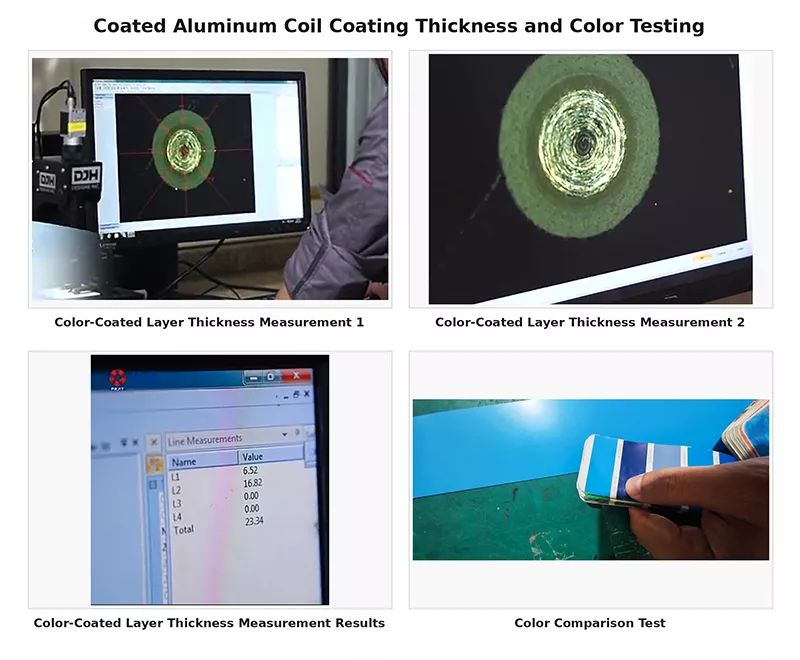
Coating and surface inspection of color coated aluminum before shipment
Request a Quote for 5052 Color Coated Aluminum Sheet
To recommend the right 5052 coated aluminum product, please provide:
- Required thickness and width
- Coil, sheet or slit strip format
- Temper requirement, if known
- Color code or sample reference
- Coating type: PE, SMP, HDP or PVDF
- One-side or two-side coating requirement
- Intended application and service environment
- Quantity and destination port
Haomei Aluminum will help evaluate whether 5052 is the most suitable alloy for your project and provide a coating and temper recommendation based on actual fabrication and environmental conditions.
FAQ – 5052 Color Coated Aluminum Sheet
Is 5052 color coated aluminum suitable for coastal areas?
Yes. 5052 aluminum has good corrosion resistance due to its aluminum-magnesium alloy composition. For coastal buildings and long-term outdoor exposure, a suitable PVDF coating system, proper edge protection and appropriate installation design can provide additional durability.
Can 5052 color coated aluminum be bent?
Yes. 5052 color coated aluminum can be bent, but the required bend radius depends on the temper, thickness and forming method. O temper provides the highest formability, while H32 is suitable for moderate bending. H34 offers higher strength but generally requires a larger bend radius.
What is the difference between 5052 and 3003 color coated aluminum?
5052 is an aluminum-magnesium alloy with higher strength and good corrosion resistance, making it suitable for demanding outdoor and humid environments. 3003 is an aluminum-manganese alloy that is commonly selected for roofing, cladding and decorative applications where good formability and cost efficiency are important.
Which coating is best for 5052 aluminum sheet used outdoors?
The suitable coating depends on the exposure conditions and service life requirements. PE coating can be used for many standard applications, while SMP and HDP offer improved weathering performance. PVDF is commonly selected for curtain walls, coastal architecture and other projects requiring long-term outdoor weather resistance.