
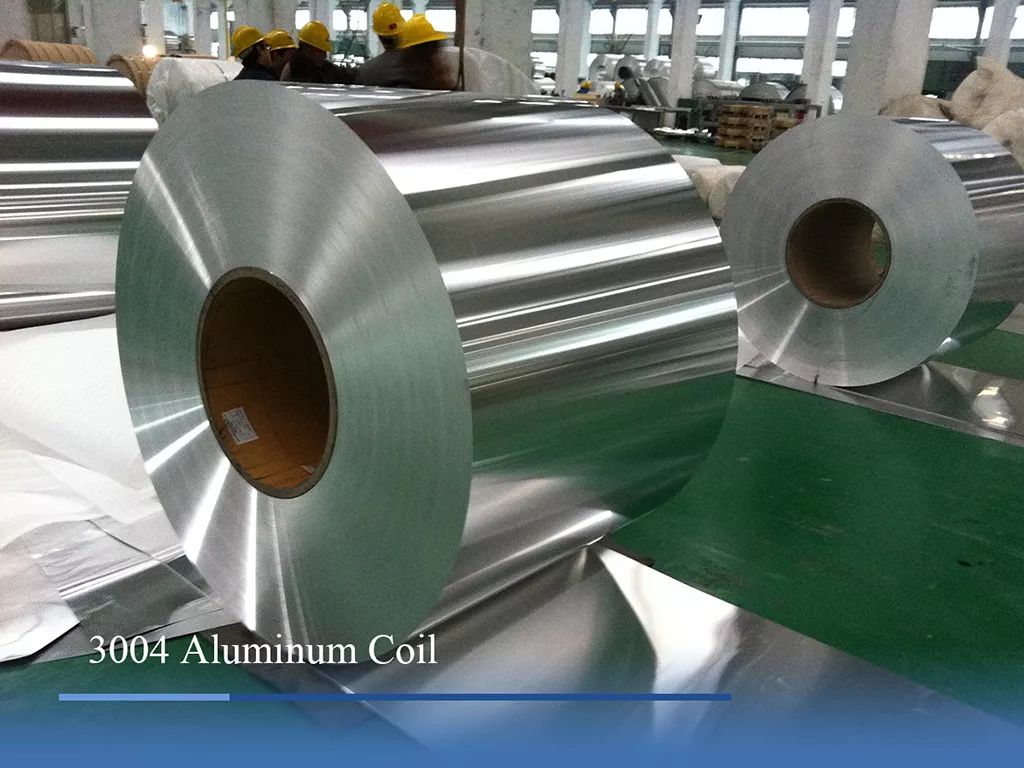
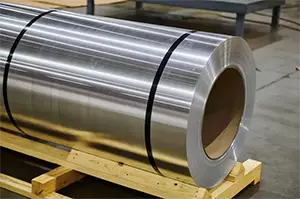
3004 Aluminum Coil
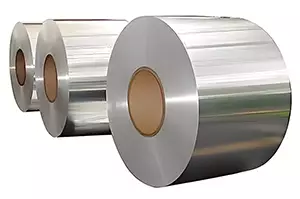
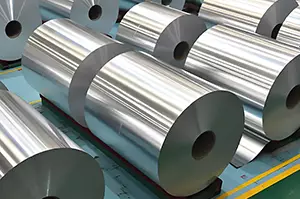
Haomei Aluminum supplies 3004 aluminum coil for forming, coating and general fabrication applications that require higher strength than 3003 alloy while maintaining good workability and resistance to atmospheric corrosion. Coils can be supplied in O, H14, H24, H34, H38 and selected application-specific tempers.
What is 3004 Aluminum Coil?
3004 is an aluminum-manganese-magnesium alloy in the 3xxx series. It is generally classified as a non-heat-treatable alloy, which means its strength is developed mainly through cold working rather than precipitation heat treatment.
Compared with 3003 aluminum coil in comparable tempers, 3004 generally offers a higher strength level because of its magnesium addition. The material still provides useful formability, weldability and resistance to many common atmospheric service environments.
Final material selection should be confirmed according to the applicable standard, thickness, temper, processing method and end-use environment. Material properties can vary by temper, gauge and mill production route.
3004 Aluminum Coil Specifications
| Item | Available Options |
| Alloy | AA 3004 / UNS A93004 |
| Temper | O, H14, H24, H34, H38; H19 subject to thickness, application and production capability |
| Thickness | 0.20–6.00 mm or according to confirmed supply capability |
| Width | 100–1, 650 mm; custom slit widths available where applicable |
| Coil Inner Diameter | 405 mm, 505 mm, 508 mm, or customer-specified requirement |
| Coil Weight | According to thickness, width, handling equipment and customer requirement |
| Surface | Mill finish; selected color-coated, embossed or protective-film options after technical confirmation |
| Edge | Mill edge or slit edge, depending on width and processing requirement |
| Applicable Standards | ASTM B209, EN 485, JIS H4000, GB/T standard, or customer-specific requirement where applicable |
| Documents | Mill Test Certificate, Certificate of Analysis, packing list, commercial invoice and selected inspection documents upon request |
If you require narrow strips, please see our aluminum strip. For coating requirements, refer to our color-coated aluminum coil options.
Choosing the Right Temper: O, H14, H24, H34, H38 and H19
Temper selection is one of the most important parts of specifying 3004 aluminum coil. The right temper is determined by the required strength, bend radius, draw depth, forming process, surface treatment and final product function.
3004-O Aluminum Coil
O temper is fully annealed and relatively soft. It is normally considered for deep drawing, bending and forming operations where maximum ductility is more important than final hardness.
3004-H14 Aluminum Coil
H14 is a strain-hardened temper that offers more strength than annealed material while retaining workable forming characteristics for selected fabrication processes.
3004-H24 Aluminum Coil
H24 material is strain-hardened and partially annealed. It can provide a practical balance between strength and formability for many fabricated sheet applications.
3004-H34 Aluminum Coil
H34 is a more highly strain-hardened and stabilized temper than H24. It may be selected for applications requiring improved rigidity while still allowing controlled forming.
3004-H38 Aluminum Coil
H38 is a hard temper with higher strength and reduced ductility compared with O, H14 or H24. It is better suited to applications where severe forming is not required.
3004-H19 Aluminum Coil
H19 is a high-strength temper used for specific applications. Requirements for H19 material must be carefully confirmed because thickness, forming process, mechanical properties and industry standards can be highly application dependent.
Features of 3004 Aluminum Coil
Higher Strength Than 3003
3004 is commonly considered when a fabricated part requires more strength than standard 3003 alloy can provide under comparable conditions.
Cold-Work Strengthening
The alloy is strengthened through rolling and other cold-working processes. Annealing can be used when additional ductility is required.
Formability and Fabrication
Depending on temper, 3004 coil can be suitable for bending, drawing, roll forming, stamping and general sheet-metal fabrication.
Corrosion Resistance
Like other aluminum alloys, 3004 forms a natural oxide film that helps provide resistance to atmospheric corrosion in many normal service conditions.
3004 Aluminum Coil Surface Finishes and Processing Options
Surface finish should be selected according to the end use, forming method, coating process, visual requirement and corrosion environment. Not every finish is suitable for every thickness, temper or application.
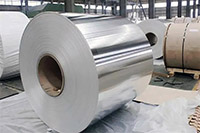
Mill Finish 3004 Aluminum Coil
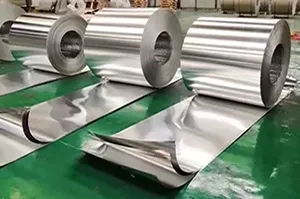
Mill finish coil is supplied with the natural rolled aluminum surface. It is commonly used where the customer will further process, coat, laminate, stamp or fabricate the material.
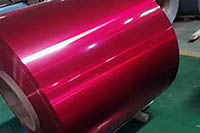
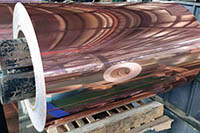
Color-Coated 3004 Aluminum Coil
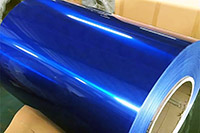
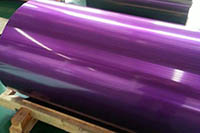
For applicable building, decorative or industrial uses, 3004 may be supplied with a polyester, SMP, HDP or PVDF coating system, subject to technical confirmation of alloy, gauge, pretreatment and final-use conditions.
Embossed or Stucco-Embossed Options
Embossed surfaces may improve appearance, stiffness or slip resistance in certain applications. Confirm the required pattern, thickness, coil width and surface standard before ordering.
Protective Film
PE or PVC protective film may be available for selected surface-sensitive products. Film type, adhesion level and removal conditions should be confirmed according to the customer’s fabrication process.
Explore our color-coated aluminum coil range and embossed aluminum coil options for applications that require a specific finished surface.
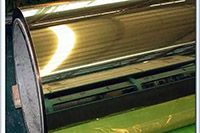
3004 Aluminum Coil Color Options

Chemical Properties of Aluminum Coil 3004
| element | Si | Fe | Cu | Mn | Mg | Cr | Zn | Ti | Others-Each | Others Total | Al Min |
| 3004 | 0.30 | 0.7 | 0.25 | 1.0-1.5 | 0.8-1.3 | – | 0.25 | 0.25 | 0.05 | 0.15 | Remainder |
Aluminum Coil 3004 Mechanical Properties
| Temper | Specified Thickness(in) | Tensile Strength - KSI | Elongationin 2 inches % | |||
| Ultimate | Yield | |||||
| Min | Max | Min | Max | |||
| H22/32 | 0.017 - 0.019 | 28 | 35 | 21 | - | 1 |
| H22/32 | 0.020 - 0.031 | 28 | 35 | 21 | - | 3 |
| H22/32 | 0.032 - 0.050 | 28 | 35 | 21 | - | 4 |
| H22/32 | 0.051 - 0.113 | 28 | 35 | 21 | - | 5 |
| H22/32 | 0.114 - 2.000 | 28 | 35 | 21 | - | 6 |
| H24/34 | 0.009 - 0.019 | 32 | 38 | 25 | - | 1 |
| H24/34 | 0.020 - 0.050 | 32 | 38 | 25 | - | 3 |
| H24/34 | 0.051 - 0.113 | 32 | 38 | 25 | - | 4 |
| H24/34 | 0.114 - 1.000 | 32 | 38 | 25 | - | 5 |
| H26/36 | 0.006 - 0.007 | 35 | 41 | 28 | - | - |
| H26/36 | 0.008 - 0.019 | 35 | 41 | 28 | - | 1 |
| H26/36 | 0.020 - 0.031 | 35 | 41 | 28 | - | 2 |
| H26/36 | 0.032 - 0.050 | 35 | 41 | 28 | - | 3 |
| H26/36 | 0.051-0.162 | 35 | 41 | 28 | - | 4 |
| H28/38 | 0.006 - 0.007 | 38 | - | 31 | - | - |
| H28/38 | 0.008 - 0.019 | 38 | - | 31 | - | 1 |
| H28/38 | 0.020 - 0.031 | 38 | - | 31 | - | 2 |
| H28/38 | 0.032 - 0.050 | 38 | - | 31 | - | 3 |
| H28/38 | 0.051 - 0.128 | 38 | - | 31 | - | 4 |
| O | 0.006 - 0.007 | 22 | 29 | 8.5 | - | - |
| O | 0.008 - 0.019 | 22 | 29 | 8.5 | - | 10 |
| O | 0.020 - 0.031 | 22 | 29 | 8.5 | - | 14 |
| O | 0.032 - 0.050 | 22 | 29 | 8.5 | - | 16 |
| O | 0.051 - 0.249 | 22 | 29 | 8.5 | - | 18 |
| O | 0.250 - 3.000 | 22 | 29 | 8.5 | - | 16 |
3004 Aluminum Coil More Informations
| Property | Description |
| Principal Design Features | This is an alloy of aluminum with magnesium and manganese. It is strengthened (hardened) by cold work only as it does not respond to heat treatment, other than annealing. |
| Machinability | The machinability of this alloy is considered to be excellent, especially in the hard temper. As is typical of the aluminum alloys an oil lubricant should be used for machining, although light cuts may be done dry. |
| Forming | AL 3004 is easily formed by either cold or hot working with conventional tooling. |
| Welding | The alloy is weldable by the standard methods. Best results are obtained by use of TIG or MIG welding with the same alloy as filler rod. |
| Heat Treatment | Heat treatment has no effect upon this alloy. It may be annealed after cold working however. |
| Hot Working | The hot working range (as for forging) is 260°C to 483°C. In that range the alloy is easily hot worked. |
| Cold Working | Cold working capability of this alloy is good: it can readily be cold worked up to a 75% reduction of area by conventional methods. Working beyond the 75% reduction requires an intermediate anneal. |
| Annealing | Annealing, during or following cold working, is done at 344°C, allowing adequate time for thorough heating, followed by air cooling. |
| Aging | Not applicable to this alloy. |
| Hardening | Cold working is the only means of producing the harder (H) tempers of this alloy. |
3004 Aluminum Coil Physical Data
| Property | Value |
| Density (20°C) | 2, 720 kg/m³ |
| Melting Point | 629°C |
| Thermal Expansion (20°C ~ 100°C) | 23.2 x 10⁻⁶ /K |
| Modulus of Elasticity | 70 GPa |
| Thermal Conductivity (Temper O) | 162 W·m⁻¹·K⁻¹ |
| Electrical Resistivity (Temper O) | 0.041 x 10⁻⁶ Ω·m |
| Conductivity (Temper O) | 42 %IACS |
| Magnetic Performance | No |
| Color | Silver |
| Odour | No |
3004 Aluminum Coil Tolerance on Forms and Dimensions
3004 Aluminum Coil Thickness Tolerance
| Thickness | Width ≤1000mm | Width >1000-1250mm | Width >1250-1600mm | Width >1600-2000mm |
| ≥ 0.2-0.4mm | ± 0.02mm | ± 0.04mm | ± 0.05mm | ± 0.05mm |
| > 0.4-0.5mm | ± 0.03mm | ± 0.04mm | ± 0.05mm | ± 0.06mm |
| > 0.5-0.6mm | ± 0.03mm | ± 0.05mm | ± 0.06mm | ± 0.07mm |
| > 0.6-0.8mm | ± 0.03mm | ± 0.06mm | ± 0.07mm | ± 0.08mm |
| > 0.8-1.0mm | ± 0.04mm | ± 0.06mm | ± 0.08mm | ± 0.09mm |
| > 1.0-1.2mm | ± 0.04mm | ± 0.07mm | ± 0.09mm | ± 0.10mm |
| > 1.2-1.5mm | ± 0.05mm | ± 0.08mm | ± 0.10mm | ± 0.11mm |
| > 1.5-1.8mm | ± 0.06mm | ± 0.09mm | ± 0.11mm | ± 0.12mm |
| > 1.8-2.0mm | ± 0.08mm | ± 0.10mm | ± 0.12mm | ± 0.13mm |
| > 2.0-2.5mm | ± 0.10mm | ± 0.12mm | ± 0.15mm | ± 0.16mm |
| > 2.5-3.0mm | ± 0.12mm | ± 0.15mm | ± 0.17mm | ± 0.18mm |
| > 3.0-4.0mm | ± 0.14mm | ± 0.18mm | ± 0.20mm | ± 0.22mm |
| > 4.0-6.0mm | ± 0.18mm | ± 0.22mm | ± 0.24mm | ± 0.25mm |
3004 Aluminum Coil Width Tolerance
| Thickness | Width ≤300mm | Width >300-500mm | Width >500-1250mm | Width >1250-1650mm | Width >1650mm |
| ≥ 0.2-0.6mm | ± 0.4mm | ± 0.6mm | ± 1.5mm | ± 2.5mm | ± 3.0mm |
| > 0.6-1.0mm | ± 0.5mm | ± 0.8mm | ± 1.8mm | ± 2.8mm | ± 3.3mm |
| > 1.0-2.0mm | ± 0.7mm | ± 1.0mm | ± 2.0mm | ± 3.0mm | ± 3.5mm |
| > 2.0-3.0mm | ± 1.0mm | ± 1.5mm | ± 2.5mm | ± 3.5mm | ± 4.0mm |
| > 3.0-6.0mm | ± 1.5mm | ± 2.0mm | ± 3.0mm | ± 4.0mm | ± 5.0mm |
3004 Aluminum Coil Flatness Tolerance
| Thickness | Total Deviation | On Length | On Width | Partial Deviation |
| ≥ 0.2-0.5mm | By agreement | By agreement | By agreement | By agreement |
| > 0.5-3.0mm | ≤ 0.4% | ≤ 0.5% | ≤ 0.5% | ≤ 0.5% |
| > 3.0-6.0mm | ≤ 0.3% | ≤ 0.4% | ≤ 0.4% | ≤ 0.4% |
3004 Aluminum Coil Lateral Curvature Tolerance
| Width | ≤1000mm | >1000-2000mm | >2000-3500mm | >3500mm |
| ≤300mm | ≤ 2.0mm | ≤ 4.0mm | ≤ 8.0mm | - |
| >300-600mm | ≤ 1.5mm | ≤ 3.0mm | ≤ 5.0mm | - |
| >600-1000mm | ≤ 1.0mm | ≤ 2.0mm | ≤ 4.0mm | ≤ 5.0mm |
| >1000-2000mm | - | ≤ 2.0mm | ≤ 4.0mm | ≤ 5.0mm |
| >2000mm | - | - | ≤ 4.0mm | ≤ 5.0mm |
3004 Aluminum Coil Squareness Tolerance
| Length | ≤1000mm | >1000-1500mm | >1500-2000mm | >2000mm |
| ≤1000mm | ≤ 4.0mm | - | - | - |
| >1000-2000mm | ≤ 4.0mm | ≤ 5.0mm | - | - |
| >2000-3000mm | ≤ 5.0mm | ≤ 5.8mm | ≤ 7.0mm | - |
| >3000-5000mm | ≤ 6.0mm | ≤ 7.0mm | ≤ 8.0mm | ≤ 10.0mm |
Typical Applications of 3004 Aluminum Coil
3004 aluminum coil is used in selected fabrication, forming, architectural and industrial applications. The actual suitability of the alloy depends on temper, thickness, fabrication method and environmental conditions.
Formed Containers and Components
3004 can be selected for formed containers and fabricated components where a higher strength level than 3003 is required. Material temper should be matched to the drawing depth and tooling conditions.
Architectural Sheet Products
For appropriate thicknesses and coating systems, 3004 may be used in roofing, cladding, shutters, decorative sheet products and certain building components.
Lighting and General Fabrication
The alloy may be used for selected lamp components, housings, stamped parts and general sheet-metal fabrication where workability and corrosion resistance are required.
Coated Aluminum Substrate
Subject to coating-line requirements and technical evaluation, 3004 coil may be supplied as a substrate for selected painted or color-coated aluminum products.
Haomei Aluminum Coil Quality Control
- Alloy identification and production batch traceability
- Thickness and width inspection
- Coil weight and coil ID confirmation where required
- Surface-condition inspection before packing
- Edge condition review for slit coils
- Mechanical-property testing according to applicable standards where required
- Mill Test Certificate or Certificate of Analysis by coil number or production batch
- Packaging inspection before loading and export shipment
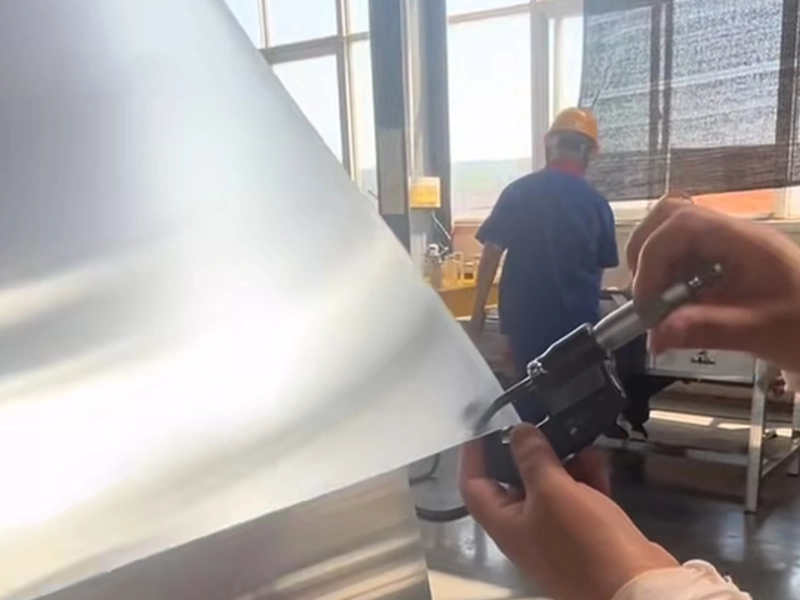
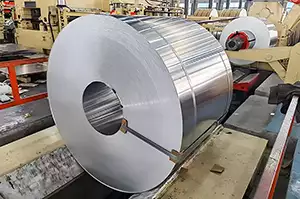
Thickness inspection of 3004 aluminum coil
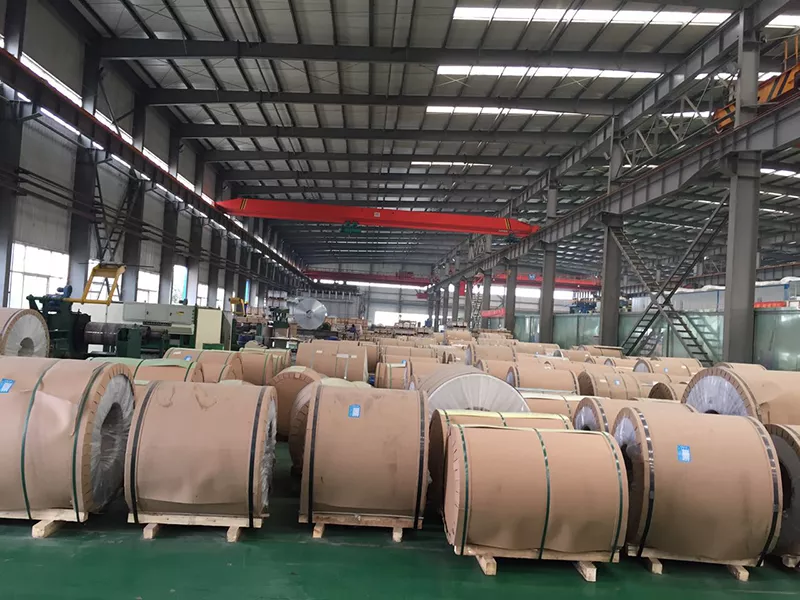
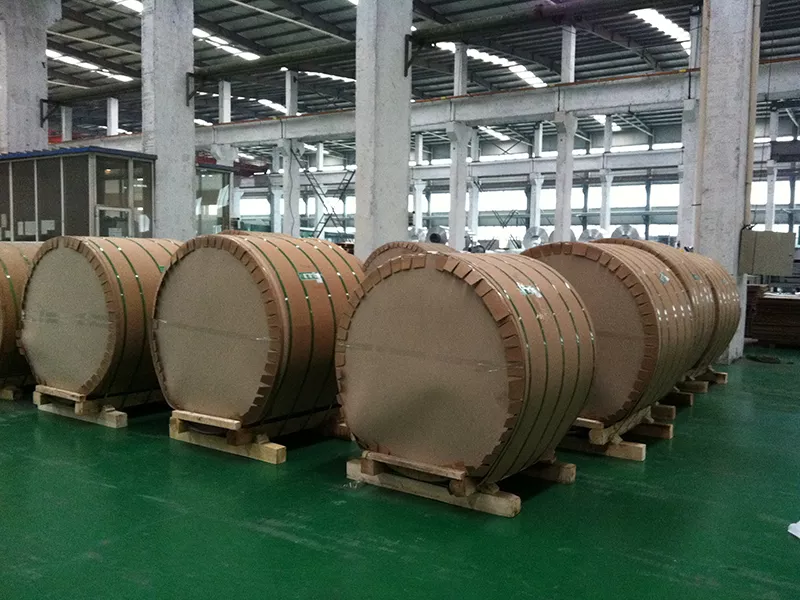
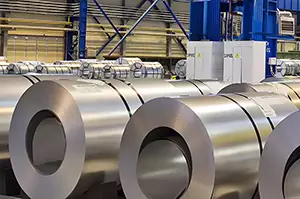
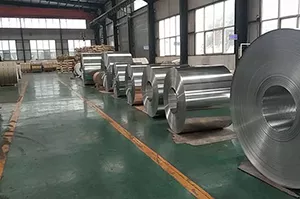
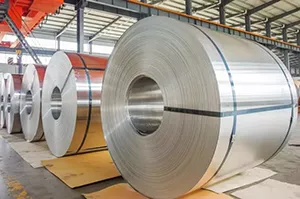
3004 aluminum coil stored in a warehouse
Haomei Aluminum Coil Packaging and Export Delivery
Aluminum coils should be packed according to the coil size, surface requirement, shipping method, destination climate and handling conditions. Proper packaging reduces the risk of moisture damage, edge damage, coil collapse and transport-related scratches.
- Moisture-proof paper or protective inner wrapping
- Plastic film and reinforced outer protection where required
- Steel straps with edge protection
- Wooden pallet, wooden skid or eye-to-wall packaging arrangement
- Coil labeling with alloy, temper, thickness, width, coil number and net weight
- Container loading protection for ocean freight shipments
3004 vs. 3003 Aluminum Coil
3003 and 3004 are both 3xxx series aluminum alloys and both are generally non-heat-treatable. However, 3004 includes magnesium in addition to manganese, which generally gives it a higher strength level than 3003 in comparable tempers.
| Comparison Item | 3003 Aluminum Coil | 3004 Aluminum Coil |
| Alloy Family | 3xxx aluminum-manganese alloy | 3xxx aluminum-manganese-magnesium alloy |
| Strength Level | Moderate strength | Generally higher strength than 3003 in comparable tempers |
| Formability | Good general formability | Good formability, but final performance depends on selected temper |
| Heat Treatment | Non-heat-treatable for strengthening purposes | Non-heat-treatable for strengthening purposes |
| Typical Use | General sheet-metal work, roofing, cookware, chemical equipment and formed products | Applications requiring more strength while retaining useful fabrication properties |
| Selection Basis | When general workability and economy are primary considerations | When higher strength than 3003 is required for the same general product category |
Read the full technical comparison: 3004 vs. 3003 aluminum coil: composition, strength, tempers and applications.
FAQ – 3004 Aluminum Coil
What is 3004 aluminum coil?
3004 aluminum coil is a 3xxx series aluminum-manganese-magnesium alloy. It is generally non-heat-treatable and gains strength mainly through cold working. It is often selected where more strength than 3003 is required while maintaining useful formability and corrosion resistance.
What is the difference between 3003 and 3004 aluminum coil?
3004 includes magnesium in addition to manganese, while 3003 is primarily an aluminum-manganese alloy. In comparable tempers, 3004 generally provides a higher strength level. Final material selection should consider required strength, bend radius, forming depth, thickness and end-use conditions.
Can 3004 aluminum coil be heat treated?
3004 is not normally heat treated for strengthening in the way that 6xxx or 7xxx series alloys are. Its strength is primarily developed by cold work. Annealing can be used to restore ductility after forming or cold reduction.
Is 3004 aluminum coil weldable?
Yes. 3004 aluminum alloy can be welded by conventional methods, including MIG and TIG welding. The welding procedure, filler material, joint design and post-weld requirements should be selected according to the product design and operating conditions.
Can 3004 aluminum coil be anodized?
3004 can be anodized, but the manganese content may affect the final appearance and can result in color variation compared with more anodizing-oriented alloys. If appearance is critical, request a sample and confirm the anodizing process before production.
What information is needed for a 3004 aluminum coil quotation?
Please provide alloy, temper, thickness, width, coil ID, coil weight, surface condition, edge requirement, required quantity, destination port, applicable standard and intended application. This allows the supplier to provide a more accurate quotation and delivery proposal.
Can you supply slit 3004 aluminum coil?
If slit coil is required, provide the mother-coil width, final slit width, edge requirement, thickness, tolerance requirement, coil ID and expected coil weight. Availability depends on the supplier's slitting equipment and material range.
Do you provide Mill Test Certificates for 3004 aluminum coil?
Haomei Aluminum can provide Mill Test Certificates or other agreed quality documents according to the confirmed order requirement. Please specify documentation needs before order confirmation.
Explore Different Aluminum Coil Grades
Further reading
Users viewing this material also viewed the following
- 3004 Corrugated Aluminum Plate
- 3004 Aluminum Strip for Blinds
- 3004 Aluminum Plate for Automobile Fuel Tank
- 3004 Aluminum Plate for Aluminum-plastic Board Substrate
- 3004 Aluminum Honeycomb Board Core Material
- 3004 Deep-drawn Aluminum Plate
- 3004 Aluminum Plate for Traffic Signs
- 3004 Aluminum Plate for Aluminum Curtain Wall
- 3004 Roof Aluminum Sheet
Recommended Content