
Haomei Aluminum supplies embossed aluminium foil in a range of surface patterns for insulation, packaging, laminating and other industrial applications. Alloy, temper, thickness, width and embossing pattern can be selected according to the requirements of the finished product and converting process.
- Wide range of alloys and tempers
- Customized foil thickness and width
- A range of embossed surface patterns
- Jumbo rolls and slit coils
- Coating and laminating options
- Export packaging for safe transportation
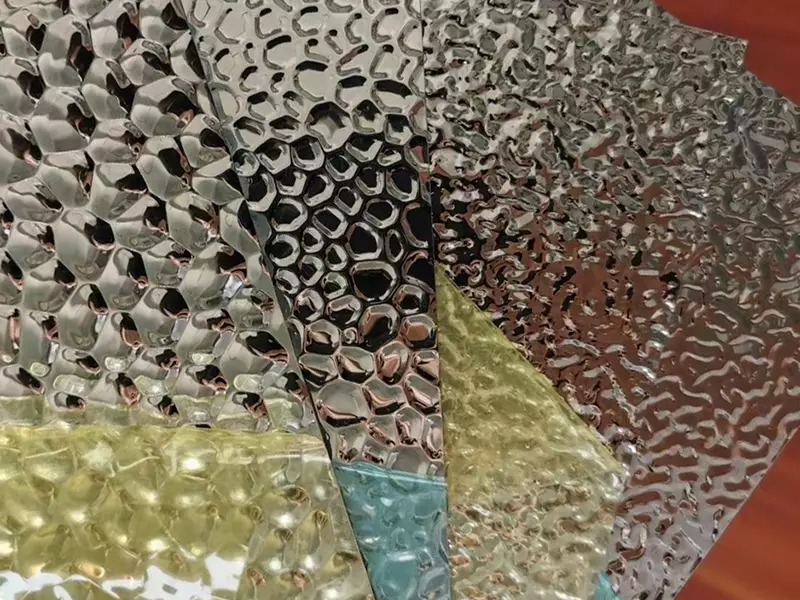
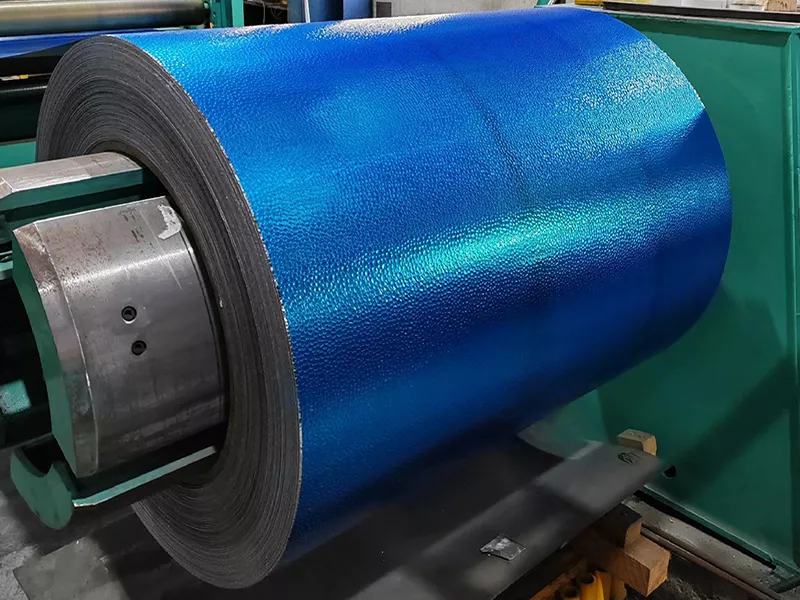
Embossed aluminium foil roll supplied by Haomei Aluminum
What is embossed aluminium foil?
Embossed aluminum foil is a type of aluminum foil product in which various patterns are imprinted on the surface of plain foil through a special process. It is made by passing smooth aluminum foil through a rolling mill or embossing roller to create concave-convex patterns on the surface, thereby giving the aluminum foil additional functionality and decorative appeal.
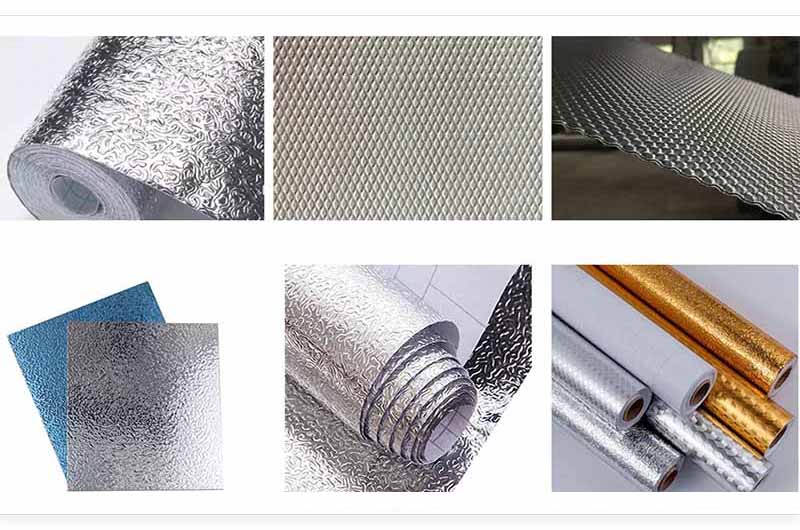
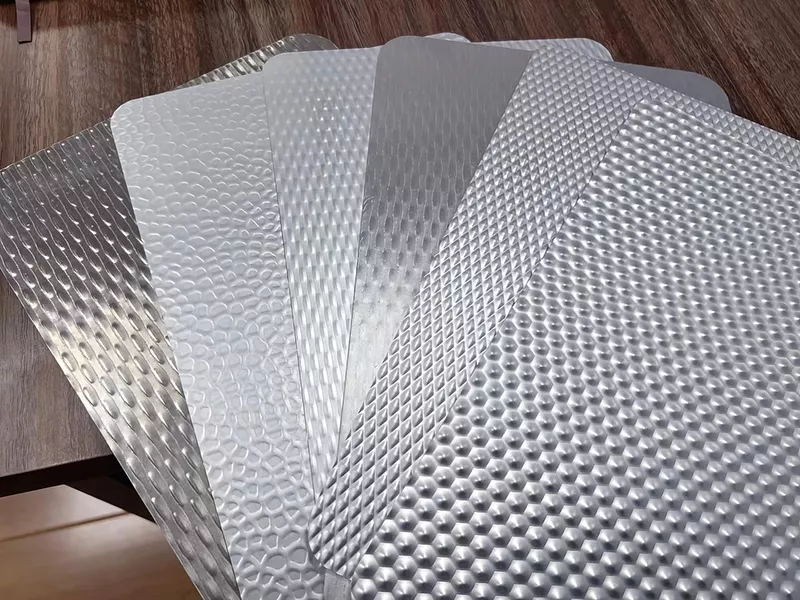
The embossing pattern is selected according to the intended application and downstream process. Depending on the roller design, the surface may have a stucco, orange-peel, diamond, line, ripple or other customized profile.
Embossing does not automatically increase the alloy’s tensile strength or improve its barrier performance. Those properties still depend on the base material, foil integrity and any coating or laminate.
Embossed Aluminium Foil Specifications
| Alloy | 1050 / 1060 / 1100 / 3003 / 8011 and other grades subject to requirements |
| Temper | O and selected H tempers according to alloy and application |
| Base Foil Thickness | Customized according to application and embossing process |
| Width | Customized to downstream converting requirements |
| Roll Form | Jumbo roll / slit coil / customized roll |
| Embossing Pattern | Stucco / orange peel / diamond / line / ripple / custom pattern |
| Surface | Mill finish / bright / matte / coated / laminated |
| Core ID | 76 mm / 152 mm or customized, subject to order |
| Packing | Moisture-resistant export packing |
| Inspection | Thickness, width, surface condition, coil dimensions and other agreed requirements |
Embossed Aluminium Foil Patterns
Haomei Aluminum supplies embossed aluminium foil in a range of surface patterns for insulation, equipment covering, decorative finishes and other applications. Pattern selection can be matched to the required appearance, forming performance and end use.
Stucco Embossed Aluminum Foil
Stucco embossing creates a distinctive textured surface that helps reduce the visibility of minor scratches and surface marks. It is widely selected for insulation covering, HVAC applications, pipe and equipment cladding, where a durable textured finish is preferred.
Orange Peel Embossed Aluminum Foil
Orange peel embossing produces a fine, evenly distributed texture with a characteristic dimpled appearance. This pattern is commonly used for insulation systems, air-conditioning ductwork, equipment wrapping and decorative metal surfaces.
Water Drop Embossed Aluminum Foil
Water drop embossing features a rounded, irregular texture that gives the foil a distinctive decorative appearance. It can be considered for insulation, equipment covering and interior or exterior decorative applications where surface texture is part of the design requirement.
Leather Grain Embossed Aluminium Foil
A leather-like texture provides a refined surface effect for decorative panels, equipment covering and other applications requiring a more distinctive finish.
Linear, Grid, Checkered & Wave Patterns
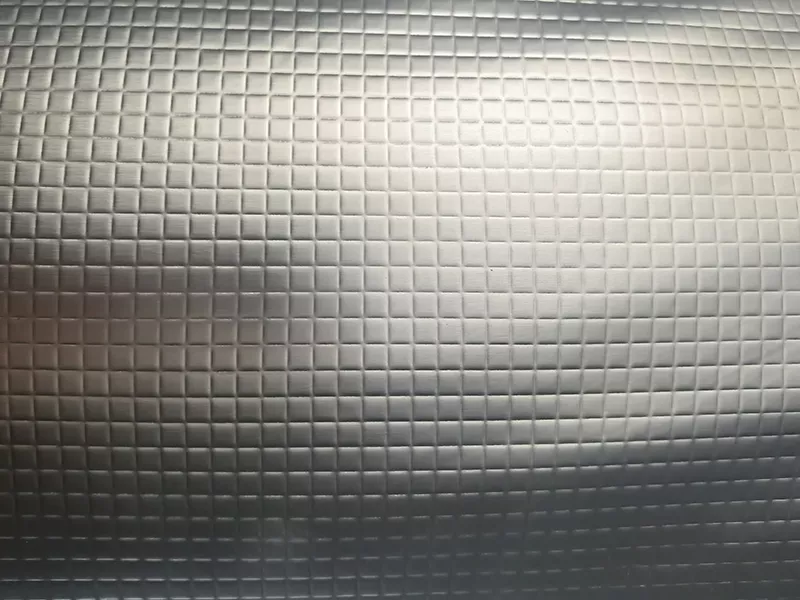
Linear, grid, checkered and wave embossing offer different visual directions for architectural, decorative and industrial applications. Pattern depth and appearance can be selected according to the finished surface requirement.
Custom Embossed Aluminium Foil Pattern
Need a pattern that is not listed above? Haomei Aluminum can discuss custom embossed aluminium foil patterns based on your drawing, sample or application.
Discuss a Custom Pattern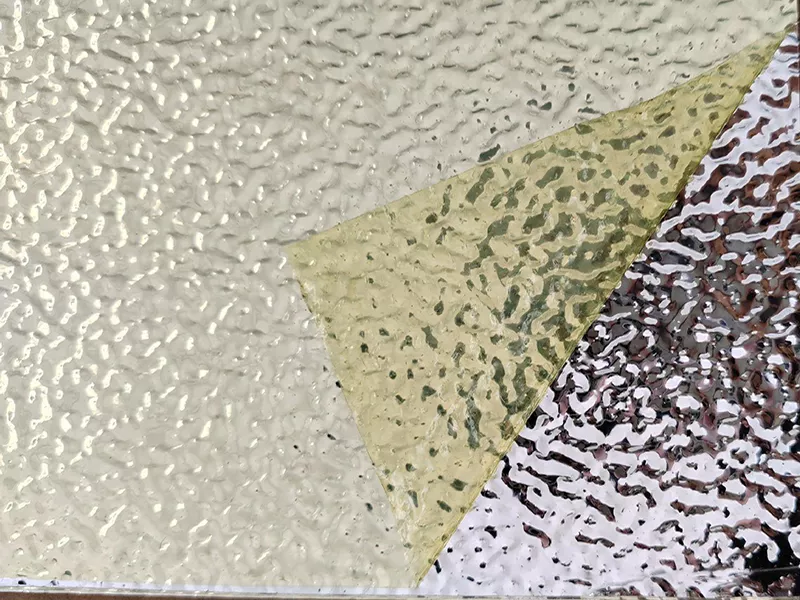
Embossed Aluminium Foil Alloys and Tempers
8011 Aluminium
8011 is widely used in aluminium foil converting where a practical balance of strength, flexibility and processing performance is required.
See our 8011 aluminum foil product information.
3003 Aluminium
3003 provides a balance of formability, strength and corrosion resistance for applications requiring more structural performance.
Learn more about 3003 aluminum foil .
1xxx Series
1050, 1060 and 1100 can be considered where high aluminium content, formability and corrosion resistance are important.
Alloy and temper should be selected together with the base foil thickness, embossing process, converting method and target application. The correct grade is therefore determined by project requirements rather than by one universal product recommendation.
| Alloy | Selection considerations |
| 8011 | Widely used in foil applications; a candidate for packaging and general converting, subject to the required temper and gauge |
| 1235 | Commercially pure aluminium used in flexible packaging and laminating applications where softness and conformability matter |
| 8079 | Used in flexible packaging foil where thin-gauge performance and forming behavior are important |
| 1100 | Commercially pure aluminium that may suit forming and decorative uses, depending on thickness and supply format |
| 3003 | A manganese-containing alloy considered where more strength is needed; often more relevant to heavier-gauge foil or thin sheet |
Embossed Aluminium Foil Surface Treatments
Lacquered or Colored Foil
Lacquers can provide color, surface protection or a functional coating. Where the foil is heavily formed, the coating must tolerate deformation without cracking or losing adhesion.
For packaging, specify whether the coating is decorative, protective or heat-sealable. These functions are not interchangeable.
Laminated Foil
Foil can be laminated with materials such as PET, PE, paper or other specified substrates to improve handling or add sealing and protective functions.
PU is commonly used as a laminating adhesive; it should not automatically be described as a reinforcing film layer. Define the complete material structure rather than requesting only "PU laminated foil."
Printed Foil
Printing can add branding, instructions or decorative graphics. A pronounced texture may affect ink coverage and the readability of small text, so the printing and embossing sequence should be reviewed together.
Self-Adhesive Foil
A pressure-sensitive adhesive and release liner can make the foil easier to apply. Adhesive choice depends on the substrate, operating temperature and expected service conditions.
Common Applications of Embossed Aluminium Foil
Packaging
Embossing adds tactile and visual detail to wraps, liners and selected packaging components. However, it does not replace the need to specify barrier integrity, cleanliness, coating compatibility or food-contact requirements.
See packaging aluminium foil for related material options.
Industrial and Insulation Facings
Textured foil may be used in insulation laminates, equipment linings and protective facings. Selection usually depends on the complete construction, including the backing, adhesive and installation conditions.
For these projects, review our aluminium foil for insulation and provide the proposed laminate structure.
Household and Decorative Wrapping
Embossed surfaces can create a decorative finish for household wrapping, seasonal packaging and presentation materials. If the foil will contact food, its substrate, coating, ink and intended conditions of use must all be considered.
Automotive
Embossed aluminium foil is used for automotive heat shields around engine compartments, exhaust systems and engine covers, and may also form part of sound insulation assemblies.
Textured metallic surfaces can also be used for decorative automotive interiors.
Hair Salon Foil
Hair highlighting foil often uses a light texture to improve handling and help the sheet stay in position during application.
For pre-cut or pop-up products, sheet dimensions and pack configuration are as important as the raw foil specification.
Crafts and DIY
Textured foil is also used for cards, decorative panels and craft components. Thicker foil generally holds a formed design more readily, while thinner foil may need paper or another backing.
Chemical Composition of embossed aluminum foil
| Alloy | Aluminum (Al) | Copper (Cu) | Manganese (Mn) | Silicon (Si) | Iron (Fe) | Magnesium (Mg) | Chromium (Cr) | Zinc (Zn) | Other Elements |
| 1100 | 99.00% | 0.05% | 0.05% | 0.10% | 0.12% | - | - | - | - |
| 1235 | 99.35% | 0.05% | - | 0.15% | 0.15% | - | - | - | - |
| 3003 | 89.0-91.0% | 0.20-0.60% | 1.0-1.5% | 0.10-0.40% | 0.70-0.90% | - | - | - | Other Elements (e.g., Nickel) |
| 8079 | 88.0-92.0% | 0.10-0.40% | 0.30-0.60% | 0.30-0.60% | 0.10-0.30% | - | - | 0.30-0.90% | Other Elements (e.g., Nickel) |
Embossed Aluminium Foil vs. Smooth Aluminium Foil
| Feature | Embossed foil | Smooth foil |
| Surface | Mechanically formed texture | Unembossed rolled finish |
| Appearance | Patterned, with more diffuse reflections | More uniform, with a bright or matte rolled appearance |
| Handling | Texture may improve grip and alter stiffness | More dependent on base gauge and temper |
| Printing | Texture can affect fine details and ink coverage | Generally more predictable for fine graphics |
| Coating and lamination | Pattern and process sequence require attention | Offers a more uniform surface for process setup |
| Barrier performance | Depends on foil integrity after embossing | Depends on foil integrity and thickness |
| Apparent Rigidity | Can be increased by surface profile | Depends mainly on base gauge and alloy |
| Reflectivity | Pattern changes visual reflection | More uniform reflection |
| Cost considerations | Includes embossing and potentially tooling costs | Avoids the embossing operation |
Choose embossed foil when texture serves a clear purpose. If the application mainly requires a uniform surface for printing, coating or tightly controlled converting, smooth foil may be the more practical option.
Haomei Aluminum Embossed Aluminium Foil Quality Control
Base Foil Inspection
Before embossing, Haomei Aluminum checks alloy, temper, thickness and width against the agreed production requirements.
Embossing Quality
During production, pattern consistency, surface condition and overall coil appearance are monitored.
Dimensional Inspection
Thickness, width, coil dimensions and other agreed tolerances are checked according to order specifications.
Final Coil Inspection
Before shipment, Haomei Aluminum checks winding condition, edge quality, surface defects and packaging integrity.
Order Custom Embossed Aluminium Foil Coils
Haomei Aluminum produces embossed aluminium foil to match different processing and end-use needs. Customers can choose the foil grade, size and surface pattern according to the finished product.
- Alloy and temper
- Base foil thickness
- Finished width or slit width
- Embossing pattern and depth
- Surface finish or treatment
- Coil diameter and core size
- Packaging method
- Delivery and shipping requirements
Need Custom Embossed Aluminium Foil?
Send Haomei your alloy, base foil thickness, width, embossing pattern, roll requirements and final application. We can confirm the suitable specification and prepare a quotation according to your project requirements.
Request a QuoteEmbossed Aluminium Foil Coil Packaging and Delivery
Moisture Protection
Moisture-resistant wrapping and suitable protective materials are used to help protect aluminium foil during storage and international transportation.
Coil Protection
Protective film, paper, steel strapping or reinforced supports can be selected according to the coil format and transport conditions.
Export Loading
Wooden pallets or suitable export supports can be arranged according to loading, coil dimensions and customer unloading requirements.
Frequently Asked Questions
What alloys are used for embossed aluminium foil?
Depending on the application, embossed foil may be produced from aluminium grades such as 1050, 1060, 1100, 3003 and 8011. Alloy selection should be based on forming, strength, surface requirements, converting process and final use.
Can embossed aluminium foil be customized?
Yes. Depending on the production requirements, embossed aluminium foil can be specified by alloy, temper, base foil thickness, width, embossing pattern, surface treatment, roll dimensions and packaging requirements.
Does embossing change the foil thickness?
Embossing changes the surface geometry of the foil, so the finished profile includes raised and recessed areas. However, the nominal base foil thickness and the embossed profile should be treated as separate specifications when ordering material.
Can embossed foil be laminated or coated?
Selected embossed foil products can be coated or laminated with compatible films, paper or other substrates. Compatibility depends on the alloy, foil gauge, embossing pattern, surface condition, adhesive or coating system and downstream process.
Does embossing make aluminium foil stronger?
It may increase apparent stiffness or change how the foil bends, but it does not inherently increase tensile strength. Excessive embossing can also create local thinning or damage. Performance should be checked on the finished foil.
Can embossed foil be used for food packaging?
Yes, provided the complete product is suitable for its intended food-contact use. Compliance depends on the foil, coatings, inks, adhesives and applicable market requirements—not on the embossed pattern alone.