
Haomei Aluminum manufactures aluminium foil for insulation applications, supplying foil in roll form for reflective insulation, HVAC systems, roofing, walls, ducts and laminated insulation structures.
Haomei Aluminum supplies aluminium foil used as a reflective facing, vapor-control layer or protective surface in insulation systems. The foil can be laminated with kraft paper, plastic film, woven fabric or other substrates according to the requirements of the finished product.
Our material is supplied to insulation manufacturers, building material converters, HVAC contractors and industrial distributors. Product specifications can be adjusted for different lamination processes, forming requirements and installation methods.
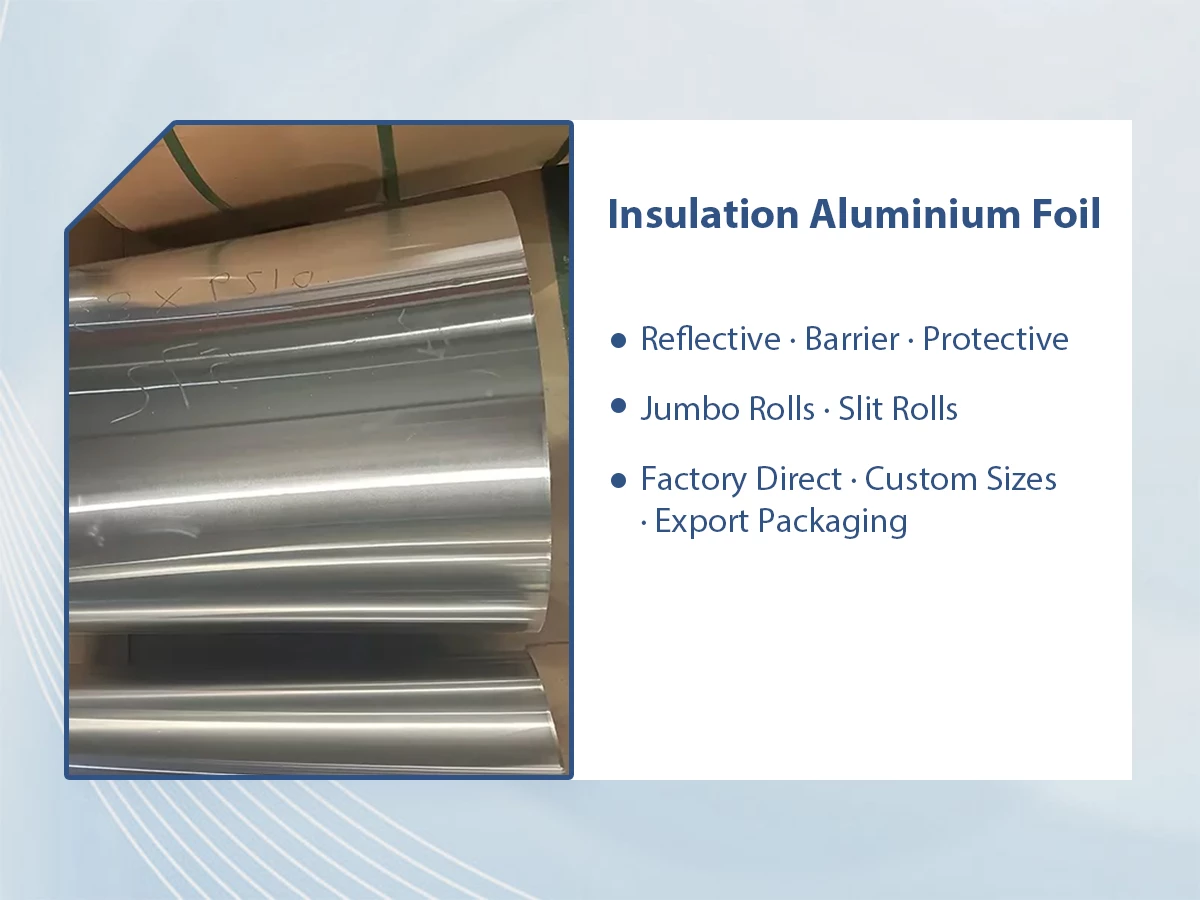
- Alloy 1235, 8011 or custom grade
- Temper O, H18, H22, H24 or available option
- Surface Mill, bright, embossed or coated
- Supply Jumbo rolls or slit rolls
- Factory Supply
- Custom Sizes
- Export Packaging
- Technical Support
Insulation Aluminium Foil Specifications
| Specification | Typical Options |
| Alloy | 1235, 8011 and other suitable aluminium foil grades according to application requirements. |
| Temper | O, H18 and other tempers depending on handling, strength and converting requirements. |
| Thickness | According to insulation facing and lamination requirements. Final tolerance should be confirmed before production. |
| Width | Customized according to downstream laminating, coating, slitting or converting equipment. |
| Surface | Mill finish, bright, embossed, coated, matte or other available conditions according to application. |
| Supply Form | Jumbo roll or slit coil. |
| Core ID | According to winding and converting requirements. |
| Coil OD | Coordinated with production, transportation and downstream equipment. |
| Edge | Mill edge or slit edge, subject to the finished roll and slitting requirements. |
| Processing | Slitting, rewinding, embossing, coating or lamination support when available. |
| Packaging | Export-oriented packaging according to coil dimensions, loading and handling requirements. |
Why Aluminium Foil Is Used in Insulation Systems
Aluminium foil is normally one layer within a complete insulation structure. Its function depends on the final design, surface condition, lamination method and surrounding materials.
Reflective Surface
A low-emissivity aluminium surface can be used as part of a radiant heat control system where the foil faces an appropriate air space or is incorporated into a reflective insulation structure.
Moisture Barrier
In properly designed and sealed composite structures, aluminium foil can serve as a barrier layer that helps control moisture or water vapour transmission.
Facing Layer
Foil can form the exposed facing layer of an insulation assembly, depending on the product design, reinforcement requirements and installation conditions.
Lamination Layer
Aluminium foil can be combined with fiberglass, kraft paper, PE, PP, foam, scrim and other materials to create a composite insulation facing.
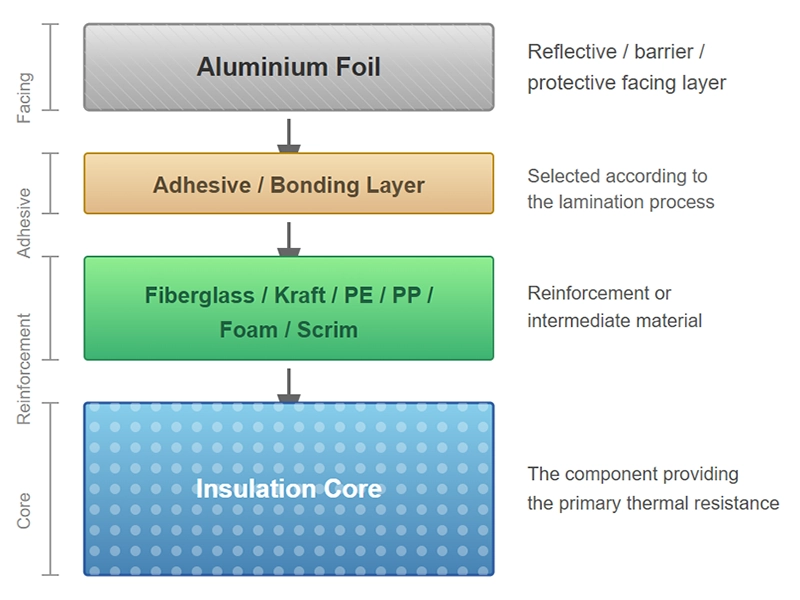
Insulation Aluminium Foil Structure
Aluminium foil is normally used as part of a layered insulation system. Its role depends on the facing material, bonding method and insulation core used in the finished assembly.
- Aluminium Foil Facing Reflective surface, moisture barrier and protective outer layer
- Adhesive / Bonding Layer Joins the aluminium foil with the selected insulation material
- Fiberglass, Kraft, PE, PP, Foam or Scrim Provides reinforcement or forms an intermediate layer within the assembly
- Insulation Core Provides the main thermal resistance required by the insulation system
The aluminium foil facing does not replace the insulation core. In a finished insulation product, the foil works together with the other layers to improve surface protection, moisture resistance and reflective performance.
Insulation Aluminium Foil Alloy Options
8011 Aluminium Foil
8011 aluminium foil is a practical choice for many insulation and laminated products. It offers good handling performance during slitting, laminating and converting, making it suitable for foil-faced insulation materials and other industrial assemblies.
Haomei can supply 8011 foil in different thicknesses, widths and tempers according to the converting process and final insulation structure.
1235 Aluminium Foil
1235 aluminium foil is well suited to applications where high aluminium content, ductility and a clean, consistent surface are important. It can be used as the foil facing in laminated insulation systems and other flexible barrier structures.
Foil thickness, width, temper and roll dimensions can be specified to match the customer's laminating, coating or converting equipment.
Other Aluminium Foil Alloys
The most suitable aluminium foil grade depends on the insulation structure, lamination method, required flexibility and finished product performance. Other foil alloys can therefore be considered when the standard 8011 or 1235 specification does not match the application.
As an aluminium foil manufacturer, Haomei can review the required alloy, temper, thickness, width and roll configuration before production.
Insulation Aluminium Foil Applications
HVAC Insulation
Aluminium foil can be used as a facing or reflective outer layer in HVAC insulation systems where the foil is combined with insulation cores or reinforcing layers.
Duct Insulation
Foil can be incorporated into duct insulation products where surface protection, reflective characteristics or barrier performance are part of the overall design.
Roof Insulation
Aluminium foil may serve as a reflective facing or barrier component in selected roofing insulation constructions.
Wall Insulation
In wall insulation systems, foil can be incorporated into composite structures where a reflective or moisture-control layer is required.
Pipe and Equipment Insulation
Aluminium foil can be used as an outer facing or barrier layer for selected pipe, vessel and equipment insulation systems.
Reflective Insulation
Foil is commonly incorporated into reflective insulation constructions designed around radiant heat control and suitable air-space conditions.
Haomei Jumbo and Slit Aluminium Foil Rolls for Insulation
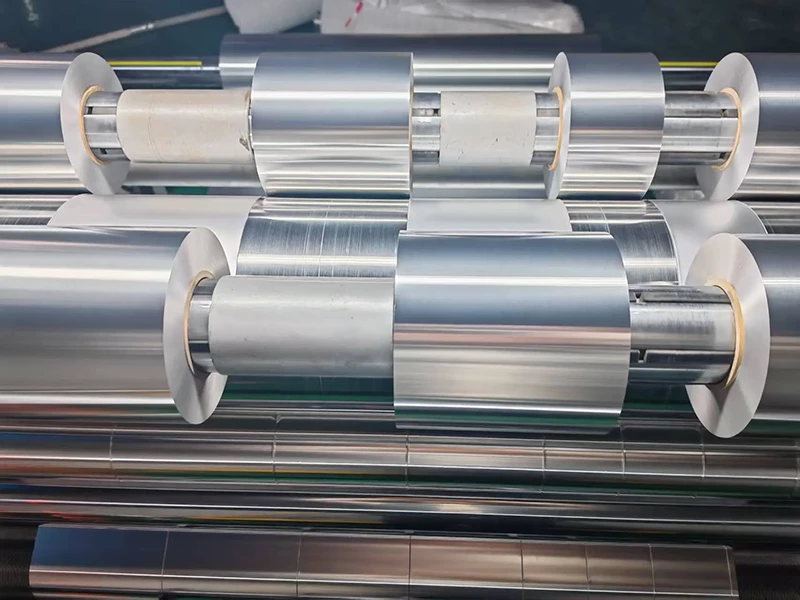
Haomei Aluminum supplies aluminium foil for insulation in jumbo rolls and slit coils for laminating, coating and other converting operations.
- Jumbo Roll For laminating and direct converting
- Slit Coil Finished widths for converting lines
- Custom Width Matched to equipment requirements
- Custom Core Selected for winding equipment
- Custom Roll Weight Arranged for production and handling
Haomei Quality Control for Insulation Aluminium Foil
Quality checks are carried out throughout production to keep insulation aluminium foil within the agreed dimensional, surface and mechanical requirements. Inspection items are selected according to the alloy, temper, foil thickness and the requirements of the final laminating or insulation process.
Foil Thickness
Thickness is monitored during rolling and checked again on the finished material. Measurements are compared with the specified nominal thickness and tolerance to maintain consistent barrier performance and processing stability.
Width & Dimensional Accuracy
Finished foil width is measured after slitting or rewinding. Width tolerance is controlled according to the order specification so the material can be used efficiently on laminating, coating and insulation converting equipment.
Surface Quality
The foil surface is visually inspected for defects that could affect lamination, printing, coating or appearance. Surface condition, cleanliness and finish are checked according to the intended application.
Alloy & Mechanical Properties
Chemical composition and mechanical properties are controlled according to the selected aluminium alloy and temper. Tensile strength, elongation and other applicable properties can be tested when required by the specification.
Roll & Edge Condition
Before packing, finished rolls are checked for winding condition, edge quality, telescoping and core condition. Proper roll formation helps reduce handling problems and supports smooth operation during downstream converting.
Inspection Records & Documentation
Inspection results are recorded against the production batch and order requirements. Mill test certificates, inspection records and relevant shipping documents can be supplied according to the agreed quality and export documentation requirements.
Haomei Aluminum Foil Roll Packaging and Export Delivery
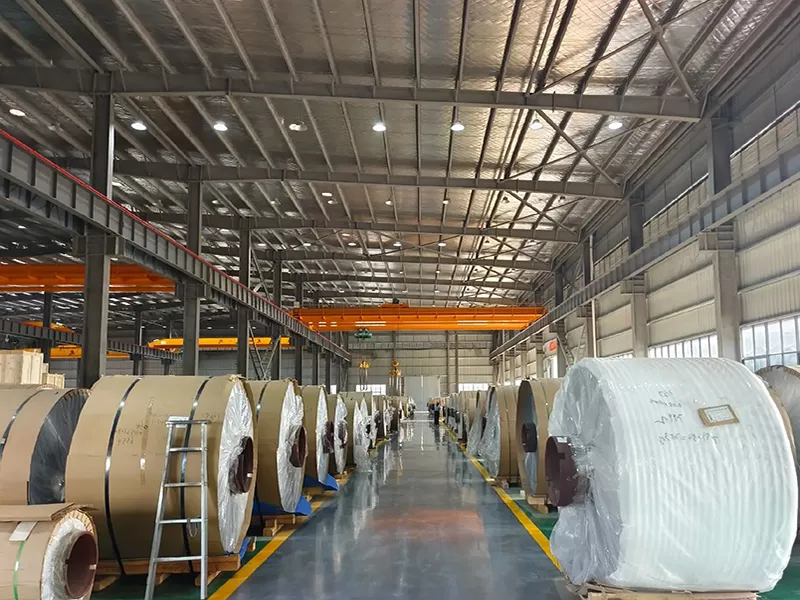
Aluminium foil rolls are packed according to the material specification, roll dimensions and shipping method. For export orders, Haomei can arrange moisture-resistant protection, reinforced coil packing and suitable loading methods to help keep the foil in good condition throughout handling, ocean transportation and storage.
Moisture-Resistant Packing
Aluminium foil is protected against moisture exposure during overseas transportation and storage. The packing method can be selected according to the shipment route, transit conditions and customer requirements.
Roll and Edge Protection
Finished rolls can be protected at the ends, edges and outer surfaces before shipment. Appropriate wrapping and cushioning help reduce the risk of dents, scratches and handling damage during loading and unloading.
Pallets and Skids
Pallets or skids are selected according to roll weight, dimensions and handling requirements. The packing structure is arranged to provide stable support while allowing the rolls to be handled safely at the warehouse or destination port.
Container Loading
Container loading is planned around coil size, weight distribution and available loading space. Where required, rolls are secured to help limit movement during sea transportation and make unloading more manageable at the destination.
How to Choose Aluminium Foil for Insulation
The right aluminium foil depends on how it will be processed and used in the finished insulation system.
- Alloy — Choose the alloy according to the required formability, strength, surface quality and converting process. Common options include 1235 and 8011, while other grades can be supplied for specific requirements.
- Temper — The temper affects how the foil behaves during lamination, forming and handling. O and H18 are commonly used conditions, with other tempers available when specified.
- Foil Thickness — Thickness should be selected according to the insulation construction, barrier requirements and production process. Thinner foil can reduce material consumption, while heavier gauges may be preferred where greater handling strength is required.
- Finished Width — Width is normally matched to the laminating, coating, slitting or converting line. Supplying the required finished width can also reduce trimming and material waste during production.
- Core ID — The inner core diameter needs to match the customer's unwinding or winding equipment. This is particularly important for high-speed converting lines.
- Coil OD — Maximum outside diameter is usually determined by the customer's machine capacity, lifting equipment and storage conditions. Haomei can arrange the roll configuration according to these limits.
- Surface Condition — Mill finish, bright finish or another specified surface condition can be selected according to the bonding, coating, printing or facing process.
- Roll Weight — Roll weight should take into account the customer's handling equipment and production setup. We can adjust the coil dimensions to achieve a practical weight for loading and operation.
- Lamination Method — The bonding process matters when selecting foil. Adhesive lamination, thermal bonding, extrusion lamination and other processes may require different foil characteristics and surface conditions.
- End Application — The final use provides the starting point for material selection. Aluminium foil may be used for HVAC and duct insulation, roof and wall systems, pipe insulation, reflective insulation or composite insulation facings.
Haomei Aluminum Insulation Foil Supply and Customization Capabilities
Custom Roll Specifications
Haomei Aluminum can arrange core ID, coil OD, roll weight, winding direction and other roll parameters according to the agreed order requirements. Specifications are confirmed before production to support reliable operation on converting and handling equipment.
Slitting and Width Options
Jumbo foil can be supplied for further processing, while slit-width rolls can be arranged for applications that require specific converting dimensions.
Production and Quality Checks
Material specifications, foil thickness, surface condition, dimensions and finished roll requirements are checked during production and before shipment according to the agreed order specification.
FAQ – Insulation Aluminium Foil
What is aluminium foil for insulation used for?
Aluminium foil for insulation can be used as a reflective, barrier or facing layer in insulation structures for HVAC systems, ducts, roofing, walls, pipes and other applications. The exact construction depends on the insulation material and converting process.
What alloys are suitable for insulation aluminium foil?
Common options include 1235 and 8011 aluminium foil. Other aluminium grades may also be considered according to mechanical properties, forming requirements, surface condition and converting process.
Can Haomei supply insulation foil in jumbo rolls?
Yes. Haomei Aluminum can supply insulation aluminium foil in jumbo roll and slit coil formats according to production requirements and downstream converting processes.
Can the foil width be customized?
Yes. Foil width can be specified according to the customer's laminating, coating, slitting or converting equipment and the required finished roll format.
What thickness should be selected for insulation foil?
The appropriate thickness depends on the insulation structure, converting process, mechanical requirements and handling conditions. The specification should be selected based on the complete insulation system rather than thickness alone.
Can aluminium foil be laminated with fiberglass or kraft paper?
Yes. Aluminium foil can be used as a facing layer in laminated structures with materials such as fiberglass, kraft paper, plastic film, foam or scrim, subject to the customer's converting process and bonding requirements.
What information is needed for a quotation?
Useful quotation information includes alloy, temper, thickness, width, roll dimensions, surface requirements, estimated quantity, application and any specific packaging or documentation requirements.