
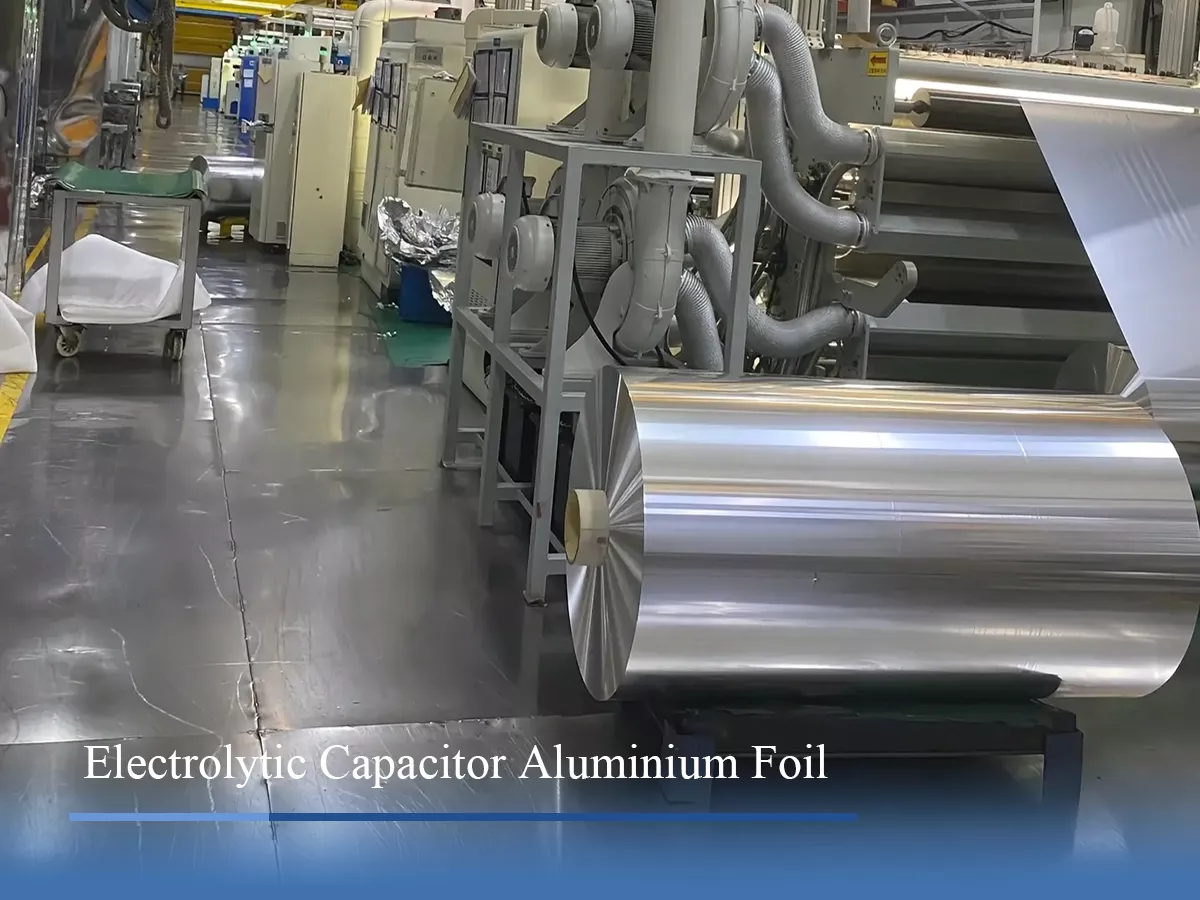
Haomei Aluminum supplies raw aluminium foil for electrolytic capacitor production , with material options for anode foil processing, cathode applications and related capacitor components.
Our selection includes 1A99 anode stock in thicknesses of 0.10–0.30 mm , together with 1050, 1070, 1080, 1090 and 3003 options in thicknesses of 0.02–0.50 mm for cathode-side and related applications, subject to the intended use and technical specification.
What Is Electrolytic Capacitor Aluminium Foil?
Electrolytic capacitor aluminium foil is a high-purity aluminium substrate used to manufacture the anode and cathode elements of electrolytic capacitors. Its surface condition, thickness consistency, chemical purity and response to electrochemical treatment all influence the performance of the finished capacitor.
In a typical aluminium electrolytic capacitor, two aluminium foils are separated by an electrolyte-saturated spacer paper. The positive aluminium foil is processed to create an enlarged effective surface area and an oxide dielectric layer, while the negative foil provides electrical contact with the electrolyte.
Haomei Aluminum focuses on supplying the aluminium foil raw material rather than the finished capacitor.
Electrolytic Capacitor Aluminium Foil Specifications
| Application | Typical Alloy | Reference Thickness | Supply Form |
| Anode foil | 1A99 | 0.10–0.30 mm | Coil |
| Cathode foil | 1050 / 1070 / 1080 / 1090 / 3003 | 0.02–0.50 mm | Coil |
- Alloy
- Application-Specific Aluminium Alloys
- Thickness
- According to Project Requirements
- Width
- Custom Width Available
- Surface Finish
- Controlled Mill Finish
- Supply Form
- Jumbo Roll / Slit Coil
- Documentation
- MTC & Agreed Inspection Documents
For other material grades and applications, see our aluminium foil product range.
Discuss Your Capacitor Foil Specification
Send Haomei Aluminum your drawing, material specification or current purchasing requirements for review. Please state whether you need anode foil stock, cathode-side material or stock for another capacitor component , so the enquiry can be assessed against the correct application.
Contact Haomei Aluminum about your foil requirementsAluminium Electrolytic Capacitor Structure and Foil Applications
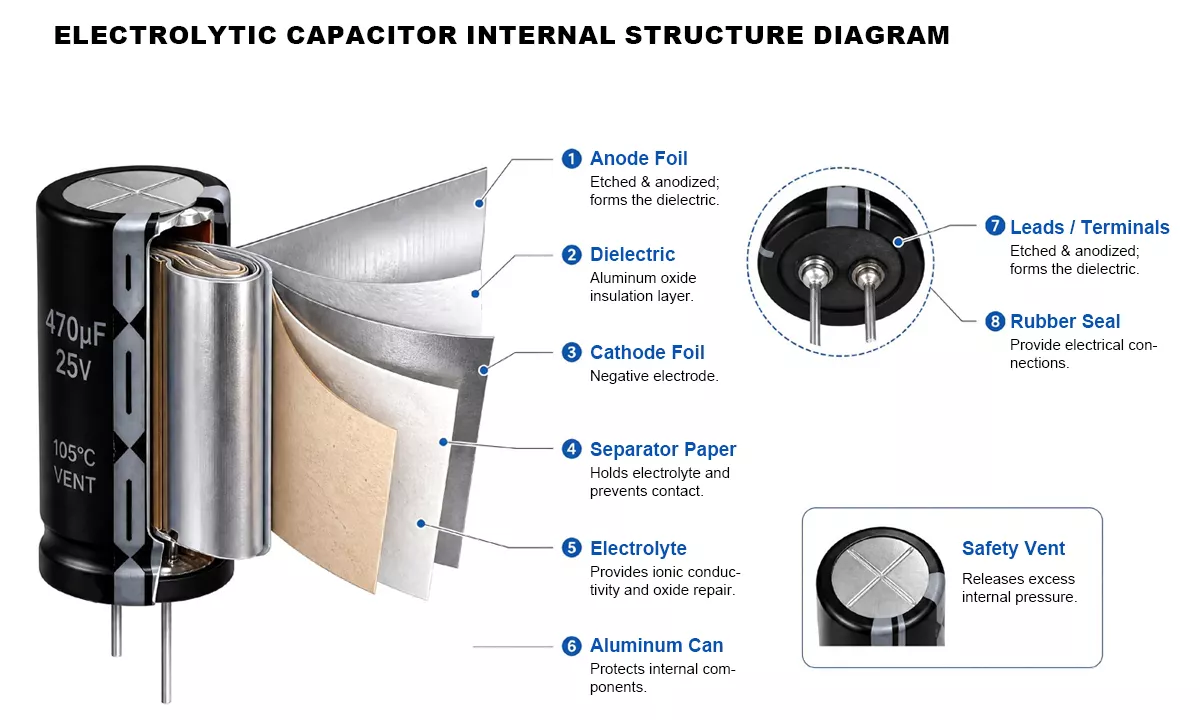
A conventional liquid-electrolyte aluminium capacitor contains a wound assembly of anode foil, cathode foil and separator paper impregnated with electrolyte.
- Anode foil: The positive aluminium electrode. Its surface is etched to increase effective area, then anodically formed to produce the dielectric oxide film.
- Aluminium oxide dielectric: A thin insulating layer formed on the anode surface. It is not a separate, free-standing sheet.
- Cathode foil: The aluminium contact and current collector on the negative side, working with the electrolyte.
- Separator paper and electrolyte: The paper keeps the foils physically apart and holds the electrolyte, which provides ionic conduction.
Why Etching Matters
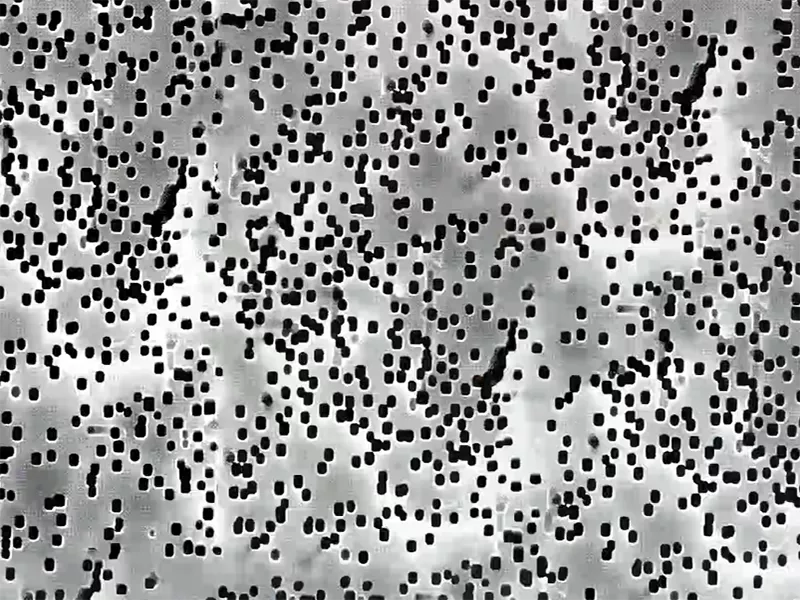
Capacitance depends on the effective electrode area and the thickness of the dielectric layer. Etching creates microscopic pits or tunnels in the aluminium surface, providing much more active area than an untreated foil of the same external dimensions.
For a comparable dielectric thickness, a larger effective area can provide higher capacitance. However, thicker foil does not automatically mean higher capacitance , and raw foil does not yet have the surface structure of a finished electrode.
Final performance depends on the interaction between the starting material, etching conditions, oxide formation and capacitor design.
Anode Foil and Cathode Foil for Aluminum Electrolytic Capacitors
Aluminum electrolytic capacitors use aluminum foil for both electrode functions, but the material requirements are not identical. The anode foil is the surface-forming electrode, while the cathode foil acts as the negative-side electrode and current-collecting surface.
1A99 Aluminium for Anode Foil Processing
The anode foil is etched to increase its effective surface area and then formed electrochemically to create the aluminum oxide dielectric layer. High aluminum purity and controlled foil structure are important because impurity levels can influence the etching behavior and anodic oxide characteristics.
- Standard Alloy: 1A99 (Purity ≥ 99.99%)
- Thickness Range: 0.10 mm – 0.30 mm
- Etching Gain: High Density Pit Formation
- Primary Function: Anode Electrode & Dielectric Base
Aluminium Options for Cathode Applications
The cathode foil provides the negative electrode and electrical connection to the electrolyte system. Its composition and surface condition are selected differently from the anode because the cathode does not require the same high-voltage dielectric forming function.
- Standard Alloys: 1050 / 1070 / 1080 / 1090 / 3003
- Thickness Range: 0.02 mm – 0.50 mm
- Surface Treatment: Light Etch / Anti-Corrosion
- Primary Function: Cathode Collector & Signal Lead
Chemical Composition of Capacitor Aluminum Foil
| Alloy | Chemical Composition |
| 1A99 | Al: ≥ 99.99% |
| 1050 | Al: ≥ 99.50% |
| 1070 | Al: ≥ 99.70% |
| 1080 | Al: ≥ 99.80% |
| 1090 | Al: ≥ 99.90% |
| 3003 | Al: Remainder; Mn: 1.0–1.5%; Cu: 0.05–0.20% |
Capacitor Aluminium Foil Supply from Haomei Aluminum
Capacitor aluminium foil is more than a standard rolled foil product. Its suitability depends on the material grade, dimensional consistency, coil format and the requirements of the downstream manufacturing process. Haomei Aluminum can review these requirements before production and arrange the foil to the agreed specification.
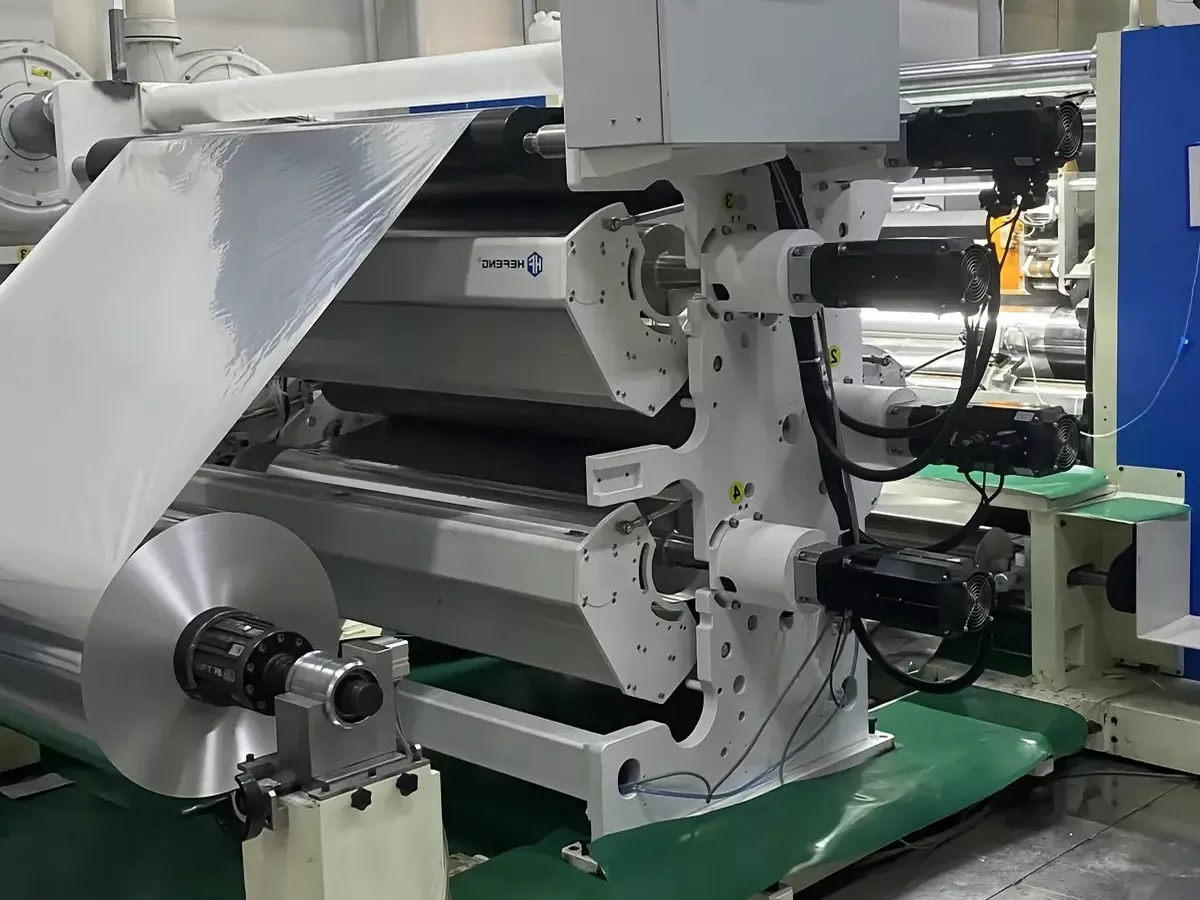
- Material Control Aluminium foil can be supplied to the agreed alloy and composition requirements, with material documentation available according to the order specification.
- Dimensional Customization Foil thickness and width can be produced or slit to suit downstream equipment, processing conditions and the required coil format.
- Coil Supply Jumbo rolls and slit coils are available for different production setups, with winding and packing requirements confirmed before shipment.
- Export Support International orders can be supported with export packing, inspection records and technical communication throughout the quotation and delivery process.
Why Aluminium Foil Surface Area Matters in Capacitor Design
In an aluminium electrolytic capacitor, the usable surface area of the aluminium anode foil plays a major role in determining capacitance. Unlike a flat sheet, capacitor foil can be electrochemically etched after rolling to develop a fine surface structure and increase the effective electrode area.
The required foil structure is not the same for every capacitor. Etching depth, pore structure and forming conditions are selected according to the capacitor's rated voltage, capacitance requirement and construction.
Quality Control for Electrolytic Capacitor Aluminium Foil
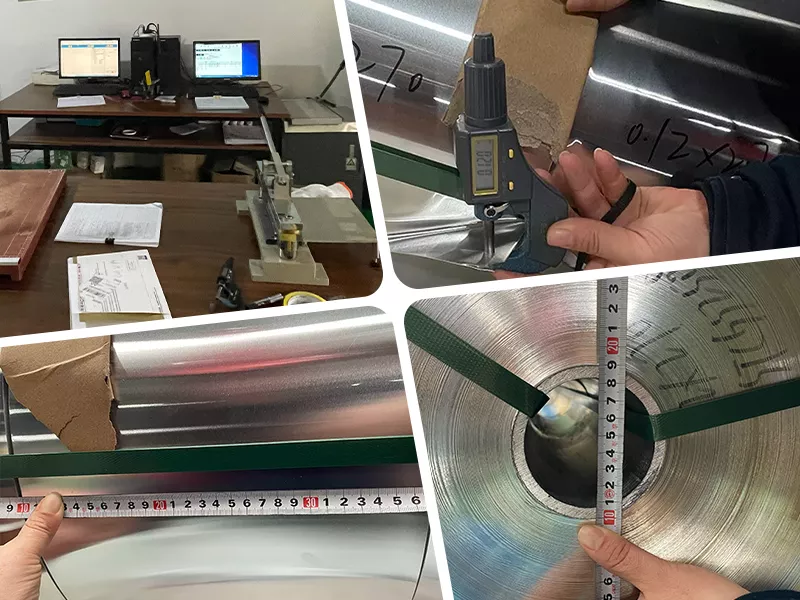
For capacitor aluminium foil, dimensional consistency and surface quality are important because the material may undergo further slitting, winding, etching or forming after delivery. Before shipment, Haomei Aluminum checks the finished material against the agreed order specification and inspection requirements.
The inspection scope can be adjusted to the application and purchase specification, covering alloy chemistry, foil thickness, width, surface condition and finished coil dimensions. Where inspection documents are required, the applicable test and material records can be supplied with the order.
- Alloy Composition The chemical composition is checked against the specified alloy grade to confirm that the supplied foil matches the ordered material.
- Foil Thickness Thickness is measured within the agreed tolerance range, helping maintain consistent material dimensions during downstream capacitor processing.
- Surface Condition The foil surface is examined for visible defects, contamination and other conditions that could affect subsequent processing or handling.
- Coil Dimensions Finished coil width, winding condition and other agreed coil requirements are checked before packing and shipment.
Applications of Aluminium Foil for Electrolytic Capacitors
Capacitor-grade aluminium foil is selected for applications where conductivity, electrochemical processing behavior, dimensional consistency and controlled surface characteristics are important to the finished capacitor.
Aluminum Electrolytic Capacitors
Used as the electrode substrate in aluminium electrolytic capacitor construction, including anode and cathode components.
Power Supply Capacitors
Used in capacitor systems associated with power conversion, filtering and energy storage equipment.
Industrial Control Equipment
Applied in capacitor assemblies used in industrial electrical and control systems where stable material quality is required.
Automotive Electronics
Suitable for capacitor components used in selected automotive electronic and electrical systems, subject to the required material specification.
Inverter and Energy Systems
Used in capacitor applications associated with inverters, energy conversion and related electrical equipment.
Consumer Electronics
Used in electrolytic capacitor components for selected consumer electronic products and electrical assemblies.
Request a Quote for Capacitor Aluminium Foil
- Anode or cathode application.
- Plain, etched or formed supply stage.
- Alloy, purity and trace-element requirements.
- Thickness, width, temper and tolerances.
- Coil size and packaging requirements.
- Trial quantity and expected order volume.
- Inspection specification and intended downstream process.
Tell Us Your Capacitor Foil Requirements
Send us your required alloy or purity level, foil thickness, width, temper, roll dimensions and intended capacitor application. Haomei Aluminum can review the specification and provide a production-oriented quotation.
Get Free Quote NowElectrolytic Capacitor Related Aluminium Foil Materials
Capacitor production may require different aluminium foil specifications depending on the electrode, processing route and final capacitor design. The following pages provide additional information on related grades and aluminium foil materials supplied by Haomei Aluminum.
Electronic Aluminium Foil
See the wider range of aluminium foil used in electronic and electrical components, with information on alloy selection, thickness, temper and application-specific requirements.
Explore Electronic Aluminium Foil →1070 Aluminium Foil
Learn more about 1070 aluminium foil, including its material characteristics, available specifications and applications requiring high aluminium content and good electrical conductivity.
Explore 1070 Aluminium Foil →Aluminium Foil Products
Browse the complete aluminium foil range to compare available alloys, tempers, thicknesses, widths, surface finishes and coil configurations for different industrial applications.
Browse Aluminium Foil Products →Other grades may also be considered when they match the required electrical, dimensional and processing conditions. For additional material information, see 1060 Aluminium Foil .
FAQ – Electrolytic Capacitor Aluminium Foil
Can the same aluminium grade be used for both electrodes?
Not by default. Anode and cathode foils have different functions and qualification requirements. Select the material for its intended electrode role rather than treating the listed grades as interchangeable.
Does thicker foil store more energy?
Not necessarily. Foil thickness alone does not determine capacitance or stored energy. Effective etched area, dielectric thickness, operating voltage and the overall capacitor design all matter.
What information is needed for a quotation?
Please provide the electrode or component application, alloy, thickness, width, temper, quantity and delivery destination. Include any chemical limits, surface requirements, coil dimensions and inspection criteria.
For anode stock, information about the intended etching and forming route also helps clarify the material requirement.
What aluminium alloys are used for capacitor foil?
The alloy depends on the electrode application and production process. Haomei can discuss grades such as 1A99 for specified anode applications and 1050, 1070, 1080, 1090 and 3003 for specified cathode applications.
What thickness of aluminium foil is available?
Reference ranges for the applications described on this page are 0.10–0.30 mm for 1A99 anode foil and 0.02–0.50 mm for the listed cathode foil grades. Final thickness is confirmed against the customer's production requirements.
What is the difference between anode and cathode foil?
Anode foil is the positive electrode and undergoes electrochemical etching and forming to develop the effective surface area and aluminum oxide dielectric layer. Cathode foil functions as the negative electrode and current-collecting surface and normally has different purity and processing requirements.