
Haomei Aluminum supplies ultra-thin aluminum foil with nominal thicknesses of 4.5 μm (0.0045 mm) and 5 μm (0.005 mm) for industrial converting.
At these gauges, pinhole limits, surface condition and winding quality also need to match your process, particularly when the foil will be coated or laminated.
To request a quotation, send us your required thickness, alloy, temper, foil width and order quantity. Include any limits on pinholes or thickness variation, along with your core size and maximum roll diameter, so we can review the full specification.
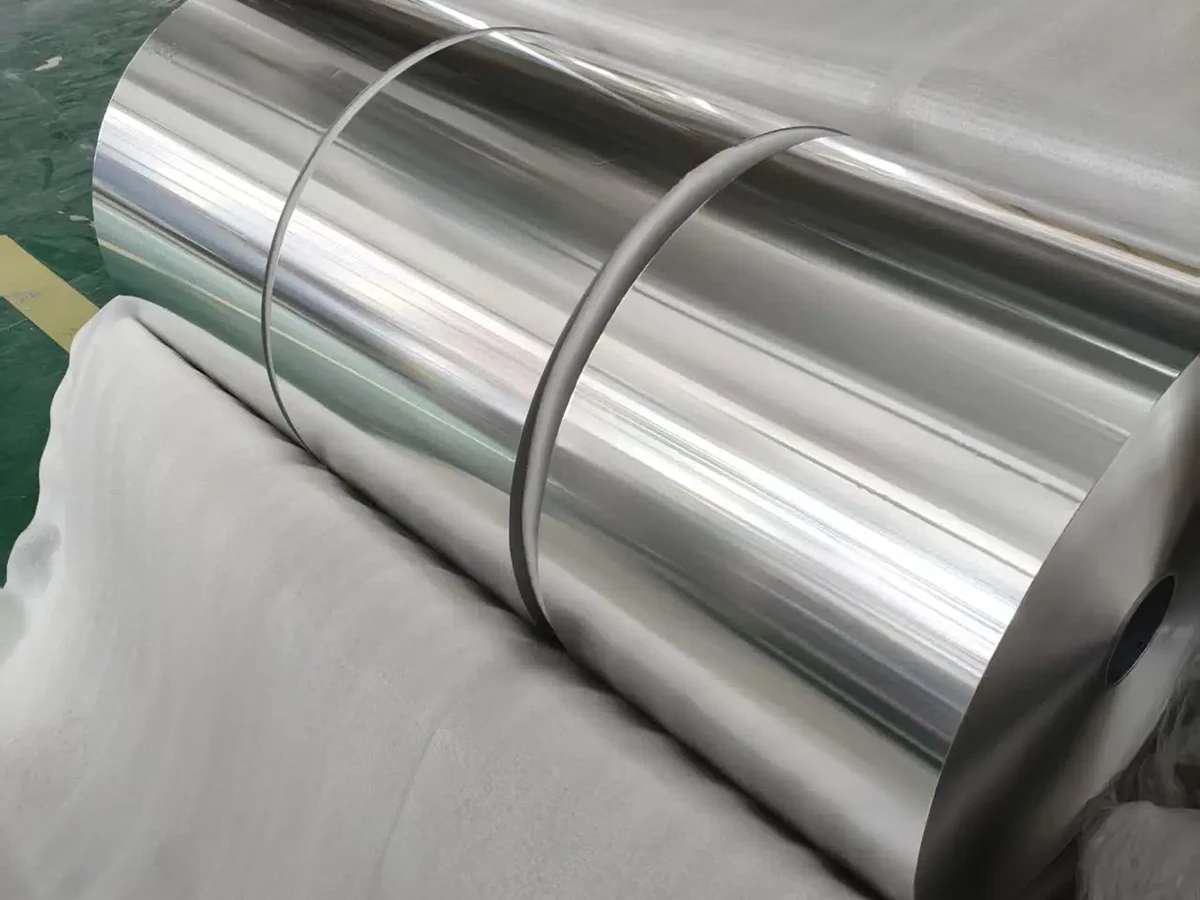
Ultra Thin Aluminum Foil Specifications
| Product | Ultra Thin Aluminum Foil |
| Nominal Thickness | 4.5 μm (0.0045 mm) |
| Additional Thickness | 5 μm (0.005 mm) |
| Alloy | 8011, 8079, 1235, 1070, 1100 |
| Temper | O |
| Width | Confirm according to project requirements |
| Thickness Tolerance | ±0.2 μm (guaranteed by full-line tension closed-loop control system) |
| Surface Treatment Options | Degreasing/mirror finish/single-sided roughening/hydrophilic coating/color printing coating/conductive coating, etc. |
| Coil Dimensions | φ76 mm / φ152 mm |
| Supply Format | Coil (standard) / Cut-to-length pieces / Die-cut pieces / Multi-layer composite substrates available |
Specification note: For 4.5 micron aluminum foil, nominal thickness alone is not enough to determine suitability. Share your required alloy, temper, thickness tolerance, width and end-use conditions so our team can review the specification with you.
What Is 4.5 Micron Ultra-Thin Aluminum Foil?
4.5 micron aluminum foil is foil rolled to a nominal thickness of 0.0045 mm. At this gauge, the aluminum alone weighs approximately 12.2 grams per square meter, making it a lightweight option for applications where material use and total thickness matter.
Thinner than typical household aluminum foil, 4.5 μm foil needs more careful handling during unwinding, slitting and lamination. Web tension and equipment settings must suit the material to help prevent wrinkles, tears and breaks during processing.
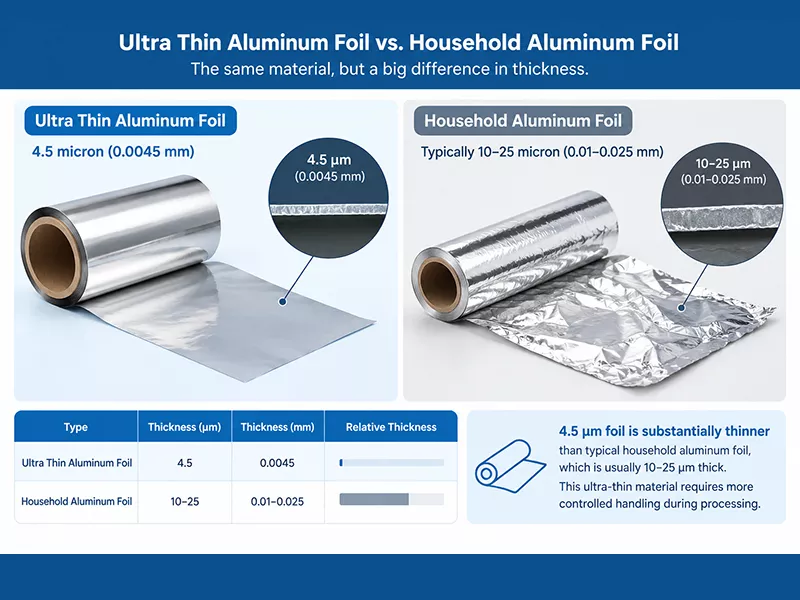
Thickness alone does not determine whether the foil is suitable for a particular application. Buyers should also check thickness tolerance, pinhole levels, surface cleanliness and mechanical properties against their production requirements. Where barrier performance is critical, assess the finished laminate rather than relying on the foil’s nominal gauge.
Applications of Ultra-Thin Aluminum Foil
Ultra-thin aluminum foil is an option for applications where metal-layer thickness, weight or flexibility is a design constraint. Choosing the right foil involves more than specifying a gauge: alloy, temper, surface condition and handling requirements all affect how the material performs during processing and in the finished product.
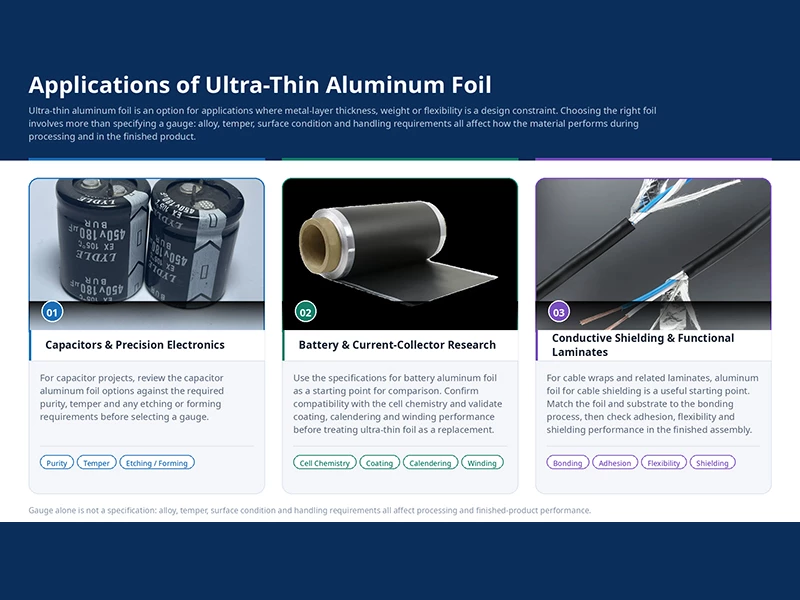
Capacitors and Precision Electronics
Some electronic components require a thin aluminum layer within a tightly controlled dimensional range. Thickness consistency, surface cleanliness and electrical properties are important selection factors, but capacitor suitability also depends on the electrode design and manufacturing process. A thinner foil is not necessarily a suitable substitute for a specified capacitor grade.
For capacitor projects, review the capacitor aluminum foil options against the required purity, temper and any etching or forming requirements before selecting a gauge.
Battery and Current-Collector Research
Reducing current-collector thickness can lower the amount of inactive material in a battery cell, which makes thinner foil relevant to some development projects. At 4.5 μm, however, handling becomes a key consideration. Tensile strength, coating adhesion, drying conditions and web tension need to be evaluated on the intended equipment.
Use the specifications for battery aluminum foil as a starting point for comparison. Confirm compatibility with the cell chemistry and validate coating, calendering and winding performance before treating ultra-thin foil as a replacement.
Conductive Shielding and Functional Laminates
In a shielding laminate, aluminum foil provides a conductive layer while a supporting film or other substrate helps with handling and mechanical strength. Performance depends on the complete structure—not foil thickness alone. Electrical continuity, seams, grounding and the frequency range to be shielded all matter.
For cable wraps and related laminates, aluminum foil for cable shielding is a useful starting point. Match the foil and substrate to the bonding process, then check adhesion, flexibility and shielding performance in the finished assembly.
How to Choose Ultra Thin Aluminum Foil
Thickness and Tolerance
Start with the foil thickness your process needs, then confirm the allowable variation. For 4.5 μm aluminum foil, the nominal gauge alone is not a complete specification.
Alloy and Temper
Choose the alloy and temper to suit how the foil will be used and processed. Foil intended for lamination, for example, may have different mechanical requirements from foil used in other applications.
Surface Quality and Pinholes
Surface requirements should reflect the next production step, whether that is coating, printing or lamination. Specify acceptable levels of rolling-oil residue, visible defects and pinholes where relevant. If barrier performance matters, agree on pinhole size and count limits, along with the inspection area and test method.
Slit Width and Roll Specifications
Check the roll dimensions against your converting equipment before ordering. Include slit width and tolerance, core inner diameter, and maximum roll diameter or weight. Edge condition, winding quality and permitted splices also deserve attention, as they can affect unwinding and production continuity.
Haomei Aluminum — Ultra Thin Aluminum Foil Supplier
Haomei Aluminum operates aluminum foil production lines backed by more than 20 years of manufacturing experience. Our product range includes ultra-thin foil in nominal thicknesses of 4.5 μm and 5 μm, serving industrial customers in over 100 countries.
- Own aluminum foil production lines: Work directly with the manufacturer to review material requirements and confirm production specifications before ordering.
- 4.5 μm and 5 μm foil supply: Our ultra-thin foil range supports projects where low material thickness is a key requirement.
- 20+ years of manufacturing experience: Established aluminum foil production experience supports technical discussions on gauge, alloy, temper and finished roll requirements.
- Production planning around your order: Provide your required quantity, roll dimensions and delivery date so our team can assess production feasibility and confirm the schedule.
- Supply experience across 100+ countries: Our international supply experience helps us coordinate export packing and order documentation for different destinations.
Request a Quote for 4.5 μm Ultra Thin Aluminum Foil
Share your required thickness, application and material specifications with Haomei Aluminum. Our team can review the information and clarify the parameters needed for a quotation.
Request a QuoteFAQ – Ultra Thin Aluminum Foil
What thickness is 4.5 micron aluminum foil?
4.5 micron aluminum foil has a nominal thickness of 4.5 μm, equivalent to 0.0045 mm. It is an ultra-thin aluminum material intended for applications with specific thickness and processing requirements.
Does Haomei supply 0.0045 mm aluminum foil?
Haomei's published ultra-thin aluminum foil information lists 0.0045 mm and 0.005 mm thickness options. Alloy, temper, order quantity, and delivery specifications should be confirmed for each project.
Is 4.5 μm foil suitable for battery current collectors?
Not automatically. Suitability depends on cell design, required mechanical performance, coating process, and production-line conditions. The intended design should be evaluated before selecting a 4.5 μm gauge.
Which alloy is best for ultra thin aluminum foil?
There is no single alloy that is best for every application. The appropriate grade depends on mechanical properties, surface requirements, electrical or processing requirements, and the intended end use. Buyers should confirm the alloy and temper with the supplier.
What information should I provide when requesting a quotation?
Provide the required thickness, alloy and temper if specified, width, coil dimensions, target quantity, application, and any applicable quality or inspection requirements. If certain parameters are not yet defined, describe the application so they can be reviewed.
How does ultra thin aluminum foil compare with household aluminum foil?
Typical household aluminum foil is often around 10–25 μm thick, depending on the product. At 4.5 μm, ultra thin aluminum foil is substantially thinner and requires more controlled handling during processing.