
Haomei Aluminum supplies high-quality battery aluminum foil for lithium-ion batteries, energy storage systems, power batteries, consumer electronics batteries, and related electrochemical applications. We provide stable aluminum foil substrate for cathode current collector production, battery cell processing, and battery component manufacturing.
- 1050 / 1060 / 1070 / 1100 / 1235 Alloy
- 9 μm–30 μm Thickness Range
- Low-Oil Surface Treatment
- Thickness Tolerance: ±2%
- Surface Tension: ≥32 dyne/cm
- H18 Tensile Strength: 180–200+ MPa
- Lithium-Ion Battery Cathode Foil
- Custom Slit Coils Available
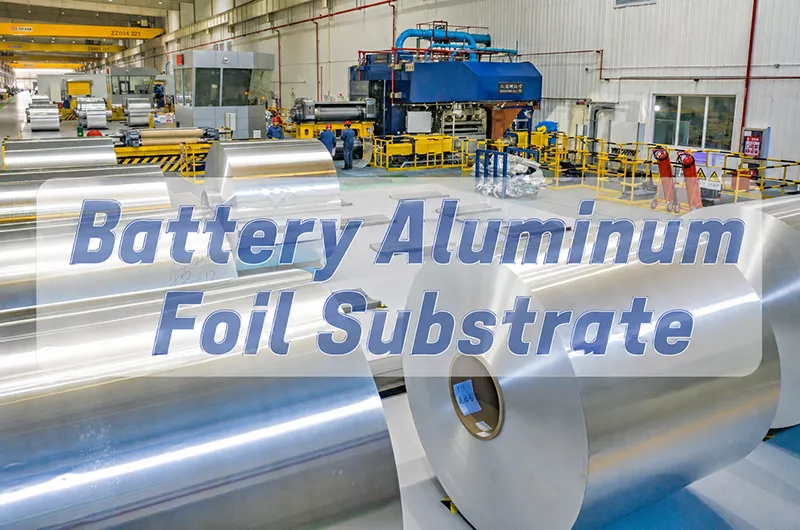
Haomei Aluminum supplies high-quality battery aluminum foil and aluminium foil for battery applications. As an aluminum foil substrate manufacturer, we provide stable foil coils designed for cathode current collector production, battery electrode coating, lithium-ion battery cell processing, pouch cells, power batteries, and energy storage systems.
Our battery foil is produced with controlled thickness, clean surface condition, consistent flatness, and reliable mechanical properties. It can be supplied in coils according to customer requirements for alloy, temper, thickness, width, inner diameter, and coil weight.
What Is Battery Aluminum Foil?
Battery aluminum foil is an aluminum foil material mainly used as the positive electrode current collector in lithium-ion batteries. Because aluminum has good electrical conductivity, low density, corrosion resistance, and processability, it is widely used in battery cathode current collectors. The foil must maintain a clean, uniform, and stable surface so that electrode slurry can be coated evenly during battery electrode manufacturing.
Depending on battery design and processing requirements, battery aluminum foil may be used for:
- Lithium-ion battery cathode current collectors
- EV and hybrid vehicle power batteries
- Energy storage system batteries
- Consumer electronics batteries
- Cylindrical, prismatic, and pouch cell batteries
- Lithium polymer battery electrodes
- Supercapacitor and electrochemical energy storage applications
- Battery tab and battery component processing, where applicable
Battery Aluminum Foil Specifications
Haomei Aluminum can provide customized aluminium foil for battery according to customer production requirements.
| Item | Typical Range / Option |
| Product Name | Battery Aluminum Foil / Battery Aluminium Foil |
| Common Alloys | 1050, 1060, 1070, 1100, 1235 and customized options |
| Temper | O, H14, H16, H18, or as required, H18 (Fully Hard Temper, Most Commonly Used) |
| Thickness | 0.009mm – 0.025mm (9μm – 25μm) |
| Common Thicknesses | 12 μm, 14 μm, 15 μm, 16 μm, 18 μm, 20 μm |
| Width | Customized according to slitting requirements |
| Coil Inner Diameter | 150 mm, 300 mm, 505 mm, or customized |
| Surface | Smooth, clean, low-oil, no visible defects |
| Form | Aluminum foil coil, slit coil, jumbo roll |
| Pinholes | Strictly Controlled According to National and International Standards, with Extremely Low or Nearly Zero Pinholes |
| Standard | Available according to customer technical agreement |
The actual alloy, thickness tolerance, width tolerance, tensile strength, elongation, surface wetting requirements, and coil parameters can be confirmed before production.
Role of Battery Aluminum Foil in Lithium-Ion, Sodium-Ion and Solid-State Batteries
Battery aluminum foil is a critical current collector material used in lithium-ion batteries, sodium-ion batteries, and next-generation solid-state batteries. As the positive electrode substrate, it provides reliable support for cathode materials while ensuring efficient electron transfer and stable battery performance throughout repeated charge and discharge cycles.
High-quality battery aluminum foil directly affects key battery characteristics, including energy density, charging efficiency, cycle life, and overall safety. Its main functions include:
- Cathode Material Support: The aluminum foil surface serves as a carrier for active cathode materials such as lithium iron phosphate (LFP), ternary materials (NCM/NCA), and lithium cobalt oxide (LCO), ensuring uniform coating and strong adhesion.
- Efficient Current Collection: With excellent electrical conductivity and stable surface performance, battery aluminum foil quickly collects and transfers electrons with low energy loss, improving battery charge and discharge efficiency.
- Thermal Management and Safety Enhancement: Aluminum foil helps distribute heat generated during battery operation, reducing local overheating risks and supporting safer battery performance under high-rate charging and discharging conditions.
The mechanical strength, and coating compatibility, plays an important role in determining battery capacity, power output, and long-term reliability.
Key Performance Characteristics of Battery Aluminum Foil
High-quality Battery Aluminum Foil requires precise control of chemical composition, electrical conductivity, surface quality, and mechanical properties to ensure stable performance during electrode coating, cell assembly, and long-term charge-discharge cycles.
As a critical current collector material for lithium-ion batteries, battery-grade aluminum foil is engineered to provide excellent conductivity, strong coating adhesion, and reliable processing performance for EV batteries, energy storage systems, and consumer electronics.
| Performance Factor | Technical Requirements | Benefits for Battery Manufacturing |
| High Aluminum Purity | ≥99.45% (Common grades: 1235, 1060, 1070) | Reduces impurities, improves electrical conductivity, and supports stable battery cycle performance. |
| Low Electrical Resistivity | ≤0.0282 Ω·mm²/m | Minimizes current loss and improves energy transfer efficiency inside lithium-ion cells. |
| Excellent Surface Wettability | Uniform surface condition with strong slurry adhesion | Ensures stable cathode coating, preventing coating peeling, powder shedding, and uneven electrode performance. |
| High Strength & Elongation | Optimized tensile strength and elongation balance | Provides excellent resistance to coating, calendering, winding, and battery expansion during operation. |
| Precise Thickness Control | Thickness tolerance: ±3% to ±5% | Maintains consistent electrode weight, coating accuracy, and battery capacity performance. |
| Clean Surface Quality | Free from oil stains, scratches, oxidation marks, and surface defects | Improves coating uniformity and reduces risks during battery production. |
Through strict quality control during rolling, cleaning, and surface inspection processes, battery aluminum foil delivers the consistency required for high-performance lithium-ion battery production.
Battery Aluminum Foil Grades & Alloy Options
Choosing the right alloy is essential for battery aluminum foil performance. The ideal alloy depends on factors such as foil thickness, electrical conductivity, tensile strength, elongation, surface quality, coating adhesion, and the requirements of the battery manufacturing process. Haomei Aluminum supplies multiple high-purity aluminum foil grades for lithium-ion battery current collector applications.
1050 Aluminum Foil for Battery Applications
1050 aluminum foil features high aluminum purity, excellent ductility, and reliable conductivity. It provides smooth processing performance during rolling, coating, and slitting, making it suitable for battery foil applications where good formability and stable production performance are required.
1060 Aluminum Foil for Lithium Battery Current Collectors
1060 aluminum foil is one of the commonly selected grades for battery cathode current collector substrates. With high purity, low electrical resistance, good corrosion resistance, and consistent mechanical properties, it offers a balanced solution for lithium-ion battery manufacturers requiring stable coating and assembly performance.
1070 Aluminum Foil with High Conductivity
1070 aluminum foil provides higher aluminum content and excellent electrical conductivity. It is suitable for battery designs that place greater emphasis on conductivity, lightweight performance, and high-purity aluminum substrate requirements. Its good flexibility also supports precision foil processing.
1100 Aluminum Foil for Battery-Related Processing
1100 aluminum foil combines good corrosion resistance, forming capability, and processing stability. Depending on battery structure and manufacturing conditions, it can be selected for applications where mechanical workability and surface reliability are important considerations.
1235 Aluminum Foil for Thin Gauge Battery Foil
1235 aluminum foil is widely used in thin aluminum foil production due to its excellent rolling performance and lightweight characteristics. It is an option for battery applications requiring thinner gauges, uniform thickness, and consistent surface quality during high-precision manufacturing.
Haomei Aluminum provides battery aluminum foil in various alloys, thicknesses, and customized specifications. Our technical team can help select the most suitable aluminum foil substrate according to your coating process, battery type, and performance requirements.
Battery Aluminum Foil Alloy Specifications
| Alloy Grade | Aluminum Purity | Typical Thickness | Recommended Applications |
| 1235 Aluminum Foil | ≥99.35% | 12–15 μm | Lithium-ion power batteries, sodium-ion batteries, and thin gauge battery foil applications |
| 1060 Aluminum Foil | ≥99.60% | 15–20 μm | Energy storage batteries, EV batteries, and general lithium battery current collectors |
| 1070 Aluminum Foil | ≥99.70% | 10–12 μm | High-performance digital batteries and applications requiring high conductivity and lightweight design |
In addition to standard alloy grades, Haomei Aluminum can provide customized battery aluminum foil solutions according to battery structure, coating requirements, thickness tolerance, and production process conditions.
Why Aluminum Foil Is the Preferred Cathode Current Collector for Lithium-Ion Batteries
Aluminum foil is widely used as the cathode current collector in lithium-ion batteries because it combines reliable conductivity, low weight, electrochemical stability, and efficient processability. It provides a dependable conductive substrate for cathode materials including LFP, NMC, NCA, and LCO, supporting battery applications such as electric vehicles, energy storage systems, and consumer electronics.
Reliable Electrical Conductivity
Battery-grade aluminum foil efficiently transfers electrons between the cathode active material and the battery terminals. Its conductivity helps reduce electrode resistance and supports stable power output throughout the battery’s service life.
Lightweight Design for Higher Energy Density
Aluminum has a much lower density than copper and many other conductive metals. Using aluminum foil reduces inactive electrode weight, helping improve gravimetric energy density for EV batteries, portable electronics, and high-capacity battery packs.
Stable at Cathode Operating Voltages
Aluminum remains electrochemically stable across the operating voltage range of most lithium-ion cathodes. Its naturally formed oxide layer also offers protection during storage, coating, calendaring, and cell operation.
Designed for Efficient Electrode Manufacturing
Aluminum foil can be manufactured in thin, uniform gauges and supplied as wide master rolls or precision-slit coils. Its flatness, mechanical strength, and surface consistency support continuous coating, drying, calendaring, slitting, and automated cell assembly.
Good Coating Adhesion and Surface Compatibility
With the appropriate surface treatment, aluminum foil provides a stable base for cathode slurry coating. Suitable surface finishes can improve adhesion, reduce delamination risk, and help maintain consistent electrode quality during large-scale production.
Recyclable and Cost-Effective
Aluminum is widely available, recyclable, and supported by an established global supply chain. Its recovery value and practical cost-performance balance make aluminum foil an important material for battery manufacturers focused on efficient and more circular production.
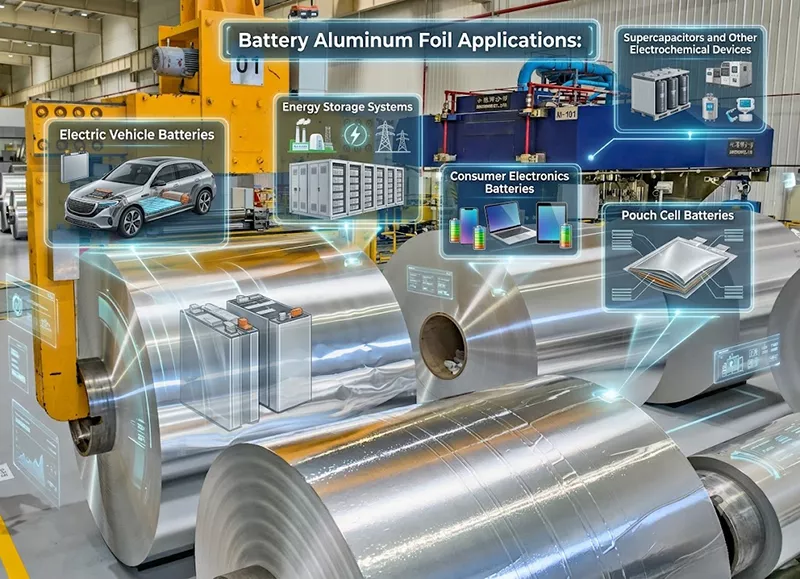
Applications of Battery Aluminum Foil
-
Electric Vehicle Batteries
EV battery manufacturers require consistent materials for high-volume production. Battery aluminum foil is used as a cathode current collector in lithium-ion batteries for electric cars, buses, trucks, two-wheelers, and other electric mobility products.
-
Energy Storage Systems
Energy storage batteries require stable electrode materials for long-cycle operation. Aluminum foil is used in battery cells for residential storage, commercial storage, grid-side energy storage, and renewable energy projects.
-
Consumer Electronics Batteries
Mobile phones, tablets, laptops, wearable devices, power banks, and wireless tools commonly use lithium-ion or lithium-polymer batteries. Thin aluminum foil supports lightweight battery electrode designs.
-
Pouch Cell Batteries
Pouch cells often require carefully controlled electrode materials due to their compact structure and high energy-density targets. Aluminum foil can be supplied in suitable widths and coil formats for pouch battery electrode processing.
-
Supercapacitors and Other Electrochemical Devices
In addition to lithium-ion batteries, aluminum foil may be used in supercapacitors, capacitor-related products, and other electrochemical energy storage components.
Haomei Aluminum Quality Control for Battery Foil
Reliable battery performance starts with consistent foil quality. At Haomei Aluminum, every coil of battery aluminum foil undergoes a comprehensive quality control process from raw material inspection to final packaging. Each production batch is monitored to ensure stable thickness, excellent surface quality, and reliable mechanical properties required for lithium-ion battery manufacturing.
- Raw Material & Alloy Verification – Confirm chemical composition and alloy consistency before production.
- Precision Thickness Control – Monitor foil thickness throughout rolling to ensure tight tolerances and uniform current collector performance.
- Width & Slitting Accuracy – Inspect finished width, edge quality, and burr control for smooth downstream coating and winding.
- Surface Cleanliness Inspection – Verify the foil surface is free from oil stains, contamination, scratches, and foreign particles.
- Flatness & Shape Monitoring – Check flatness, wave control, and coil shape to improve coating uniformity and processing efficiency.
- Visual Defect & Pinhole Detection – Identify pinholes, wrinkles, roll marks, cracks, dents, and other surface defects through continuous inspection.
- Mechanical Performance Testing – Test tensile strength, elongation, and other key properties to ensure stable processing during electrode manufacturing.
- Coil Winding Inspection – Ensure neat winding, consistent coil tension, and uniform edges to support automated production lines.
- Export Packaging Verification – Inspect moisture-proof packaging, labeling, and pallet protection to minimize transportation damage and corrosion risks.
Customized Battery Aluminum Foil Supply
Different battery factories use different coating lines, coating speeds, slurry systems, and electrode designs. For this reason, Haomei Aluminum offers customized supply options rather than a one-size-fits-all foil solution.
Available customization includes:
- Aluminum alloy selection
- Foil thickness
- Coil width
- Slit width
- Temper and mechanical properties
- Coil inner diameter
- Coil outer diameter and weight
- Surface condition requirements
- Packaging method
- Export pallet and container loading requirements
Looking for a Reliable Battery Aluminum Foil Supply Chain?
Our sales and technical team will recommend a suitable aluminum foil substrate and provide a quotation based on your requirements.
Request a QuoteWhether you need jumbo coils for further slitting or narrow coils for direct electrode coating, Haomei Aluminum can work with your purchasing and technical teams to prepare a suitable supply plan.
Packaging and Delivery of Battery Aluminum Foil
Every roll of battery aluminum foil is packaged to help maintain surface quality, coil shape, and edge integrity throughout storage and international transportation. Proper export packaging also minimizes the risk of moisture exposure, contamination, and handling damage before the material reaches the coating or battery manufacturing line.
Standard export packaging options include:
- Protective inner wrapping to keep the foil surface clean
- Moisture-barrier paper and PE film for humidity protection
- Heavy-duty outer wrapping for improved transport safety
- Steel or plastic edge protectors and coil support rings
- Fumigation-free wooden pallets or wooden cases upon request
- Product labels showing alloy, temper, dimensions, coil number, and batch information
Packaging methods can be customized according to shipment type, including full-container (FCL), less-than-container (LCL), air freight, or customer-specific logistics requirements. Additional protective measures are available for long-distance ocean shipping to help ensure the battery aluminum foil arrives in production-ready condition.
Why Choose Haomei Aluminum?
Haomei Aluminum supplies aluminum foil raw materials for industrial customers worldwide. We focus on providing practical foil solutions for battery manufacturers, converters, traders, and processing companies.
Manufacturing Experience
We work with aluminum foil products across different alloys, thicknesses, and industrial applications. This experience allows us to understand the production challenges involved in rolling, slitting, coating, and coil handling.
Customized Supply Capability
Battery foil is not simply standard household foil. We support customized requirements for thickness, width, temper, surface condition, and coil format.
Consistent Export Service
From technical communication and sample confirmation to production, packing, inspection, and shipping, our team supports customers throughout the order process.
Technical Communication Before Production
We encourage customers to confirm critical specifications before production, especially for battery electrode applications where thickness tolerance, surface properties, and winding quality are important.
FAQ – Battery Aluminum Foil
Is aluminum foil used in lithium-ion batteries?
Yes. Aluminum foil is widely used as the cathode current collector in lithium-ion batteries. The cathode active material is coated onto the aluminum foil, allowing electrical current to be collected and transferred within the battery cell.
What is the common thickness of battery aluminum foil?
Common battery aluminum foil thicknesses include 12 μm, 14 μm, 15 μm, 16 μm, 18 μm, and 20 μm. The correct thickness depends on battery type, cathode design, coating process, and energy-density requirements.
Which alloy is suitable for battery aluminum foil?
Common alloys include 1050, 1060, 1070, 1100, and 1235. Among them, 1060 and 1070 aluminum foil are frequently used for battery cathode current collector applications. Final alloy selection should be based on the customer's technical specifications.
Can Haomei Aluminum provide slit battery foil coils?
Yes. Haomei Aluminum can supply battery aluminum foil in both jumbo coils and slit coils. Coil width, inner diameter, outer diameter, and coil weight can all be customized according to the customer's equipment and production requirements.
Is battery aluminum foil the same as battery packaging foil?
No. Battery aluminum foil used as a cathode current collector and aluminum foil used for battery packaging have different functions. Current collector foil is used inside the battery electrode structure to conduct electricity, while packaging foil is used to seal and protect the battery cell, especially in pouch batteries.