
Haomei Aluminum supplies aluminum foil for cable shielding, wrapping and laminated cable constructions. Used as the conductive layer in shielding structures, the foil helps reduce electromagnetic interference around signal-carrying conductors..
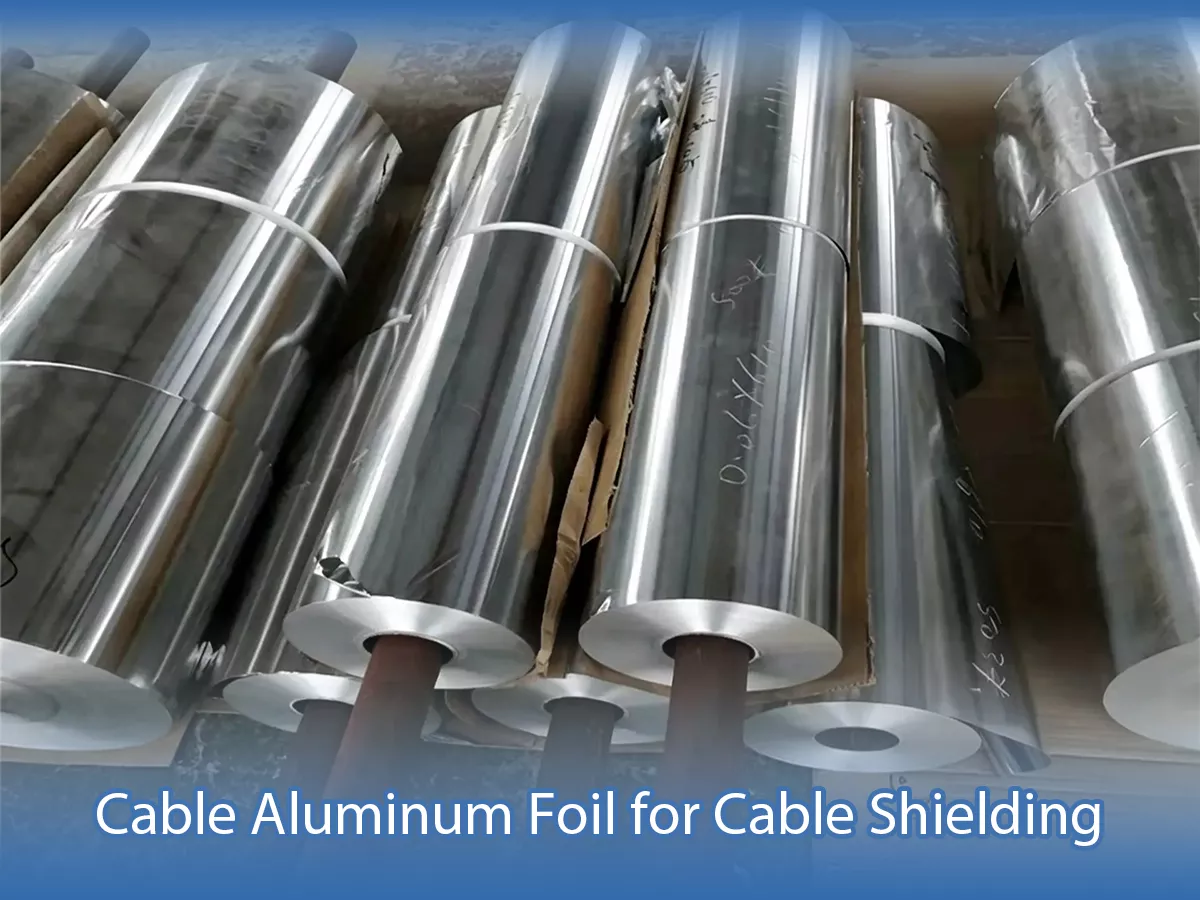
- Alloys
- 1235 / 8011 / 1145 / 1100 / Selected 1xxx & 8xxx Series
- Temper
- O / Other tempers according to application
- Supply Form
- Jumbo Roll / Slit Roll / Narrow Strip
- Customization
- Thickness / Width / Surface / Core / Roll Dimensions
Cable Aluminum Foil Specifications
Haomei supplies cable foil according to the required alloy, converting process, cable construction and roll specification.
| Specification | Details |
| Alloys | 1235, 8011, 1145, 1100 and selected 1xxx series |
| Temper | O and other tempers according to the application |
| Thickness | Custom thickness according to cable construction and converting process |
| Width | Jumbo roll, slit width or custom width |
| Surface | Mill finish, bright or application-specific surface |
| Supply Form | Jumbo roll, slit roll or narrow strip |
| Lamination | Plain aluminum foil or AL-PET / other laminated structures according to project requirements |
| Packaging | Export seaworthy roll packaging or customer-specified packing |
What Is Cable Aluminum Foil?
Cable aluminum foil is a thin aluminum foil layer used as part of a cable shielding or wrapping construction. In many cable designs, the foil is laminated to a plastic carrier such as PET and placed around the insulated conductors.
The aluminum layer provides a continuous conductive barrier that helps reduce electromagnetic and radio-frequency interference. Depending on the cable design, the shielding layer may be used together with a drain wire to provide a controlled path for grounding.
What the Aluminum Layer Does
- Provides a continuous conductive shielding layer
- Helps reduce electromagnetic and radio-frequency interference
- Can be laminated with PET or other carrier materials
- Can work with a drain wire in suitable grounding designs
- Can be supplied in jumbo or slit roll form for converting
Haomei Aluminum supplies the aluminum foil substrate for these constructions rather than finished cable assemblies. Foil thickness, width, alloy, temper and roll dimensions can be selected according to the customer's cable manufacturing process.
Cable Aluminum Foil for Foil and AL-PET Shielding
Haomei Aluminum supplies cable aluminum foil for cable shielding, wrapping and converting applications. The foil can be used as a standalone metal layer or combined with polyester film to form an AL-PET shielding structure, depending on the cable construction and converting process.
Plain Cable Aluminum Foil
Plain aluminum foil is supplied as the metal shielding layer for cable wrapping, shielding and further converting. Thickness, width, temper, surface condition and roll dimensions can be selected according to the cable design and production line.
AL-PET Cable Shielding
AL-PET combines an aluminum foil layer with polyester film to provide a laminated shielding material with improved handling strength during cable manufacturing. The foil and film construction should be specified according to the required cable structure and converting method.
Haomei Aluminum Supply Scope: Haomei supplies the aluminum foil used for cable shielding and related converting applications. For AL-PET laminated foil, lamination requirements, film specifications and finished shielding construction should be confirmed according to the project scope and available production capability.
Aluminum Alloys for Cable Foil
Alloy selection should be matched with ductility, thickness, converting behavior and the requirements of the final cable construction.
| Alloy | Typical Temper | Main Consideration | Typical Use |
| 1235 | O | High ductility and easy converting | Cable wrapping and shielding foil |
| 8011 | O | Good formability and general industrial availability | Cable foil and laminated constructions |
| 1145 | O | High-purity aluminum option | Electrical and cable-related foil |
| 1100 | O | Commercially pure aluminum with good ductility | Selected cable and electrical applications |
Chemical Composition of Cable Aluminum Foil 8011 and 1235
| Elements | Composition /% | |
| 1235 | 8011 | |
| Si | 0-0.65 | 0.50-0.90 |
| Fe | 0-0.65 | 0.60-1 |
| Cu | 0-0.05 | 0-0.10 |
| Mn | 0-0.05 | 0-0.20 |
| Mg | 0-0.05 | 0-0.05 |
| Cr | - | 0.05 |
| Zn | 0-0.1 | 0-0.10 |
| Ti | 0-0.06 | 0-0.08 |
| V | 0-0.05 | - |
| Al | Rem | Rem |
Cable Aluminum Foil Thickness, Width and Custom Roll Specifications
The required foil size depends on the cable construction, shielding design and the equipment used for laminating or wrapping. Haomei supplies cable aluminum foil in different thicknesses and widths, with the final roll dimensions matched to the customer's converting process.
Foil Thickness
Thickness is selected according to the cable structure, handling requirements and converting process. Haomei can supply the specified gauge instead of using a single standard thickness for every cable application.
Foil Width
Material can be supplied in jumbo rolls for downstream slitting or as finished slit widths. Narrow strip widths can also be prepared when they match the customer's cable production line.
Request a Cable Aluminum Foil Quote
A complete roll specification helps Haomei match the foil to the actual production requirements before slitting and packing.
- Aluminum alloy and temper
- Nominal foil thickness and tolerance
- Finished foil width or slit width
- Jumbo roll or slit roll supply
- Core inner diameter
- Maximum roll outside diameter
- Required roll weight or length
- Surface and appearance requirements
- Estimated order quantity
Made to Your Cable Production Requirements
Haomei can work from a cable foil specification, drawing, sample roll or existing converting requirement. Based on the information provided, we can check the available alloy, gauge, slit width and roll configuration before production.
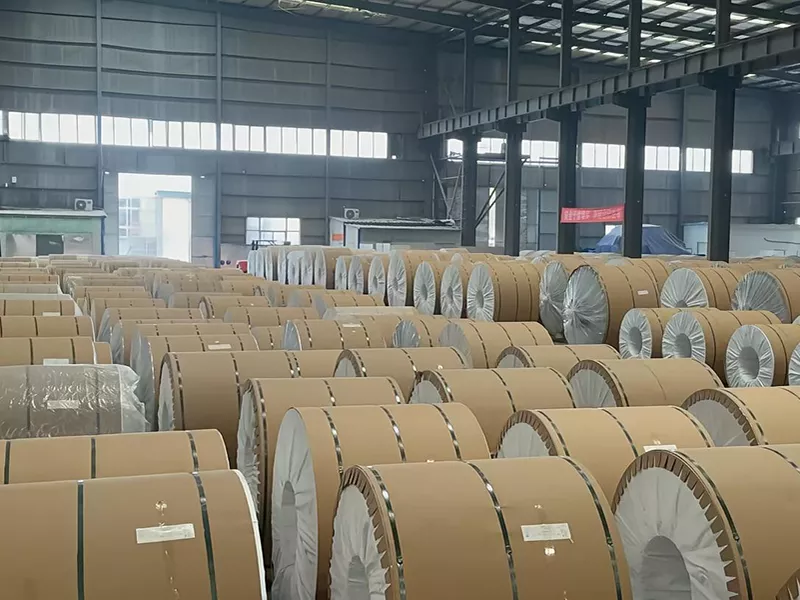
Contact Haomei Aluminum about your foil requirementsHaomei Cable Aluminum Foil Factory Supply and Slitting


How Aluminum Foil Shields Cables from EMI
Aluminum foil wraps around insulated conductors or cable pairs to help reduce electromagnetic interference (EMI). Its shielding performance depends on more than foil thickness: wrap overlap, laminate construction and shield termination all matter.
Overlapping Foil Limits Gaps
Applied with sufficient overlap, aluminum foil can provide full coverage around the conductors. Unlike a braided shield used on its own, foil has no openings between strands. Maintaining that coverage during bending and installation helps preserve shielding performance.
Conductive Metal Reduces Interference
The aluminum layer helps limit unwanted electrical noise coupling into or out of the cable. Foil shielding is commonly used to control high-frequency interference, but thin aluminum foil alone offers limited protection against low-frequency magnetic fields.
A Drain Wire Connects the Shield
In many foil-shielded cables, a drain wire contacts the conductive aluminum surface and provides a convenient connection for shield termination. Grounding should follow the cable and equipment design; at high frequencies, a long drain-wire connection can reduce shielding effectiveness.
Cable Aluminum Foil Applications
Aluminum foil can be incorporated into different cable constructions where a conductive shielding or wrapping layer is required.
Communication Cables
For cable constructions used in communication and data transmission where shielding against electrical interference is required.
Coaxial and Data Cables
Aluminum foil can form part of a shield structure around signal-carrying conductors.
Power and Control Cables
Used in selected cable constructions where an aluminum shielding or wrapping layer is required.
Industrial Cable Assemblies
Available as foil for cable wrapping, laminating, slitting and further converting.
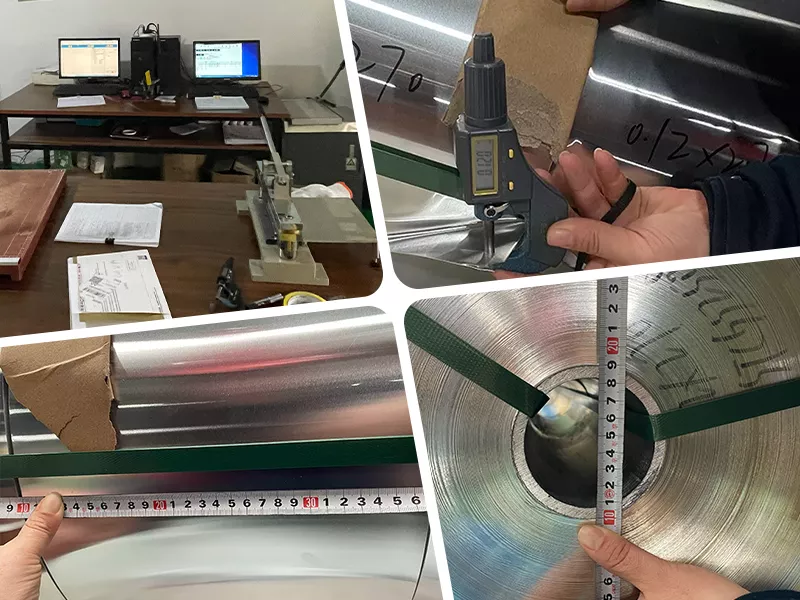
Haomei Quality Inspection for Cable Aluminum Foil
Cable foil quality is not determined by alloy alone. Thickness consistency, width, edge condition, roll winding and surface quality can all affect the downstream converting process.
-
Thickness Control : Thickness is checked to maintain consistent foil gauge across the supplied roll.
-
Width and Roll Inspection : Slit width, roll dimensions, winding condition and edge quality are inspected before shipment.
-
Surface Quality : The foil surface is inspected for defects that could interfere with lamination, converting or cable wrapping.
Choosing the Right Cable Aluminum Foil
A cable foil order should start with the finished cable structure rather than the foil alloy alone. The same foil grade may be processed differently depending on thickness, width, lamination, overlap and grounding requirements.
For general-purpose 8011 foil specifications, see our 8011 aluminum foil page for available alloy, temper, surface and roll supply options.
When the cable construction requires another grade, Haomei can review the required specification and confirm the available material and converting format.
Selection Factors
- Cable construction
- Required shielding structure
- Alloy and temper
- Foil thickness
- Finished width
- Lamination requirement
- Drain-wire arrangement
- Slitting and winding requirements
- Order quantity
FAQ – Cable Aluminum Foil
What is cable aluminum foil used for?
Cable aluminum foil is used as a conductive shielding or wrapping layer in cable constructions. It can help reduce electromagnetic and radio-frequency interference and is often used in communication, data, coaxial, control and selected power cable structures.
Which aluminum alloy is commonly used for cable foil?
Common cable foil options include 1235, 8011, 1145 and 1100, depending on the cable construction and converting requirements. Haomei can review the required alloy together with thickness, width, temper and roll format.
Can Haomei supply AL-PET cable foil?
Haomei supplies the aluminum foil substrate used in cable shielding constructions. Whether a finished AL-PET laminate can be supplied should be confirmed according to the specific project, lamination requirement and available production scope.
What thickness is available for cable aluminum foil?
Cable foil thickness should be selected according to the cable design, shielding construction and converting process. Haomei can discuss custom thickness requirements rather than limiting supply to one universal thickness.
Can cable foil be supplied in narrow slit rolls?
Slit-roll supply can be considered where the customer's cable production line requires narrow widths. Slit width, core dimensions, roll OD, winding requirements and quantity should be confirmed before production.
Does thicker foil always provide better shielding?
Not necessarily. Thickness can affect electrical resistance and handling strength, but finished-cable shielding also depends on frequency, coverage, continuity and termination. Increasing gauge alone will not correct a poor seam or connector design.