
Aluminum foil for cigarette packaging is used in the inner liner between the cigarettes and the outer pack. Usually laminated to paper, the foil helps limit moisture exchange and aroma loss, while the paper provides support for folding and handling.
Haomei supplies soft aluminum foil in common cigarette packaging gauges, including 6–7 micron material, with alloy options such as 1145, 1235 and 8011. Depending on the converting process, the foil can be supplied for lamination with paper or polymer-based backing materials.
- Application
- Cigarette & tobacco packaging
- Foil Thickness
- 0.006–0.007 mm
- Alloy Options
- 1145 / 1235 / 8011
- Temper
- Soft / O
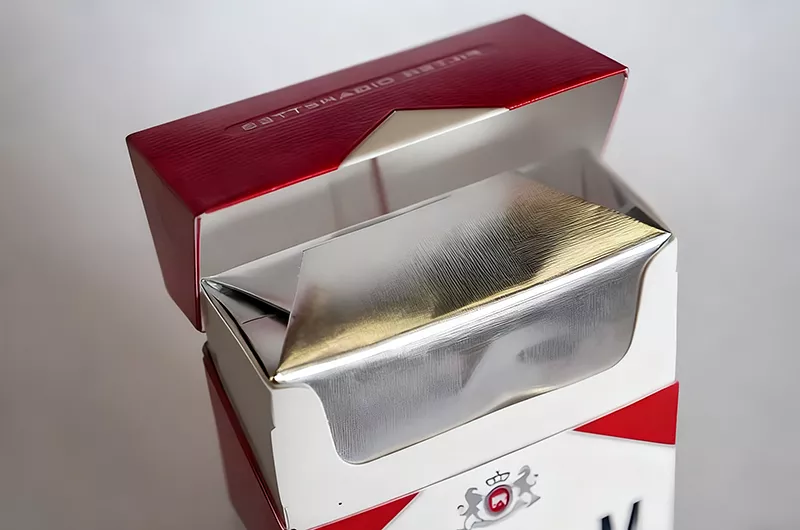
What Is Aluminum Foil for Cigarette Packaging?
Aluminum foil for cigarette packaging is a thin aluminum material used as an inner liner or as part of a laminated cigarette packaging structure. Its main purpose is to create a barrier between the tobacco and the external environment while providing the handling and forming characteristics required during packaging.
The foil layer is typically combined with a lightweight backing material such as paper or a polymer layer. This construction allows packaging converters to balance barrier performance with flexibility, foldability and converting efficiency.
For cigarette packaging, the aluminum layer is intentionally kept very thin. A typical range is around 0.006–0.007 mm (6–7 microns), although the final specification depends on the packaging structure and converting requirements.
Aluminum Foil Specifications for Cigarette Packaging
| Property | Typical Range / Option |
| Aluminum Thickness | 0.006–0.007 mm |
| Thickness Equivalent | 6–7 micron |
| Alloy | 1145 / 1235 / 8011 |
| Temper | Soft / O |
| Product Form | Foil roll / jumbo roll |
| Structure | Aluminum foil or laminated material |
| Backing Material | Paper or polymer layer, depending on final structure |
| Surface | Suitable for the intended adhesive, printing or coating process |
| Application | Cigarette inner liner / tobacco packaging |
| Inspection requirements | Agreed criteria for thickness, pinholes, winding and surface defects |
The thickness above refers to the aluminum layer, not the total laminate. For alloy-specific information, see our 1235 aluminum foil and 8011 aluminum foil pages.
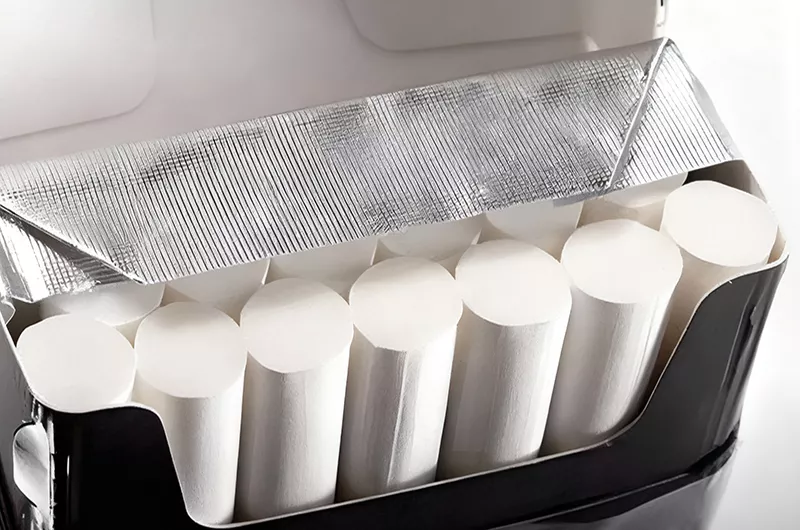
Key Functions of Cigarette Packaging Foil
Aroma and Flavor Protection
Tobacco products require packaging that helps limit the exchange of moisture and volatile compounds with the surrounding environment. An aluminum foil layer provides an effective barrier within the packaging structure, helping the packaged tobacco retain its intended characteristics during storage and distribution.
Moisture Barrier
Aluminum foil is used as a barrier layer to reduce the passage of moisture through the inner packaging structure. This is particularly important where the finished pack may be exposed to changing humidity during transportation, warehousing or retail distribution.
Light Barrier
The foil layer also provides protection from light. For packaging structures where light exposure needs to be minimized, aluminum foil can serve as the reflective barrier layer.
Folding and Packaging Performance
The foil is not used alone in many cigarette packaging structures. When laminated to paper or another backing material, the composite can provide the combination of flexibility, folding behavior and dimensional stability needed for high-speed packaging operations.
Aluminum Foil for Laminated Cigarette Packaging
The aluminum layer is often only one part of the final cigarette-packaging structure.
- Backing Paper
- Adhesive / Lamination Layer
- Aluminum Foil
- Tobacco / Inner Pack

Surface Treatment and Coating of Aluminum Foil for Cigarette Packaging
- Antibacterial and anti-mold coating The upper surface is coated with antibacterial agents (such as nano-silver ions), and 2–3% of anti-mold additives are incorporated into the adhesive to inhibit the growth of microorganisms such as Aspergillus niger.
- Moisture-resistant coating The bottom surface is coated with water-based polyurethane hot-melt adhesive to achieve moisture resistance and effectively extend the product’s shelf life.
Which Aluminum Alloy Is Used for Cigarette Packaging Foil?
1145, 1235 and 8011 are alloy options used in thin packaging foil. The appropriate choice depends on the required gauge, mechanical properties, surface condition and converting process—not simply the alloy designation.
1145 Aluminum Foil
1145 is commonly considered when high foil workability and a soft material condition are required.
It can be evaluated for thin packaging structures where flexibility and forming performance are important.
1235 Aluminum Foil
1235 aluminum foil is widely used in thin foil applications where good ductility and consistent converting performance are important.
It may be selected when a soft, highly workable foil structure is required.
8011 Aluminum Foil
8011 is another established foil alloy for packaging applications, particularly where a balance of strength and formability is needed.
The final selection depends on the customer's packaging structure and converting process.
Chemical composition of aluminum foil for cigarette packaging
Common alloys include 1235, 8011, and 8079, selected for their high purity (aluminum content >99.5%) and controlled trace elements (e.g., Fe ≤0.15%, heavy metals <10 ppm) to meet food-grade safety standards. Magnesium (≤0.25%) and other alloying elements enhance printing and forming flexibility.
| Elements | Composition /% | ||
| 8011 | 1235 | 1145 | |
| Si | 0.50-0.90 | 0-0.65 | Si+Fe 0.55 |
| Fe | 0.60-1 | 0-0.65 | - |
| Cu | 0-0.10 | 0-0.05 | 0.05 |
| Mn | 0-0.20 | 0-0.05 | 0.05 |
| Mg | 0-0.05 | 0-0.05 | 0.05 |
| Cr | 0.05 | - | - |
| Zn | 0-0.10 | 0-0.1 | 0.05 |
| Ti | 0-0.08 | 0-0.06 | 0.03 |
| V | - | 0-0.05 | 0.05 |
| Al | Rem | Rem | Rem |
Mechanical properties of aluminum foil for cigarette packaging
| Alloy | Temper | Thickness /mm | Tensile strength /MPa | elongation after break /%, (not less than) | |
| A50mm | A100mm | ||||
| 1145 1235 | O | 0.0060 - 0.0090 | 45-95 | 0.5 | |
| 8011 | 50-105 | 1.0 | |||
Number of pinholes in aluminum foil for cigarette packaging
| Thickness/mm | Total number of pinholes/m2, not more than | Number of pinholes with a diameter greater than 0.2mm/m2, not more than | Number of pinholes with a diameter greater than 0.3mm/m2 |
| 0.0060 | 1500 | 150 | O |
| 0.0060-0.0065 | 1000 | 100 | |
| 0.0065-0.0070 | 500 | 50 | |
| 0.0070-0.0090 | 200 | 20 |
Applications of Cigarette Packaging Foil
Haomei aluminum foil can be supplied for packaging structures used in cigarette and tobacco-related applications.
Cigarette Inner Liners
Thin aluminum foil can be used as part of the inner liner structure to provide barrier protection around the tobacco product.
Cigarette Packs
Aluminum foil may form part of the inner packaging structure used within finished cigarette packs.
Tobacco Packaging
Thin foil can be incorporated into packaging structures where moisture, light and aroma barrier performance are required.
Moisture-Sensitive Tobacco Packaging
Foil barrier layers can help limit moisture transmission within packaging structures used in changing storage and distribution environments.
Laminated Cigarette Packaging
Aluminum foil can be laminated with paper or polymer materials to create a composite packaging structure.
Other Thin-Gauge Tobacco Packaging
The material can also be considered for other tobacco packaging structures where thin foil and barrier performance are required.
Why Choose 8011 Aluminum Foil for Cigarette Packaging?
Mechanical performance advantages
The 8011 alloy offers high strength, good ductility, and excellent formability. Its superior elongation allows it to withstand complex processing operations on high-speed packaging lines without breaking.
Packaging performance requirements
8011 aluminum foil features excellent surface smoothness and flatness, making it easy to heat-laminate or coat with other materials. It effectively prevents moisture absorption in tobacco, maintaining cigarette flavor and quality.
Dead-fold characteristics
8011 aluminum foil has a unique no-rebound folding property, allowing it to maintain its folded shape without springing back. This ensures that the packaging remains stable after folding, preserving the aesthetic and structural integrity.
Corrosion resistance
Through the addition of magnesium elements and appropriate annealing treatment, 8011-O foil has good corrosion resistance, maintaining long-term integrity without forming pits or cracks that could harbor bacterial growth.
Cigarette Packaging Aluminum Foil Manufacturing Process
- Rolling and Thinning: The process starts with aluminum ingots, which are rolled under controlled conditions to achieve the required thickness and uniformity.
- Surface Treatment and Coating: After rolling, aluminum foil may undergo additional treatments, such as light polymer coatings or varnishes. These coatings enhance its sealing properties and protect it from environmental factors during storage and transportation.
- Lamination: In some packaging solutions, aluminum foil is laminated with other materials (such as paper or specialized polymers). This creates a multilayer structure that combines the barrier properties of aluminum with the printability and structural advantages of other materials.
Cigarette Packaging Foil Manufacturer
Haomei Aluminum supplies thin aluminum foil for packaging converters and manufacturers requiring consistent material specifications for downstream processing.
Depending on project requirements, we can discuss:
- Alloy selection
- Foil thickness
- Temper
- Coil width
- Jumbo roll dimensions
- Surface requirements
- Packaging method
- Export packing
- Inspection documentation
- Customized production requirements
Why Choose Haomei Aluminum?
Direct from the Manufacturer
Work directly with Haomei's production team to confirm alloy, temper, thickness, width and roll requirements before production.
Specifications for Your Application
We can adjust foil dimensions, roll weight, winding configuration and packing details to suit different converting and packaging processes.
Consistent Foil Quality
During production, we pay close attention to thickness tolerance, surface finish, edge condition, winding quality and pinhole control.
Ready for Export
Aluminum foil coils are packed with transportation and handling in mind, with loading and packaging arrangements available for different export requirements.
FAQ – Aluminum Foil for Cigarette Packaging
What thickness is used for cigarette packaging aluminum foil?
A commonly used range is around 0.006–0.007 mm (6–7 microns) for thin cigarette packaging foil. The final gauge should be selected according to the packaging structure and converting requirements.
Which aluminum alloy is suitable for cigarette packaging foil?
Common alloy options include 1145, 1235 and 8011. The most suitable alloy depends on the required softness, formability, strength and downstream converting conditions.
Can Haomei supply customized cigarette packaging foil?
Yes. Haomei can discuss customized requirements including alloy, thickness, width, coil dimensions, packaging and other production specifications.
What information should I provide when requesting a quotation?
For a more accurate quotation, provide the required alloy, thickness, width, roll size, quantity, application and preferred packaging method.
Is cigarette packaging foil the same as household aluminum foil?
No. Cigarette inner-liner foil is generally much thinner and is commonly supported by paper or another layer. Household foil is normally thicker and designed to be handled as a standalone sheet.
Is thicker foil always better?
No. A thicker gauge may improve handling strength, but it also increases material usage. The right choice is the gauge that meets the agreed barrier, converting and inspection requirements within the complete packaging structure.
Can the liner be embossed or printed?
Many cigarette liners are embossed or printed. Suitability depends on the foil surface, backing material, coating or ink system, and processing conditions. Approval should be based on the intended laminate and a converting trial.