
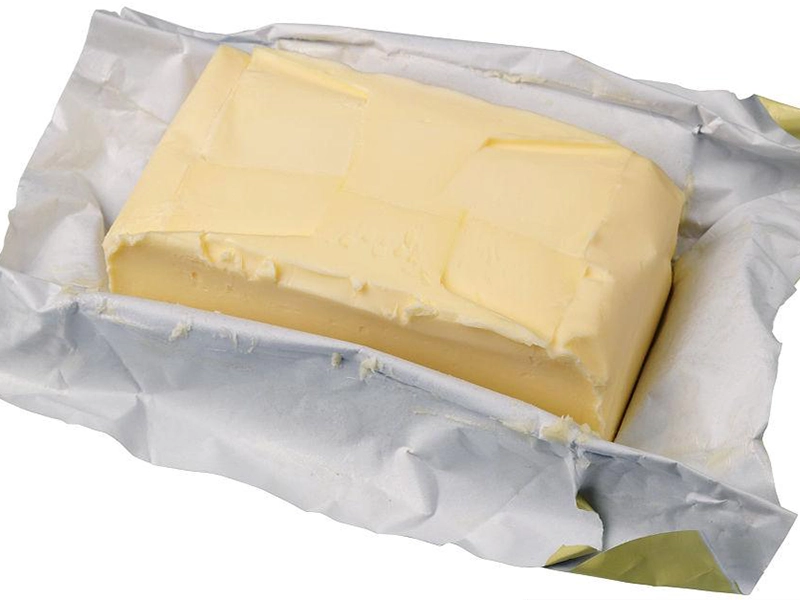
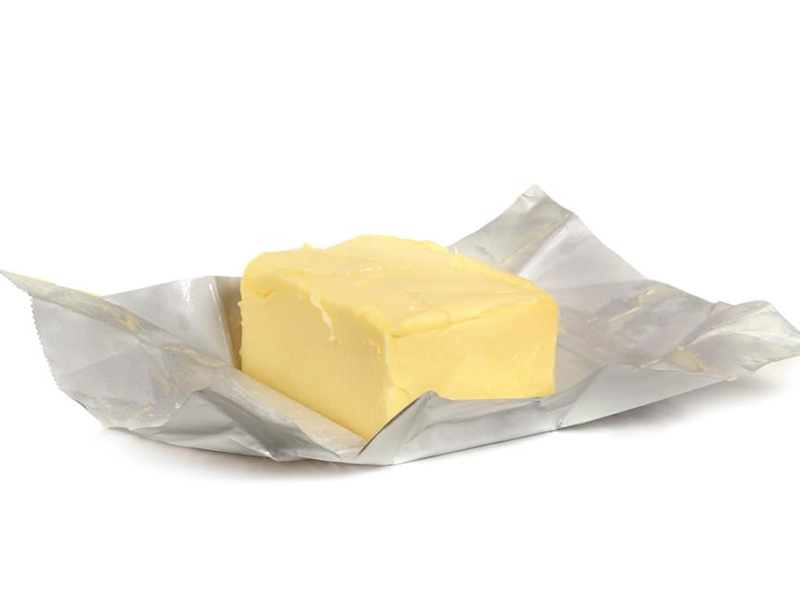
Haomei Aluminum supplies aluminum foil for butter packaging in thin gauges for butter, margarine and other dairy-fat wrapping applications. The foil can be used as a standalone wrapping material or combined with paper, PE and other compatible layers to form a laminated butter wrapper.
Our aluminum foil can be supplied in different thicknesses, widths, tempers, surface finishes and roll sizes to fit the wrapping process and final package design.
Request a Butter Foil Quote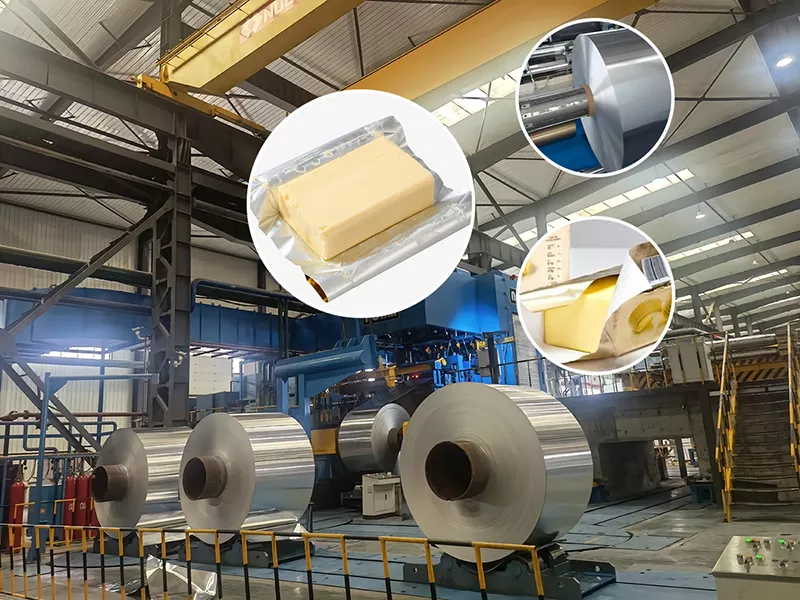
What Is Butter Packaging Aluminum Foil?
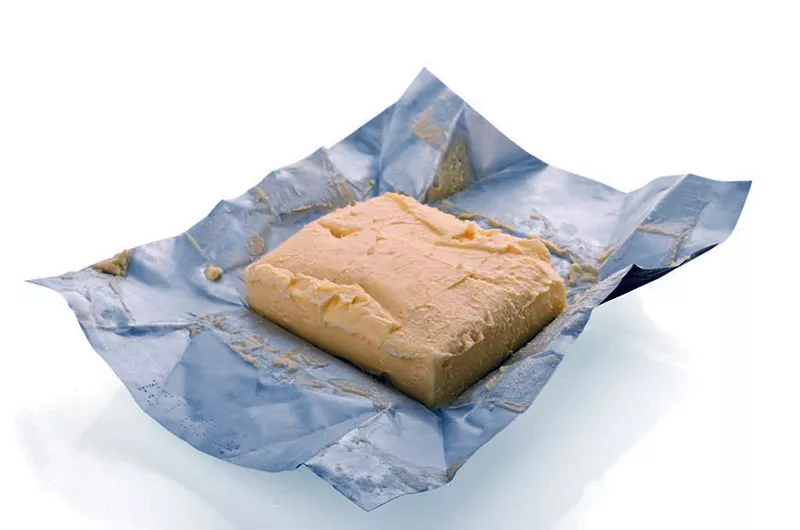
Butter packaging aluminum foil is a thin aluminum foil material used to protect butter and margarine from light, moisture, oxygen and external odors.
Aluminum foil is usually laminated with paper and/or plastic layers, combining the protective properties of aluminum, the printability of paper, and the durability of plastic. This combination extends the shelf life, maintains freshness, and gives the product a premium appearance. The inner layer is typically made of food-safe materials, such as polyethylene (PE) or paper, laminated onto the aluminum foil to enhance durability and printability.
Haomei Aluminum supplies the aluminum foil used in these structures in roll form and customized dimensions.
Butter Packaging Aluminum Foil Specifications
| Item | Available Options |
| Aluminum thickness | Approximately 6–20 μm, depending on specification |
| Common foil-only gauges | 12 / 14 / 16 / 20 μm |
| Alloy | 8011, 1235 and other suitable grades according to requirement |
| Temper | Usually soft / O, subject to final specification |
| Supply form | Jumbo rolls, slit rolls or customized coils |
| Width | Customized according to wrapping and converting equipment |
| Surface | Mill finish or specified surface condition |
| Embossing | Available according to the final wrapper design |
| Lamination | Compatible with paper, PE and other specified layers |
| Application | Butter, margarine and related dairy-fat packaging |
Butter Packaging Aluminum Foil Structures
Butter wrappers are typically made from thin aluminum foil laminates rather than thick, stand-alone foil. Depending on the packaging process, the foil may be combined with paper, PE, wax or other compatible layers to provide the required barrier, folding, grease resistance and sealing performance.
Aluminum Foil Thickness
Lightweight packaging foil can be produced in thicknesses of approximately 6–20 μm (0.006–0.020 mm). The final gauge depends on the wrapper design, converting process and required barrier performance.
Paper and Polymer Layers
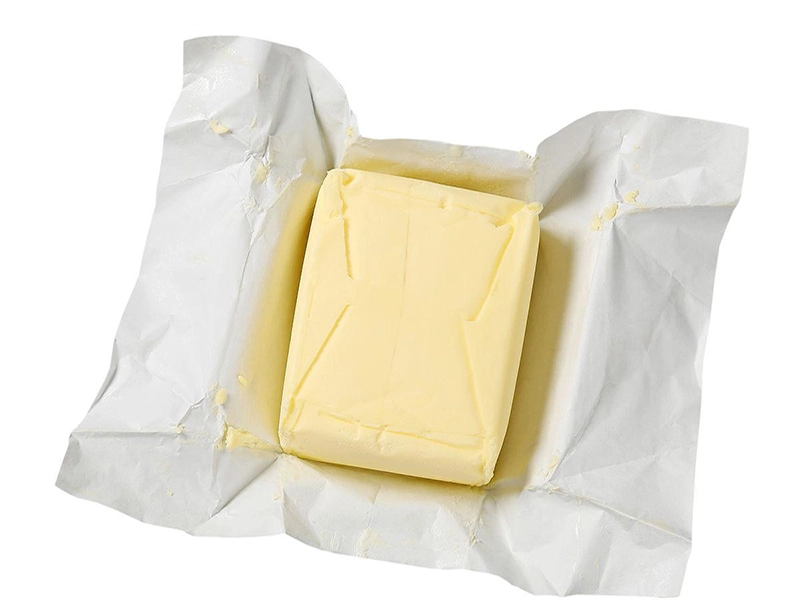
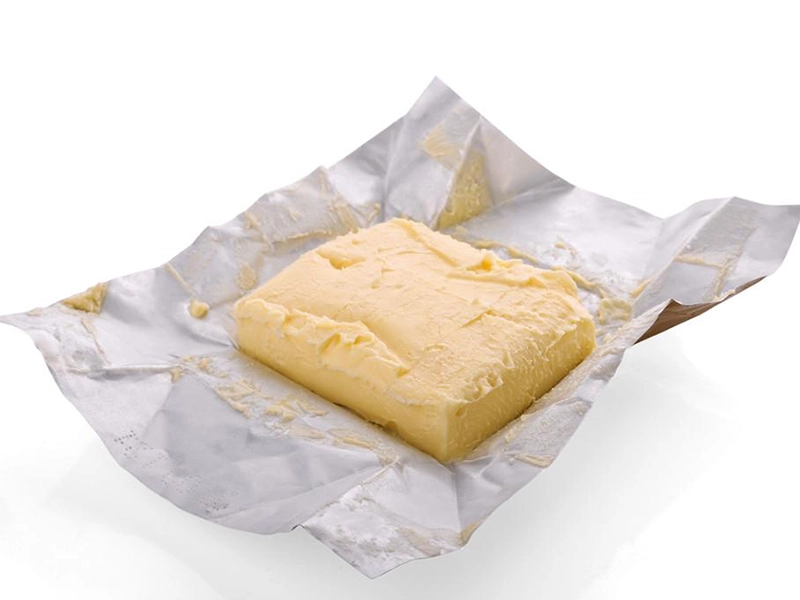
Aluminum foil may be laminated with greaseproof paper, parchment, PE, wax or other compatible layers. Common constructions include Alu/PE/Paper and Alu/Wax/Paper, with the layer sequence selected according to the converter's packaging specification.
Common Butter Wrapper Layer Structures
The aluminum layer provides a high barrier against light, moisture and external contamination, while paper adds stiffness and printability. A PE layer can provide additional protection and support sealing where required.
This multilayer construction places polymer layers around the paper and foil to provide additional protection, bonding or sealing functionality. The exact arrangement depends on the converting and filling process.
Wax-coated paper constructions can be used in selected butter wrapper applications where grease resistance, folding characteristics and the converter's specified material structure need to be balanced.
Depending on the packaging design, other combinations may incorporate greaseproof paper, parchment, adhesive layers or polymer coatings. The appropriate structure should be determined from the finished wrapper specification rather than aluminum foil thickness alone.
For aluminum foil material options commonly used in packaging applications, see our 8011 Aluminum Foil page for alloy, temper, thickness and supply information.
Why Is Aluminum Foil Used for Butter Packaging?
Butter is sensitive to light, oxygen, moisture and surrounding odors. A suitable wrapper therefore needs to provide a strong barrier while remaining easy to fold around the product.
Light Barrier
Aluminum foil provides an effective barrier against light, helping reduce exposure of the butter to ultraviolet and visible light.
Oxygen and Moisture Barrier
The foil layer acts as a barrier against oxygen and moisture transmission. This is important for packaging applications where protection of product quality and flavor is required.
Moisture & Aroma Lock
The foil barrier helps limit moisture transfer and reduces exposure to surrounding odors during storage. This is useful for maintaining the intended taste and packaging environment of butter and related dairy-fat products.
Odor Protection
Butter can absorb surrounding odors during refrigerated storage. A well-designed foil-based wrapper helps reduce the transfer of external odors into the packaged product.
Dead-Fold Performance
Soft aluminum foil has excellent dead-fold characteristics. Once folded, it tends to remain in position instead of springing back, making it suitable for wrapping butter blocks, sticks and other irregular or folded package formats.
8011 and 1235 Aluminum Foil for Butter Wrapping
8011 and 1235 aluminum foil are both used in butter wrapping, with the final selection depending on foil thickness, temper, forming requirements and the structure of the finished wrapper.
8011 aluminum foil is a common choice for food packaging because it offers a practical combination of flexibility, barrier protection and processing performance. It can be supplied in soft temper and converted into laminated or coated butter packaging structures as required.
1235 aluminum foil is also used for flexible packaging where high aluminum content and good forming characteristics are required. The suitable grade depends on the converting process and the specifications of the finished butter wrap rather than alloy designation alone.
Haomei supplies packaging foil in customized thicknesses and widths, with roll diameter, core size and coil weight matched to the customer's converting equipment. We can check the full specification before production, including alloy, temper, surface condition and packaging requirements.
Our 8011 aluminum foil is available in different thicknesses and roll specifications for food and flexible packaging applications.
Thickness Selection for Butter Wrapping Foil
The right foil thickness depends on how the butter wrapper is built and how it runs through the packaging process. Aluminum foil may be used on its own, but many butter wrappers combine it with paper or polymer layers.
For foil-only wrapping, thinner gauges such as 12 μm, 14 μm, 16 μm or 20 μm may be considered, depending on the required strength, folding behavior and handling conditions. When the foil is laminated with paper or another substrate, the aluminum layer can often be thinner because the finished structure provides additional support.
Haomei Aluminum Butter Packaging Foil Roll Supply
Haomei Aluminum supplies butter packaging foil in jumbo and slit roll form for wrapping, laminating and downstream converting. Roll specifications can be arranged around the requirements of the converting line, including foil thickness, alloy, temper, width, core size and finished roll diameter.
Jumbo Rolls or Slit Rolls
Choose jumbo rolls for in-house slitting and converting, or slit rolls prepared to the required finished width for butter wrapping applications.
Customized Roll Width
Roll width can be specified to suit the web width, slitting layout and packaging equipment used in production.
Core Inside Diameter
Core inside diameter and core dimensions can be matched with the unwinding, slitting or wrapping equipment to ensure proper roll handling.
Finished Roll Diameter
The outer diameter of each butter packaging foil roll can be arranged according to machine clearance, roll handling and production requirements.
Roll Weight
Individual roll weight can be discussed according to the selected foil thickness, width, outer diameter and the handling requirements of the converting line.
Foil Specification
Aluminum alloy, temper, foil thickness and surface condition can be specified according to the intended butter packaging structure and converting process.
Aluminum Foil for Printed and Embossed Butter Wrappers
Butter wrappers can be printed, embossed or combined with paper and other laminate layers depending on the required appearance and converting process. Haomei Aluminum supplies aluminum foil in suitable roll formats for these applications.
Embossed aluminum foil is available for butter wrapping when a textured surface or specific decorative pattern is required. Embossing can be produced according to the required pattern, foil specification and downstream packaging process.
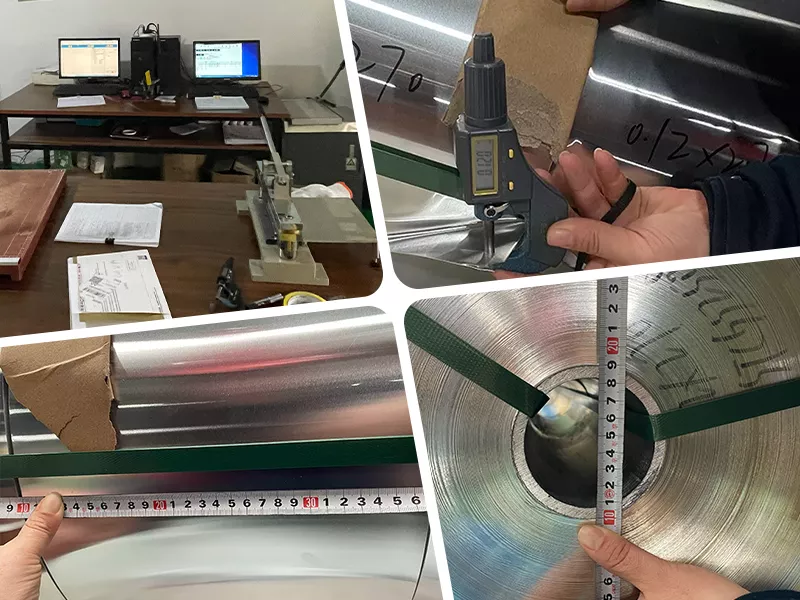
Haomei Aluminum Quality Control for Butter Packaging Foil
-
Alloy Verification: Haomei Aluminum verifies the aluminum alloy against the purchase specification and the required material grade.
-
Foil Thickness: Thickness is measured to confirm that the supplied foil meets the specified gauge and agreed tolerance.
-
Width and Dimensions: Width and other ordered dimensions are checked before the rolls are released for packing and shipment.
-
Surface Condition: Haomei Aluminum inspects the foil surface for appearance and condition in accordance with the agreed supply requirements.
-
Roll and Core Check: Roll weight, winding condition and core dimensions are verified according to the ordered roll configuration.
-
Mechanical Properties: Where required by the specification, mechanical properties are checked to confirm compliance with the agreed material condition.
-
Pinholes and Visual Inspection: Thin foil is visually inspected for pinholes and other visible surface issues that may affect converting or packaging use.
-
Packing and Labeling: Final packing, identification labels and roll information are checked before Haomei Aluminum dispatches the finished material.
Choosing the Right Butter Packaging Aluminum Foil
-
Final Wrapper Structure : Will the foil be used alone, laminated with paper, or combined with PE and other layers?
-
Aluminum Thickness : The required gauge depends on barrier requirements, folding performance and the mechanical support provided by other layers.
-
Alloy and Temper : The chosen alloy should suit the foil conversion and wrapping process.
-
Roll Width and Core : Slit width and core dimensions should match the customer's converting equipment.
-
Printing or Embossing : The final surface and foil condition should be compatible with the intended decoration or printing process.
-
Packaging and Shipping : Thin aluminum foil requires appropriate moisture protection and export packing to prevent damage during storage and transportation.
Request a Butter Packaging Aluminum Foil Quote
Haomei Aluminum supplies aluminum foil for butter packaging in customized thicknesses, widths and roll configurations.
When requesting a quotation, please provide the required:
- Aluminum alloy
- Thickness
- Width
- Temper
- Roll or sheet format
- Core size
- Estimated order quantity
- Paper/PE laminate structure, if applicable
- Packaging requirements
- Destination country
Talk to Haomei About Your Butter Foil Specification
Send Haomei Aluminum your material specification or a description of the wrapper you are developing.
Send Your Butter Foil InquiryWhich is better: Butter Paper or Aluminum Foil?
Aluminum foil is generally more suitable than butter paper (which typically refers to wax paper or parchment paper) for packaging butter. Foil can more effectively block out light, moisture, and odors, helping to preserve the quality of butter over the long term. However, butter paper is often used when a less durable barrier is acceptable, and compostable options may be more environmentally friendly.
Is Aluminum Foil Safe for Food Packaging?
Yes, aluminum foil is safe for food packaging. It is commonly used for wrapping and storing food, including butter, because it is non-toxic, durable, and provides excellent protection against external contaminants. However, it is important to ensure that aluminum foil does not come into prolonged contact with acidic or salty foods, as this can lead to reactions affecting both the food and the foil.
FAQ – Butter Packaging Aluminum Foil
What aluminum foil thickness is used for butter packaging?
Butter packaging foil can be supplied in thin gauges, with approximately 6–20 μm used across different packaging constructions. For foil-only butter wrapping, 12, 14, 16 and 20 μm are common options to evaluate. The final thickness should be selected according to the wrapper design and packaging process.
Can Haomei supply butter foil without paper?
Yes. Haomei can supply aluminum foil without a paper backing in customized thicknesses and widths. Common foil-only options include 12 μm, 14 μm, 16 μm and 20 μm.
Can butter packaging foil be laminated with paper and PE?
Yes. Aluminum foil can form part of structures such as Aluminum Foil + Paper + PE or Aluminum Foil + PE + Paper + PE. The final laminate construction should be confirmed according to the converter's process and packaging specification.
Which aluminum alloy is suitable for butter packaging foil?
8011 and 1235 are commonly considered for packaging foil applications. The appropriate alloy and temper depend on the required thickness, forming behavior, conversion process and final wrapper construction.
Can the foil width and roll size be customized?
Yes. Slit width, jumbo roll dimensions, core size and roll weight can be discussed according to the customer's converting or wrapping equipment.
Is butter packaging aluminum foil suitable for margarine?
Yes. Foil-based wrapping is also used for margarine and other fat-based dairy products. The final laminate should be selected according to the product, filling process and packaging machine.
What are common butter foil laminate structures?
Common structures include Aluminum Foil + Paper + PE and Aluminum Foil + PE + Paper + PE. Other constructions can use greaseproof paper, parchment, wax or compatible adhesive layers depending on the final packaging design.
Can Haomei supply butter packaging foil in slit rolls?
Yes. Haomei can discuss jumbo roll or slit roll supply, including customized width, core size, outer diameter and roll weight according to the downstream converting equipment.