
1060 aluminum sheet is a high-purity aluminum material containing at least 99.6% aluminum. It is widely used for decorative curtain wall panels, aluminum veneer, interior wall cladding, ceiling panels, perforated panels, signage, and other non-load-bearing architectural applications.
Compared with higher-strength aluminum alloys, 1060 aluminum offers excellent formability, a clean surface, good corrosion resistance, and efficient processing performance. It can be bent, stamped, punched, rolled, brushed, anodized, or coated to meet a wide range of architectural decoration requirements.
- Alloy: 1060, Aluminum Content ≥ 99.60%
- Temper: O, H14, H16, H18, H22, H24
- Thickness: 0.5–3.0 mm or customized
- Surface: Mill, brushed, anodized, PE or PVDF coated
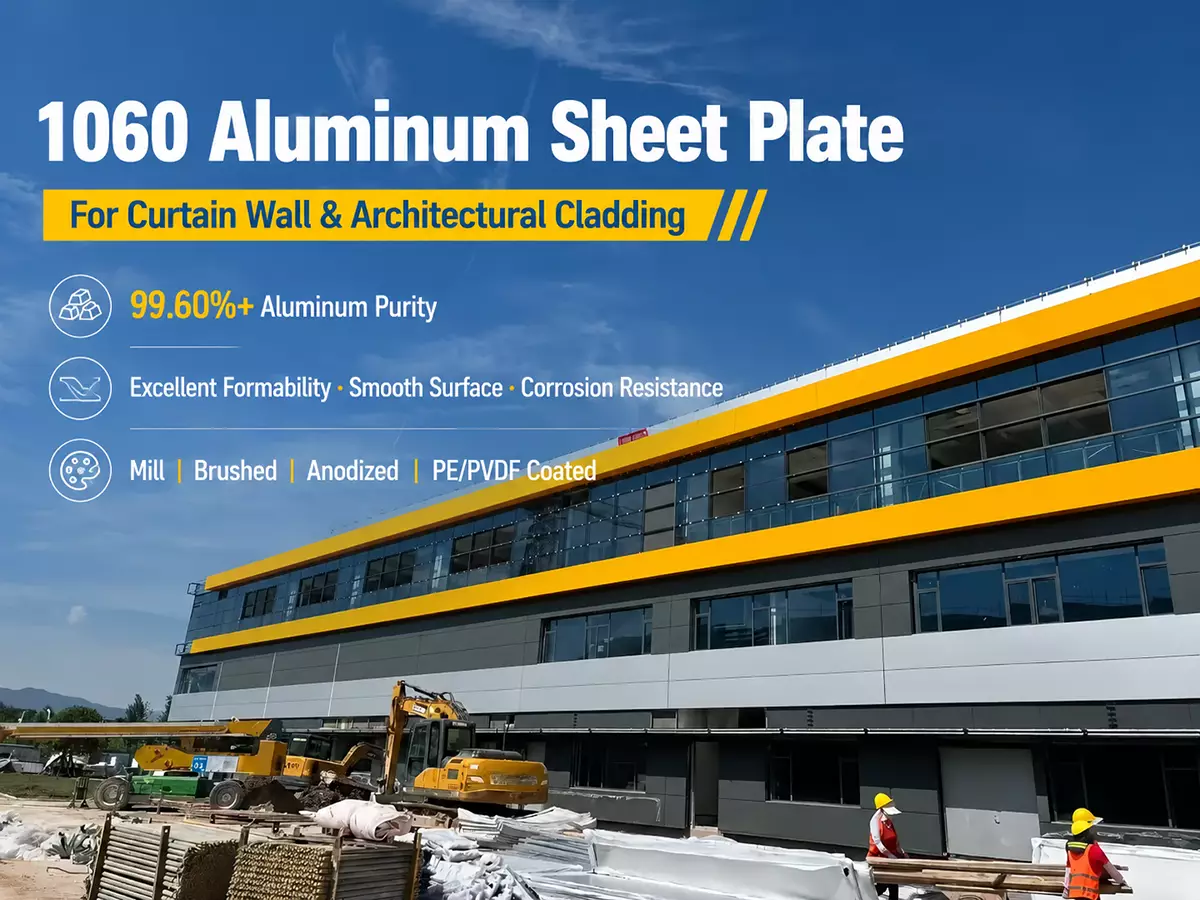
Important Material Selection Note: 1060 aluminum is generally suitable for decorative and non-load-bearing cladding. For curtain wall frames, high-wind zones, large unsupported panels, or severe coastal environments, evaluate higher-strength alloys such as 3003, 3004, 5052, or 6063 extrusion profiles.
What Is 1060 Aluminum Sheet for Curtain Wall Cladding?
1060 aluminum is a commercially pure aluminum alloy with a minimum aluminum content of 99.60%. It is valued for its smooth surface, corrosion resistance, thermal conductivity, ductility, and ease of fabrication. In architectural applications, it is commonly selected for aluminum veneer, decorative facade elements, interior cladding, perforated aluminum panels, ceiling systems, signage, and shaped aluminum components.
For decorative curtain wall panels, 1060 aluminum can be processed into flat, curved, folded, perforated, embossed, or coated panels. Its formability makes it useful where panel appearance, bending performance, and surface treatment quality are important. However, because 1060 is a high-purity aluminum alloy, it has lower mechanical strength than 3003, 3004, and 5052 aluminum. The final material choice should therefore be based on panel size, thickness, reinforcement design, fixing method, wind pressure, environmental exposure, and applicable building codes.
1060 Aluminum Sheet Specifications for Architectural Cladding
| Item | Available Options | Application Notes |
| Alloy | 1060 | Commercially pure aluminum alloy for decorative and non-structural applications. |
| Aluminum Content | ≥ 99.60% | High aluminum purity supports formability and a clean surface appearance. |
| Temper | O, H14, H16, H18, H22, H24 | Temper selection depends on forming requirements, panel design, and required stiffness. |
| Thickness | 0.5–3.0 mm or customized | Common facade-related thicknesses include 1.5 mm, 2.0 mm, 2.5 mm, and 3.0 mm. |
| Width | 1000–2650 mm, subject to production requirements | Wide material may help reduce seams for large architectural panel modules. |
| Length | Coil, standard sheet, or custom cut-to-length | Custom sheet length can reduce fabrication waste where suitable. |
| Surface Finish | Mill finish, brushed, embossed, polished, anodized, color coated | Finish should be selected according to visual design, exposure conditions, and fabrication process. |
| Coating Options | PE coating, PVDF coating, customized architectural coating | PVDF coating is commonly specified for demanding exterior facade decoration projects. |
| Color | RAL colors, PANTONE references, customer-approved samples | Color matching should be confirmed by approved sample or project specification. |
| Standards | ASTM B209, EN 485, EN 573, GB/T 3880, or as required | Please confirm the required standard, tolerances, inspection documents, and test requirements before ordering. |
| Typical Applications | Decorative curtain wall panels, aluminum veneer, ceilings, wall cladding, perforated panels, signage | Not generally recommended for primary curtain wall frames or high-load structural components. |
Why Use 1060 Aluminum for Decorative Curtain Wall Panels?
Excellent Formability
1060 aluminum is easy to bend, stamp, punch, stretch, roll, and fold. It is suitable for decorative panels with curved profiles, perforations, folded edges, embossed textures, and customized architectural shapes.
Good Atmospheric Corrosion Resistance
The surface of aluminum naturally forms a protective oxide layer. This helps 1060 aluminum resist normal atmospheric exposure and makes it suitable for many decorative building applications when the correct surface treatment and installation design are used.
Smooth Surface for Finishing
A clean and uniform surface supports decorative finishing processes such as PE coating, PVDF coating, anodizing, brushing, polishing, embossing, and other architectural surface treatments.
Low Density and Easier Handling
Aluminum has a much lower density than steel. For decorative cladding systems, this can help reduce panel handling weight during fabrication, transportation, and installation.
Cost-Effective for Suitable Applications
Where high mechanical strength is not the primary requirement, 1060 aluminum may provide a practical and cost-effective solution for decorative aluminum panels and architectural finishing components.
Compatible with Customized Processing
Haomei Aluminum can supply aluminum sheet and coil in customized thicknesses, widths, tempers, lengths, and surface conditions according to project requirements and fabrication needs.
1060 aluminum should not be described as a high-strength structural alloy. It is generally more appropriate for decorative and non-load-bearing curtain wall cladding. If the project involves large exterior panels, high wind pressure, coastal salt exposure, heavy loading, or structural framing, consult the panel designer or engineer and evaluate alternatives such as 3003 aluminum sheet or 5052 aluminum sheet.
Surface Treatments for 1060 Aluminum Architectural Panels
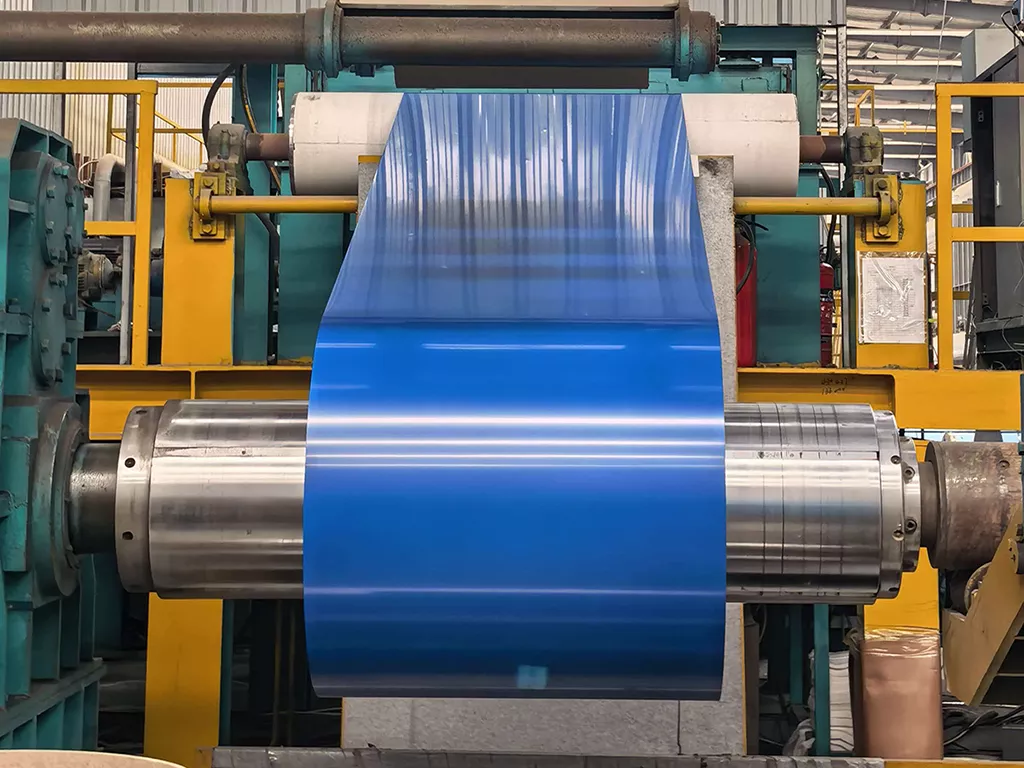
PVDF Coating
PVDF-coated aluminum is commonly considered for exterior architectural applications where long-term color retention, weather resistance, and decorative performance are important.
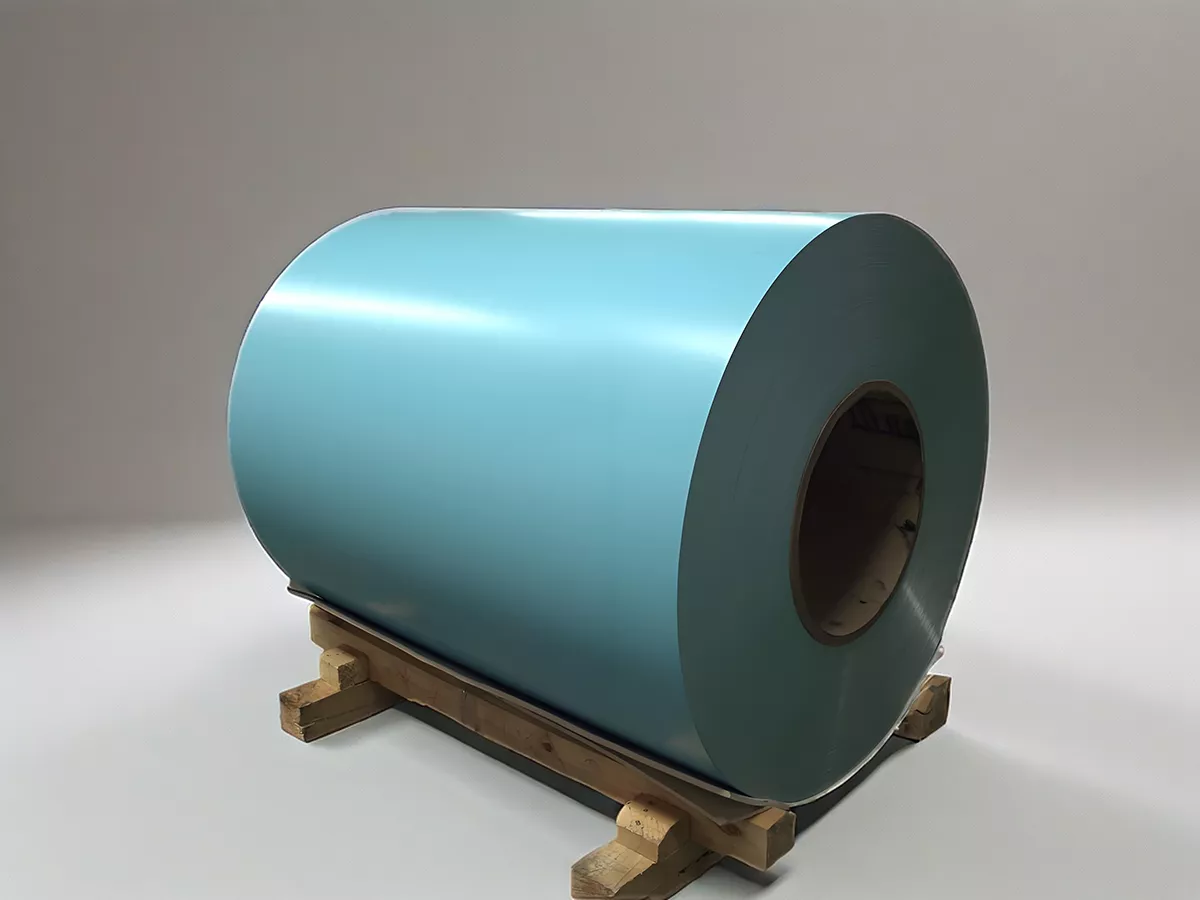
PE Coating
PE-coated aluminum can be used for interior decoration, signage, protected facade areas, and projects where the exposure conditions are less demanding than long-term exterior applications.

Anodized Finish
Anodizing creates a metallic architectural appearance and can improve surface hardness. The final visual effect should be confirmed with samples because color and texture may vary by process.
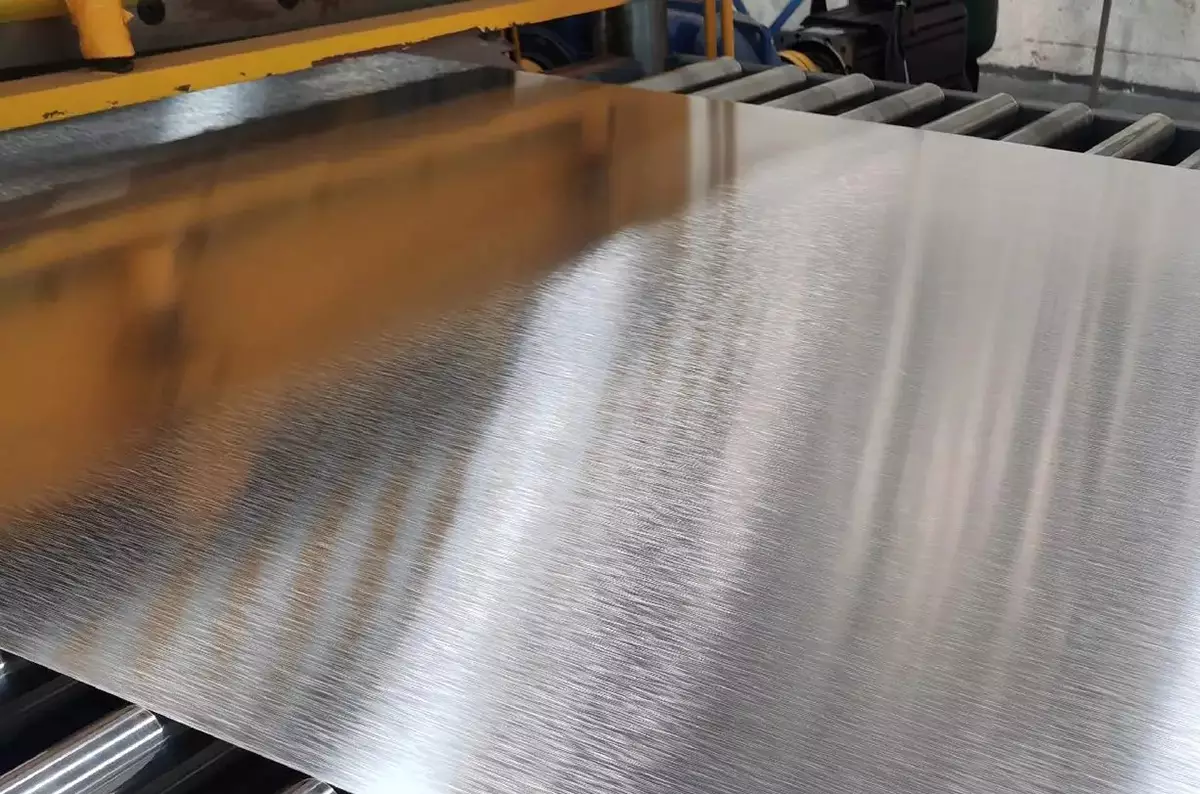
Brushed and Embossed Finish
Brushed, stucco embossed, or patterned aluminum can be used where the design requires texture, light diffusion, anti-slip properties, or a distinctive decorative surface.
Related Architectural Aluminum Products
For coating options, colored aluminum coil, and facade-grade aluminum materials, explore the related product pages below:
Applications of 1060 Aluminum Sheet in Architectural Decoration
1060 aluminum sheet is mainly used for decorative and non-load-bearing architectural components. Its high aluminum content, good formability, and clean surface make it suitable for interior and exterior decoration where structural strength is not the primary requirement.
- Decorative Curtain Wall Panels Used for non-structural facade panels where a lightweight material, smooth surface, and good formability are required.
- Aluminum Veneer Suitable for fabricated aluminum veneer with folded edges, decorative profiles, coating finishes, and customized dimensions.
- Interior Wall Cladding and Ceilings Used for decorative wall panels, suspended ceilings, column covers, elevator lobby finishes, and commercial interiors.
- Perforated Aluminum Panels Good formability allows punching and perforation for sunshade screens, decorative facades, acoustic panels, and ventilation designs.
- Architectural Signage Suitable for signboards, display panels, directional signs, decorative lettering, and branded architectural elements.
- Embossed and Textured Decoration Panels Brushed, embossed, patterned, and coated surfaces can be used to create distinctive finishes for commercial, retail, and public-building interiors.
Why Source 1060 Aluminum Sheet from Haomei Aluminum?
Customized Supply Options
Aluminum sheet and coil can be supplied according to requested thickness, width, length, temper, surface finish, and processing requirements, subject to confirmed production capability.
Architectural Surface Options
Available surface options may include mill finish, brushed finish, embossed finish, anodized finish, PE coating, PVDF coating, and customized colors based on approved samples.
Cut-to-Length and Slitting Support
Depending on the order requirements, materials can be supplied in coil form, standard sheet sizes, or customized cut-to-length sheets for fabrication efficiency.
Quality Inspection Communication
Before ordering, confirm requirements for thickness tolerance, width tolerance, surface condition, coating quality, flatness, packaging, and inspection documents.
Export Packaging
Export packaging should be selected according to material form, loading method, transport route, moisture protection needs, and destination port conditions.
Material Selection Support
If 1060 is not the most suitable option for your curtain wall project, Haomei Aluminum can help identify relevant alternatives such as 3003, 3004, 5052, coated aluminum sheet, or 6063 extrusion profiles.
Quality Control and Export Packaging for Architectural Aluminum
At Haomei Aluminum, we check architectural aluminum throughout production rather than relying only on the alloy designation. For curtain wall panels, decorative wall panels and other fabricated applications, consistent thickness, accurate dimensions, surface condition and coating performance can make a significant difference during fabrication and installation.
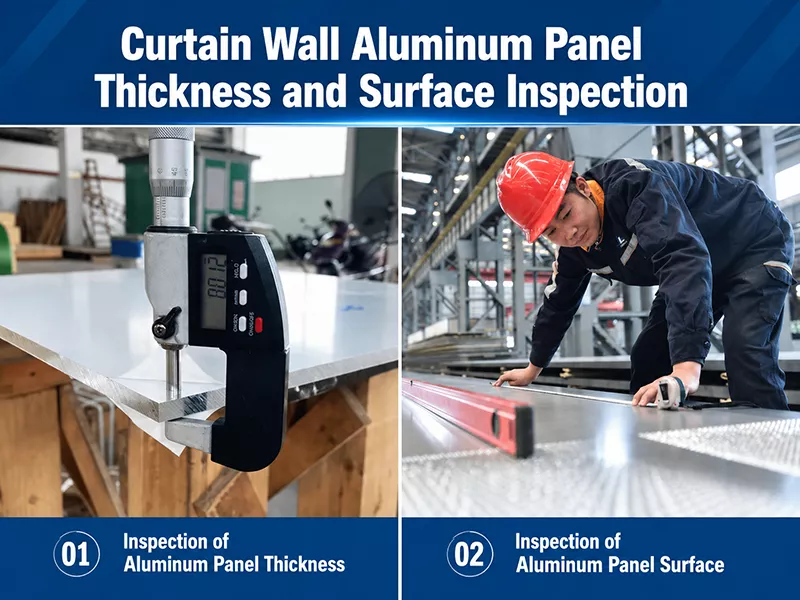
Before production, our team reviews the customer's material specification and project requirements, including:
- Aluminum alloy and temper, such as 1060, 1100, 3003, 3005 or 5052, according to the application.
- Sheet or coil thickness, width, length and applicable dimensional tolerances.
- Required surface finish, including mill finish, brushed, anodized, PE coated or PVDF coated surfaces.
- Coating color and finish, based on a RAL or PANTONE reference, approved color card or physical sample when required.
- Protective film specifications for coated, brushed, polished or other finished surfaces.
- Applicable product standards, mill test certificates, inspection reports and third-party inspection requirements.
Packaging is planned according to the product form and shipping conditions. Aluminum sheets and coils can be prepared with moisture-resistant protection, protective film, suitable pallets or wooden cases, and secure strapping for export transportation. The packaging method can also be adjusted according to loading requirements and the customer's unloading or fabrication process.
When requesting a quotation from Haomei Aluminum, customers can provide the intended application, alloy, temper, thickness, dimensions, surface treatment, coating specification, quantity, destination port and required standard. For architectural projects, drawings, color references or approved samples can also be provided when available. Clear specifications at the quotation stage allow us to recommend a suitable material and reduce avoidable changes before production.
1060 vs 3003 vs 5052 Aluminum for Curtain Wall Applications
| Alloy | Main Advantages | Limitations | Typical Curtain Wall or Architectural Use |
| 1060 Aluminum | Excellent formability, high purity, smooth surface, easy coating and decorative processing. | Lower mechanical strength than 3003, 3004, and 5052. | Decorative non-load-bearing panels, aluminum veneer, interior cladding, ceilings, perforated panels, shaped decorative components. |
| 3003 Aluminum | Better strength than 1060 while retaining good formability and corrosion resistance. | May be less suitable than 1060 for some deep-forming requirements. | Common choice for aluminum veneer, coated facade panels, and exterior decorative cladding with higher stiffness requirements. |
| 3004 Aluminum | Higher strength than 3003 and suitable for certain demanding formed panel applications. | May require more careful processing depending on panel design and temper. | Large panels, formed cladding, and applications requiring more strength than 1060 or 3003. |
| 5052 Aluminum | Higher strength and very good corrosion resistance, including many humid and marine-related environments. | Higher material cost and may not offer the same forming behavior as pure aluminum grades. | Coastal buildings, humid environments, high-corrosion applications, and facade panels requiring increased durability and strength. |
FAQ – 1060 Aluminum Sheet for Curtain Wall Panels
Is 1060 aluminum suitable for curtain wall panels?
Yes. 1060 aluminum can be suitable for decorative and non-load-bearing curtain wall panels because it offers good formability, corrosion resistance, and a smooth surface for coating or anodizing. It is commonly used for aluminum veneer, interior cladding, perforated panels, ceiling panels, signage, and shaped decorative components.
However, for large exterior panels, high-wind areas, severe coastal environments, or applications requiring higher stiffness and mechanical strength, 3003, 3004, or 5052 aluminum may be more appropriate. Curtain wall frames are usually made from 6063 or other structural aluminum extrusion alloys.
What thickness is commonly used for 1060 aluminum curtain wall panels?
Commonly discussed thicknesses include 1.5 mm, 2.0 mm, 2.5 mm, and 3.0 mm. The final thickness should be selected according to panel dimensions, folding depth, support structure, reinforcement, wind load, installation system, local regulations, and project requirements.
A thicker sheet alone does not guarantee sufficient panel stiffness. Alloy, temper, panel geometry, stiffeners, backing structure, fixing spacing, and engineering design must also be evaluated.
Can 1060 aluminum sheet be PVDF coated?
Yes. 1060 aluminum sheet can be used as a substrate for PVDF coating, PE coating, anodizing, brushing, embossing, and other decorative architectural finishes.
For exterior facade applications, coating type, coating thickness, pretreatment process, color requirements, weathering expectations, and project standards should be confirmed before ordering. Please refer to our PVDF coated aluminum sheet page for related supply options.
What is the difference between 1060 and 3003 aluminum for facade panels?
1060 aluminum has high purity and excellent formability, making it useful for decorative, shaped, perforated, or non-load-bearing panels. 3003 aluminum provides higher strength while maintaining good formability and corrosion resistance.
For larger exterior aluminum veneer panels or applications requiring increased stiffness, 3003 aluminum is often considered. For more information, see our 3003 aluminum sheet for curtain wall panels.
Is 1060 aluminum suitable for coastal building cladding?
The suitability of 1060 aluminum for coastal projects depends on the coating system, panel design, maintenance plan, salt exposure level, fixing materials, and project specifications. In high-salt or severe marine environments, a higher-strength and more corrosion-resistant alloy such as 5052 may be considered for certain applications.
Material selection for coastal facades should be confirmed by the project engineer, curtain wall designer, or qualified technical team. You can review 5052 aluminum sheet for coastal cladding for comparison.
What information is needed to request a quotation?
To receive an accurate quotation, please provide the alloy, temper, thickness, width, length or coil weight, surface finish, coating type, color, quantity, required standard, packaging requirements, delivery port, and intended application.
If you are not certain whether 1060, 3003, 3004, or 5052 is the most suitable alloy, provide your panel size, installation environment, fabrication process, and project requirements. Haomei Aluminum can assist with preliminary material supply recommendations.