
Haomei Aluminum supplies anodized aluminum coil for manufacturers that need a durable aluminum surface without applying a separate paint coating after fabrication. The anodizing process converts the aluminum surface into a controlled anodic oxide layer, providing improved corrosion resistance, surface hardness, and a consistent metallic appearance.
Unlike batch-anodized finished parts, continuous coil anodizing treats aluminum coil strip in a controlled production line before the material is slit, blanked, stamped, or formed.
Our aluminum coil anodizing process creates an oxide layer that is grown from the aluminum substrate itself. This is different from painted or laminated coil: the anodic film becomes an integral part of the metal surface, providing long-term corrosion resistance, a clean metallic appearance, and dependable performance during roll forming, stamping, bending, and fabrication.
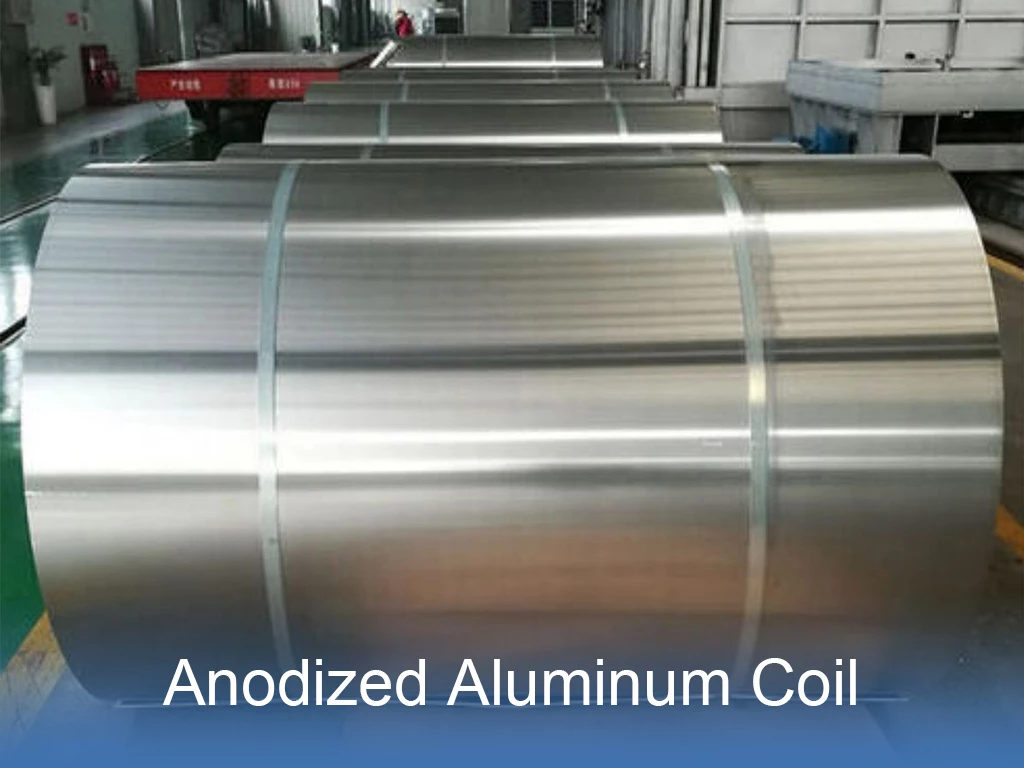
Anodized Aluminum Coil Specifications
| Aluminum Alloys | 1050, 1060, 1070, 1100, 3003, 3004, 3005, 3105, 5005, 5052 and other suitable grades |
| Temper | O, H12, H14, H16, H18, H22, H24, H26 and customized tempers |
| Product Form | Coil, slit coil, aluminum strip |
| Base Thickness | Commonly 0.20 mm–3.00 mm; wider range available upon request |
| Anodic Film Thickness | Common range 5–25 μm, subject to alloy, finish and application |
| Width | Up to 1650 mm, subject to alloy and finish requirements |
| Surface | Clear, matte, bright, satin, brushed, and other available finishes |
| Color | Natural aluminum, bronze, black, champagne, gold and custom finishes and selected anodized colors |
| Coil ID | 150 mm, 300 mm, 405 mm, 505 mm, or customized |
| Certification / Documents | Inspection records and relevant material documentation available according to order requirements |
| Surface Protection | PE film, paper interleave, protective packaging, export seaworthy packing |
Need a Different Alloy or Coil Size?
The base aluminum alloy should be selected before the anodizing requirement is finalized. For example, higher-purity 1xxx series aluminum can be suitable when surface appearance and forming performance are priorities, while 3xxx and 5xxx series alloys may be preferred when the finished component needs a different balance of strength, corrosion resistance, and processing performance.
Haomei also supplies standard aluminum coil in multiple alloys and tempers, allowing customers to compare the substrate before committing to a surface treatment.
Aluminum Coil RangeHow to Choose Anodized Aluminum Coil
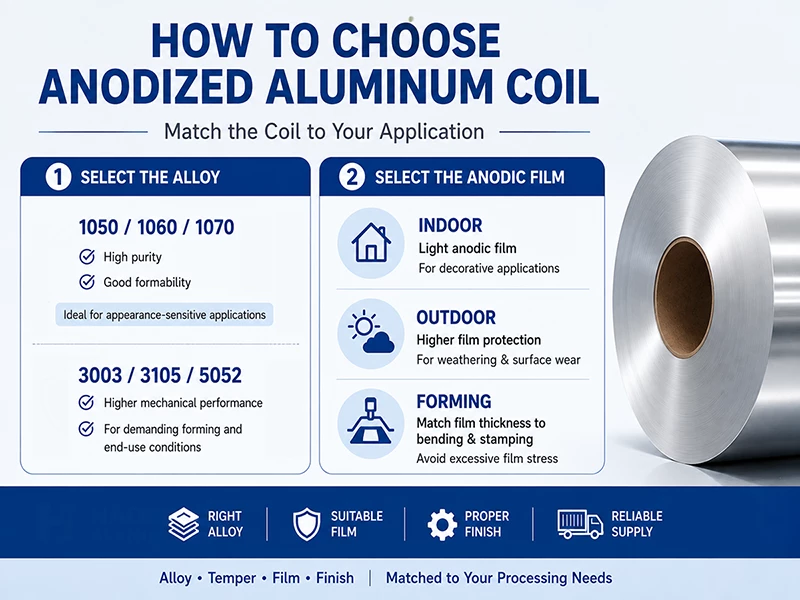
Choosing an anodized coil is not only a question of color. The aluminum substrate, temper, oxide film thickness, surface finish, and the way the coil will be processed all affect the final result.
Select the Aluminum Alloy
For decorative and appearance-sensitive applications, 1050, 1060, 1070 and similar high-purity aluminum grades are often considered because of their surface characteristics and formability.
For applications requiring higher mechanical performance, alloys such as 3003, 3105 or 5052 may be more appropriate, depending on the forming method and end-use environment.
Haomei can recommend a suitable substrate after reviewing the customer's required thickness, forming process, strength requirement, and surface specification.
Select the Anodic Film Thickness
The required oxide film should be matched to the working environment rather than selected simply by choosing the thickest available option.
For indoor decorative components, a relatively light anodic film may be sufficient. Outdoor architectural components generally require greater resistance to weathering and surface wear.
For tight forming operations, excessive film thickness can be counterproductive because severe bending or stamping can stress the anodic layer. Haomei therefore recommends defining the forming operation together with the film requirement before production.
How to Choose the Right Alloy for Anodized Aluminum Coil
| Alloy | Why Choose It | Typical Use |
| 1050 / 1060 | High purity, good formability and useful surface characteristics | Decorative panels, lighting and appearance-sensitive components |
| 1100 | Good formability and conductivity | Appliance and general fabrication applications |
| 3003 | Better strength with good formability | Architectural and industrial parts |
| 3105 | Moderate strength and corrosion resistance | Building and decorative components |
| 5005 | Useful surface appearance for anodized products | Architectural and decorative applications |
| 5052 | Higher strength and corrosion resistance | Industrial and transportation components |
The most suitable grade depends on the finished component, not only on the anodizing process.
Anodized Aluminum Coil Surface Finishes
Bright Finish
Bright anodized aluminum has a clean, reflective appearance that highlights the metallic character of the material. It is commonly selected for lighting components, decorative trim and other appearance-sensitive parts where surface brightness is important.
For projects requiring a highly reflective surface, see our Bright Anodized Aluminum Coil for available alloy, thickness and width options.
Brushed Finish
Brushed aluminum features a directional linear grain that gives the surface a distinctive textured appearance. Depending on the required specification, brushing may be completed before anodizing to produce a consistent grain suitable for decorative panels, elevator interiors, appliances and architectural components.
For applications where grain direction and surface consistency matter, consider our Brushed Anodized Aluminum Coil for customized surface and dimensional requirements.
Matte Finish
A matte anodized surface reduces glare and gives aluminum a more understated appearance. It is a practical choice for architectural trims, interior panels, ceiling systems and decorative components where a softer surface is preferred.
Natural Anodized Finish
Natural anodized aluminum keeps the original metallic character of aluminum while adding the protection of an anodic oxide layer. This finish is often used when buyers want a neutral appearance without introducing a strong decorative color.
Why Use Anodized Aluminum Coil?
Durable Surface
The anodic oxide layer is formed from the aluminum substrate rather than being a separate paint film. Under normal service conditions, it provides good resistance to corrosion and surface wear without the typical peeling behavior associated with a damaged organic paint layer.
Consistent Appearance
Continuous processing is well suited to customers running long production batches. Controlled line conditions help maintain more consistent surface characteristics across the coil.
For architectural or decorative products, the consistency of the incoming coil can directly affect the appearance of the finished components.
Suitable for Further Fabrication
Anodized coil can be selected for applications involving slitting, stamping, bending or roll forming. However, the forming method and bend radius should be considered when specifying the anodic film.
Minor forming operations may be compatible with the selected anodized surface, while aggressive deformation can produce microcracking in the oxide layer. Haomei can review the customer's forming process before production to reduce this risk.
Corrosion Resistance
The anodic oxide layer provides additional protection to the aluminum surface and is useful for products exposed to humidity, atmospheric conditions and normal outdoor environments.
The actual performance depends on alloy, anodizing system, film thickness, sealing quality, installation environment and exposure conditions.
Anodized Aluminum Coil Applications
Anodized aluminum coil is used in architectural, automotive, electronics, lighting and industrial applications where surface durability, corrosion resistance and a consistent metallic finish are required.
-

Architectural Facade & Curtain Wall
Suitable for curtain walls, exterior facades and building cladding where weather resistance, surface durability and appearance are important.
-
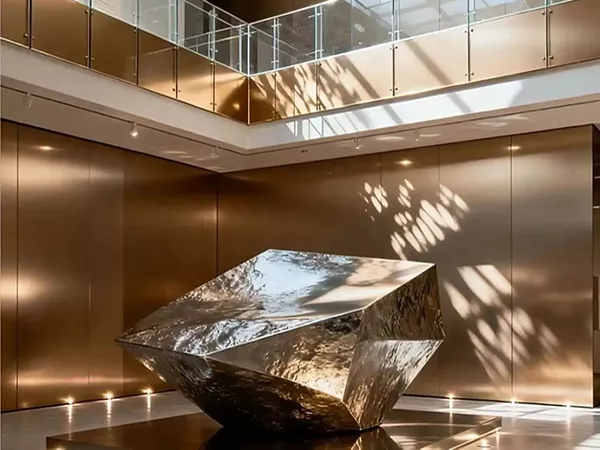
Interior Wall Decoration & Cladding
Used for atriums, lobbies, wall panels and commercial interiors requiring a durable, easy-to-maintain metallic surface.
-
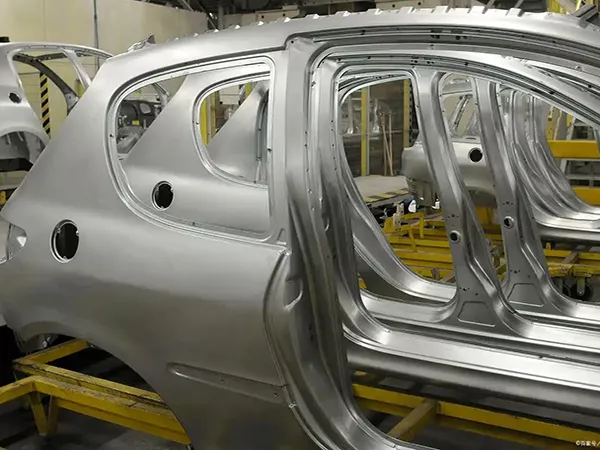
Automotive Body Manufacturing
Aluminum's low density and corrosion resistance make it suitable for selected automotive body components and formed parts.
-
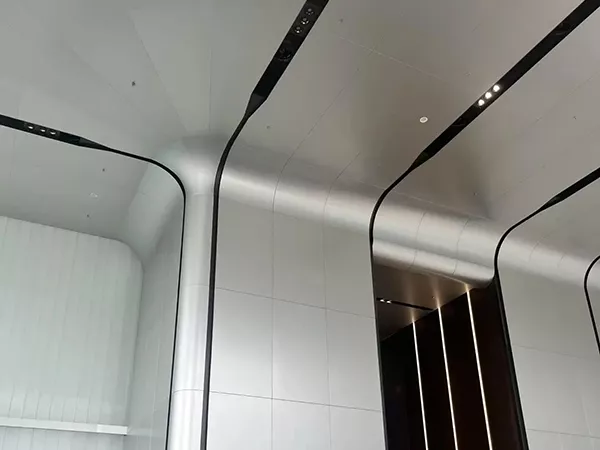
Interior Architectural Finishes
Used for elevator halls, column covers, wall panels and other commercial interior architectural elements.
-
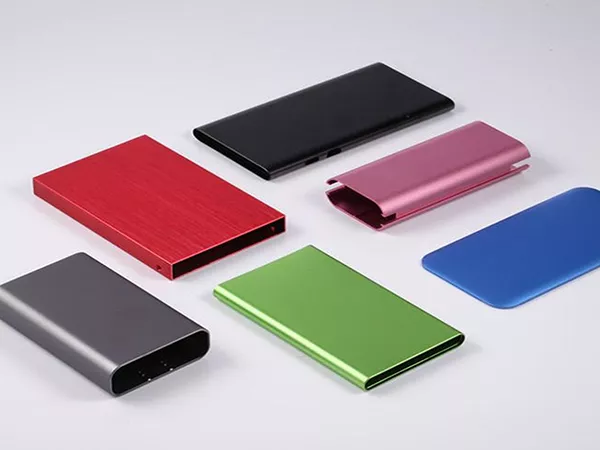
Consumer Electronics Enclosures
Suitable for selected device housings and electronic enclosures requiring a refined metallic appearance and durable surface.
-
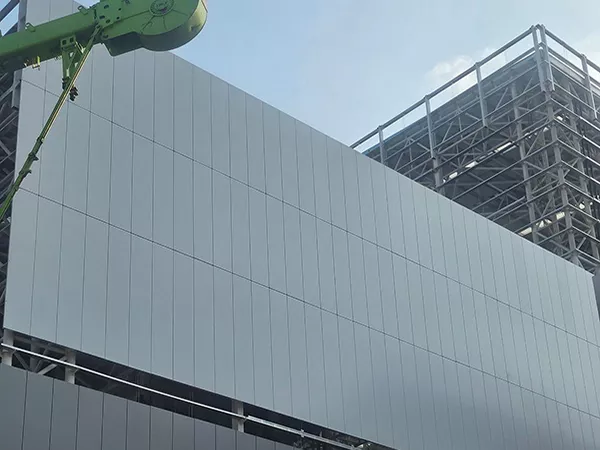
Industrial Building Cladding
Provides corrosion resistance and low-maintenance performance for suitable factory, warehouse and industrial exteriors.
-
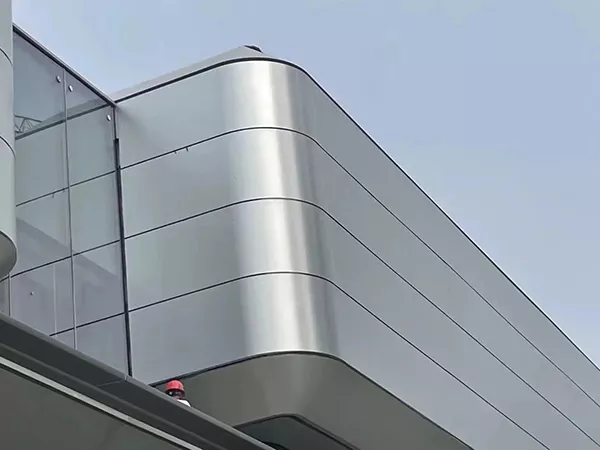
Curved Facade Panels
Suitable for curved and custom-shaped facade panels when the selected alloy, temper and fabrication process allow forming.
-
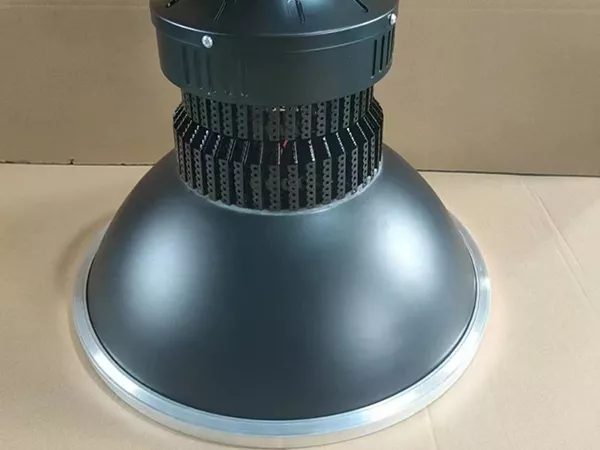
LED Lighting Fixture Housings
Aluminum's thermal conductivity, low weight and corrosion resistance support its use in LED housings and industrial lighting components.
-
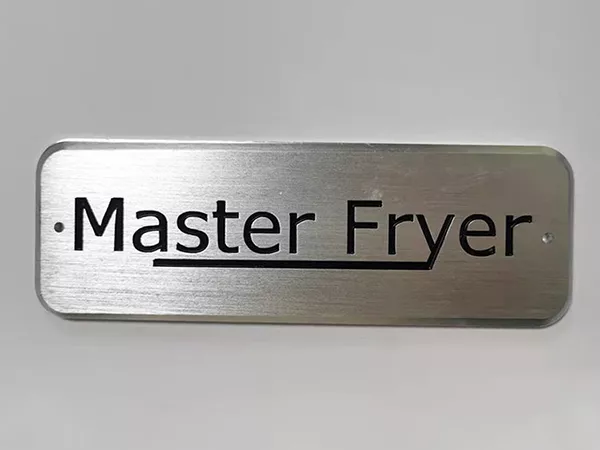
Signage & Industrial Nameplates
Used for signs, identification plates and equipment nameplates requiring durable surfaces and long-term readability.
Haomei Aluminum Anodized Coil Quality Control
Quality control for anodized aluminum coil starts with the base aluminum and continues through anodizing, finishing, inspection, and export packing. Haomei checks both dimensional requirements and anodized surface quality to ensure the coils are suitable for further fabrication and visible applications.
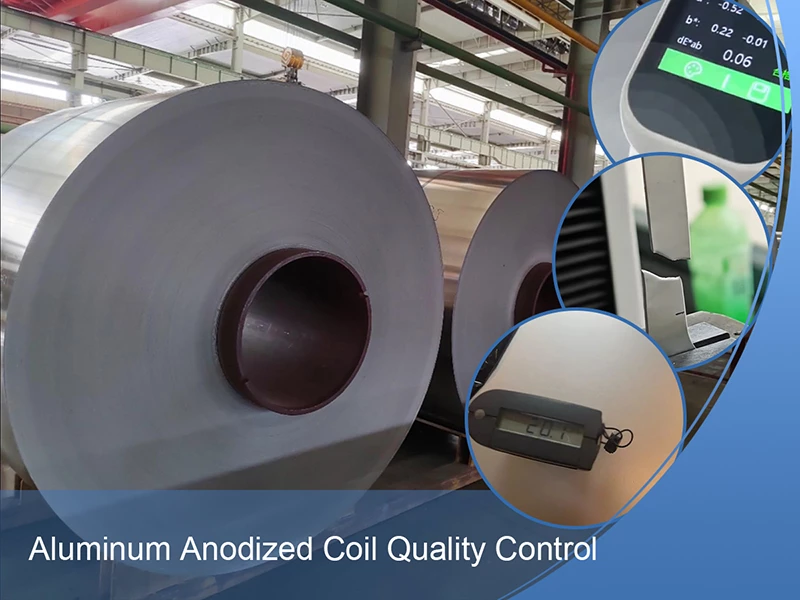
- Alloy grade and chemical composition
- Coil thickness and width tolerances
- Coil weight and inner diameter
- Surface cleanliness and preparation before anodizing
- Anodic film thickness and uniformity
- Color consistency across the coil
- Surface appearance, scratches, stains, and handling marks
- Protective film adhesion when specified
- Coil winding and edge condition
- Export packaging and moisture protection before shipment
For architectural and other appearance-critical projects, we recommend approving a production sample or color reference before full-scale production. This helps control shade and surface differences, especially for bronze, black, champagne, gold, brushed, and other decorative anodized finishes.
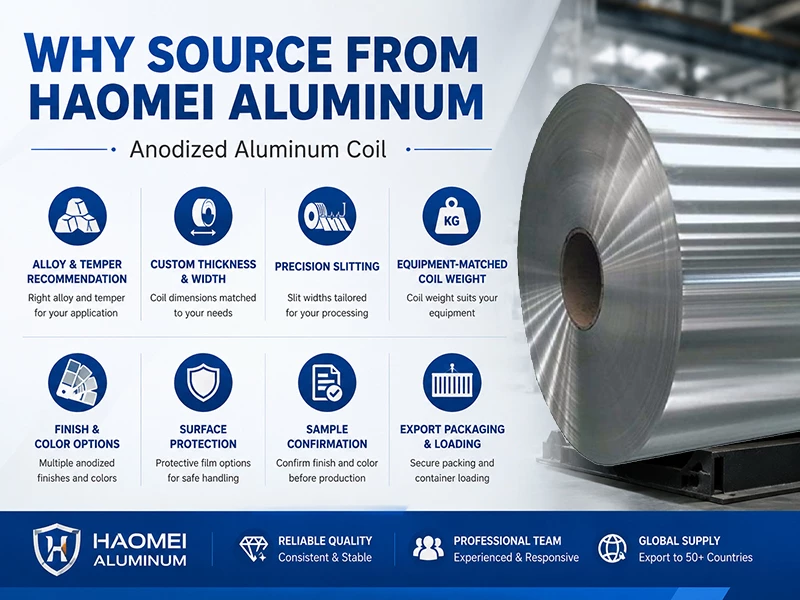
Why Source Anodized Aluminum Coil from Haomei
Anodized aluminum coil needs to match the next processing step, not just the requested alloy and thickness. Haomei works with buyers to confirm the coil specification, surface finish, forming requirements and packing details before production.
- Alloy and temper selection – Recommend suitable alloy and temper based on forming, surface appearance and end-use requirements.
- Custom thickness and width – Supply coil dimensions according to your production line and finished component requirements.
- Slitting to processing width – Slit master coils into practical widths for roll forming, fabrication or other downstream operations.
- Coil weight matched to equipment – Discuss coil weight and dimensions to suit your uncoiler, handling equipment and production setup.
- Finish and color options – Review clear, silver, matte, brushed and other anodized finishes according to the required appearance.
- Surface protection – Protective film and other packing measures can be considered where the anodized surface needs additional protection during handling and transport.
- Sample confirmation – Samples can be reviewed before volume production when surface appearance, color or forming performance needs to be confirmed.
- Export packaging and loading – Packaging and container loading can be arranged according to coil dimensions, shipment conditions and destination requirements.
FAQ – Anodized Aluminum Coil
Does anodized aluminum coil peel or flake?
No. The anodic layer is formed from the aluminum substrate rather than applied as a paint coating. It does not peel or flake in the same way that conventional painted coatings can.
What colors are available for anodized aluminum coil?
Common finishes include clear, silver, matte, brushed, bronze, black, champagne, and gold-toned finishes. Custom colors may also be available depending on the required quantity, finish standard, and application.
What is the difference between anodized and color coated aluminum coil?
Anodized aluminum has an integrated oxide layer formed from the aluminum surface and retains a natural metallic appearance. Color coated aluminum uses an applied paint system and provides a wider range of opaque colors, wood grain and stone patterns, as well as coating options such as PE and PVDF.
Is anodized aluminum coil the same as painted aluminum coil?
No. Painted or color coated aluminum uses an organic coating applied to the aluminum substrate, while anodizing forms an oxide layer from the aluminum surface itself. The appropriate product depends on the required appearance, forming process, environmental exposure, and durability.
Can anodized aluminum coil be stamped or bent?
Yes. Selected anodized aluminum coils can be stamped, bent, or roll formed, but the amount of deformation is important. Tight bending or severe stamping may damage or visibly crack the anodic layer. Haomei recommends confirming the forming radius and processing method before finalizing the anodizing specification.
What thickness of anodic film should I choose?
There is no single anodic film thickness suitable for every application. Indoor decorative products and outdoor architectural components may have different requirements. Film thickness should be selected according to environmental exposure, wear resistance, appearance, and downstream forming conditions.
Which aluminum alloy is best for anodizing?
There is no universal best alloy for anodizing. High-purity 1xxx series alloys can provide useful surface and forming characteristics, while 3xxx and 5xxx series alloys may be selected when additional mechanical or application-specific properties are required. The best alloy depends on the final application and component requirements.
Can Haomei supply custom anodized aluminum coil?
Yes. Haomei can review customized requirements for aluminum alloy, temper, thickness, width, anodic film thickness, surface finish, color, coil dimensions, slitting, and export packaging.
Hot-Selling Anodized Aluminum Coil Sizes
| Item | Alloy | Thickness (inch) | Temper | Width (inch) | Length (ft / m) |
| 0.32" 5005 Anodized Aluminum Coil | 5005 | 0.32" | H34 | 48" | According to customer needs |
| 0.40" 5005 Anodized Aluminum Coil | 5005 | 0.40" | H34 | 48" | According to customer needs |
| 0.50" 5005 Anodized Aluminum Coil | 5005 | 0.50" | H34 | 48" | According to customer needs |
| 0.63" 5005 Anodized Aluminum Coil | 5005 | 0.63" | H34 | 48" | According to customer needs |
| 0.125" 3003 Anodized Aluminum Coil | 3003 | 0.125" | H14/H24 | 24–60" | According to customer needs |
| 0.187" 3003 Anodized Aluminum Coil | 3003 | 0.187" | H14/H24 | 24–60" | According to customer needs |
| 0.25" 3003 Anodized Aluminum Coil | 3003 | 0.25" | H14/H24 | 24–60" | According to customer needs |
| 0.312" 3003 Anodized Aluminum Coil | 3003 | 0.312" | H14/H24 | 24–60" | According to customer needs |
| 0.375" 3003 Anodized Aluminum Coil | 3003 | 0.375" | H14/H24 | 24–60" | According to customer needs |
| 0.5" 3003 Anodized Aluminum Coil | 3003 | 0.5" | H14/H24 | 24–60" | According to customer needs |
| 0.125" 3105 Anodized Aluminum Coil | 3105 | 0.125" | H14/H24 | 24–60" | According to customer needs |
| 0.187" 3105 Anodized Aluminum Coil | 3105 | 0.187" | H14/H24 | 24–60" | According to customer needs |
| 0.25" 3105 Anodized Aluminum Coil | 3105 | 0.25" | H14/H24 | 24–60" | According to customer needs |
| 0.312" 3105 Anodized Aluminum Coil | 3105 | 0.312" | H14/H24 | 24–60" | According to customer needs |
| 0.375" 3105 Anodized Aluminum Coil | 3105 | 0.375" | H14/H24 | 24–60" | According to customer needs |
| 0.5" 3105 Anodized Aluminum Coil | 3105 | 0.5" | H14/H24 | 24–60" | According to customer needs |
| 0.125" 5052 Anodized Aluminum Coil | 5052 | 0.125" | H32/H34 | 24–60" | According to customer needs |
| 0.187" 5052 Anodized Aluminum Coil | 5052 | 0.187" | H32/H34 | 24–60" | According to customer needs |
| 0.25" 5052 Anodized Aluminum Coil | 5052 | 0.25" | H32/H34 | 24–60" | According to customer needs |
| 0.312" 5052 Anodized Aluminum Coil | 5052 | 0.312" | H32/H34 | 24–60" | According to customer needs |
| 0.375" 5052 Anodized Aluminum Coil | 5052 | 0.375" | H32/H34 | 24–60" | According to customer needs |
| 0.5" 5052 Anodized Aluminum Coil | 5052 | 0.5" | H32/H34 | 24–60" | According to customer needs |
| 0.03" 1060 Anodized Aluminum Coil | 1060 | 0.03" | O/H14 | 24–60" | According to customer needs |
| 0.05" 1060 Anodized Aluminum Coil | 1060 | 0.05" | O/H14 | 24–60" | According to customer needs |
| 0.08" 1060 Anodized Aluminum Coil | 1060 | 0.08" | O/H14 | 24–60" | According to customer needs |
| 0.1" 1060 Anodized Aluminum Coil | 1060 | 0.1" | O/H14 | 24–60" | According to customer needs |
| 0.125" 1060 Anodized Aluminum Coil | 1060 | 0.125" | O/H14 | 24–60" | According to customer needs |
| 0.187" 1060 Anodized Aluminum Coil | 1060 | 0.187" | O/H14 | 24–60" | According to customer needs |
| 0.25" 1060 Anodized Aluminum Coil | 1060 | 0.25" | O/H14 | 24–60" | According to customer needs |
| 0.312" 1060 Anodized Aluminum Coil | 1060 | 0.312" | O/H14 | 24–60" | According to customer needs |
| 0.375" 1060 Anodized Aluminum Coil | 1060 | 0.375" | O/H14 | 24–60" | According to customer needs |
| 0.03" 1100 Anodized Aluminum Coil | 1100 | 0.03" | O/H14 | 24–60" | According to customer needs |
| 0.05" 1100 Anodized Aluminum Coil | 1100 | 0.05" | O/H14 | 24–60" | According to customer needs |
| 0.08" 1100 Anodized Aluminum Coil | 1100 | 0.08" | O/H14 | 24–60" | According to customer needs |
| 0.1" 1100 Anodized Aluminum Coil | 1100 | 0.1" | O/H14 | 24–60" | According to customer needs |
| 0.125" 1100 Anodized Aluminum Coil | 1100 | 0.125" | O/H14 | 24–60" | According to customer needs |
| 0.187" 1100 Anodized Aluminum Coil | 1100 | 0.187" | O/H14 | 24–60" | According to customer needs |
| 0.25" 1100 Anodized Aluminum Coil | 1100 | 0.25" | O/H14 | 24–60" | According to customer needs |
| 0.312" 1100 Anodized Aluminum Coil | 1100 | 0.312" | O/H14 | 24–60" | According to customer needs |
| 0.375" 1100 Anodized Aluminum Coil | 1100 | 0.375" | O/H14 | 24–60" | According to customer needs |
| 0.125" 6063 Anodized Aluminum Coil | 6063 | 0.125" | T5/T6 | 24–60" | According to customer needs |
| 0.187" 6063 Anodized Aluminum Coil | 6063 | 0.187" | T5/T6 | 24–60" | According to customer needs |
| 0.25" 6063 Anodized Aluminum Coil | 6063 | 0.25" | T5/T6 | 24–60" | According to customer needs |
| 0.312" 6063 Anodized Aluminum Coil | 6063 | 0.312" | T5/T6 | 24–60" | According to customer needs |
| 0.375" 6063 Anodized Aluminum Coil | 6063 | 0.375" | T5/T6 | 24–60" | According to customer needs |
| 0.5" 6063 Anodized Aluminum Coil | 6063 | 0.5" | T5/T6 | 24–60" | According to customer needs |
| 0.625" 6063 Anodized Aluminum Coil | 6063 | 0.625" | T5/T6 | 24–60" | According to customer needs |
How Our Anodized Aluminum Coil Is Produced
Cleaning
The aluminum strip is cleaned to remove oil, rolling residue and surface contamination. Stable cleaning is important because residual contamination can affect oxide formation and final appearance.
Etching or Brightening
Depending on the required finish, the strip can be chemically treated to modify the surface texture and reflectivity.
A bright treatment can emphasize the metallic appearance, while a controlled matte treatment can reduce surface reflection and create a more subdued finish.
Anodizing
The cleaned aluminum strip passes through an electrolytic bath where electrical current promotes formation of the anodic oxide layer.
Film thickness and surface appearance must be controlled consistently along the coil, including the transition from one section of the coil to another.
Coloring
For colored products, the anodized surface can be further processed to obtain the specified appearance. Natural aluminum finishes can also be supplied when a metallic appearance is preferred.
Sealing
After anodizing and coloring, the porous anodic layer is sealed to improve resistance to moisture and environmental exposure.
Rewinding and Inspection
After treatment, the aluminum is rewound into the required coil format and inspected for surface appearance, dimensional consistency and film requirements before packing.
