
5083 H116 Aluminum Plate Sheet
Haomei Aluminum supplies hot rolled 5083 H116 marine grade aluminum plate for shipbuilding, offshore engineering, marine transportation equipment, LNG structures, and corrosion-sensitive industrial applications.
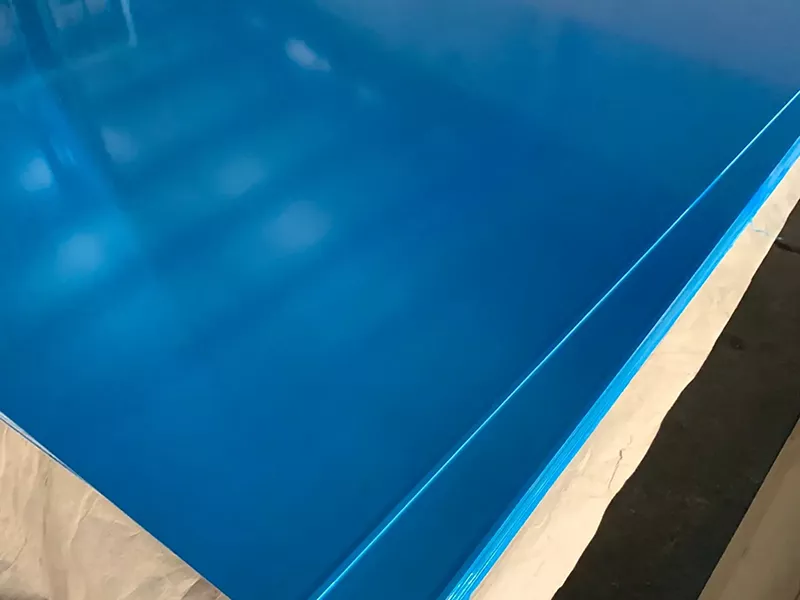
Our 5083 H116 aluminum plates are available in thicknesses from 3 mm to 200 mm and widths up to 3800 mm. Custom dimensions, cut-to-size processing, material test certificates (MTC), ultrasonic testing, export packing, and marine-class certification support can be provided according to project requirements.
- Alloy: 5083 marine grade aluminum
- Temper: H116
- Process: Hot rolled aluminum plate
- Thickness range: 3 mm–200 mm
- Maximum width: up to 3800 mm
- Custom length, cutting, and project-based processing
- MTC, UT inspection, and export documentation available
- ABS, DNV, BV, LR, and CCS certification support upon request
5083 H116 Marine Aluminum Plate Supply Capability
Haomei Aluminum supplies 5083 H116 aluminum plate and sheet for marine structures, shipbuilding, offshore equipment and corrosion-sensitive applications. Material is supplied according to the approved drawing, purchase order, technical specification and applicable classification society requirements.
Available Thickness Range
Plate and sheet dimensions can be discussed according to project requirements.
Maximum Available Width
Wide 5083 H116 plates are available for large marine panels and fabricated structures.
Quality Documentation Support
Mill test certificates and ultrasonic testing documentation can be provided when specified.
Seaworthy Export Packing
Materials are packed for international transport to help reduce moisture and handling damage.
Before Ordering 5083 H116 Marine Plate
Please confirm alloy, temper, thickness, width, length, tolerances, surface condition, inspection requirements and required certificates before production. Classification approval, third-party inspection and project-specific testing should be confirmed in the purchase specification.
What Is 5083 H116 Aluminum Plate?
5083 H116 aluminum plate is a non-heat-treatable aluminum-magnesium alloy plate commonly used in marine and offshore structures. The 5083 alloy contains a relatively high magnesium content, providing a useful balance of strength, weldability and corrosion resistance.
The H116 temper is widely specified for marine service where resistance to exfoliation corrosion and intergranular corrosion is important. It is frequently selected for vessel hulls, deck plates, bulkheads, offshore modules, seawater-exposed equipment and low-temperature structures.
Compared with many heat-treatable aluminum alloys, 5083 H116 is particularly suitable for fabricated welded structures. It is an established material choice for applications exposed to saltwater, humid coastal atmospheres and demanding marine environments.
Mechanical properties, certification availability, corrosion test requirements and inspection scope vary according to thickness, plate dimensions, governing standard and project specification. Please confirm these requirements before production.
5083 H116 Aluminum Plate Specifications
| Item | Specification |
| Alloy | 5083 |
| Temper | H116 |
| Product Form | Hot rolled plate / cut-to-length sheet |
| Thickness | 3 mm - 200 mm |
| Maximum Width | Up to 3800 mm |
| Length | 2000 mm - 12000 mm, or customized |
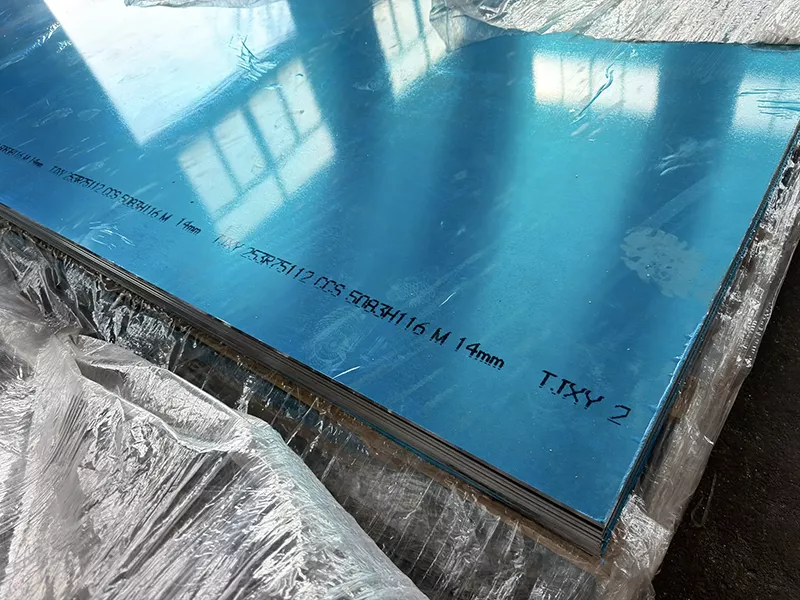
| Surface | Mill finish; protective film available for selected sizes |
| Edge | Mill edge, trimmed edge or cut edge |
| Testing | Chemical analysis, mechanical testing and UT inspection available upon request |
| Documentation | MTC, inspection report, packing list, commercial invoice and certificate of origin |
| Certification Support | ABS, DNV, BV, LR, CCS or third-party inspection subject to project requirements |
Actual producible sizes depend on thickness, plate width, required length, order quantity, certification scope and production schedule. Send your required dimensions and technical standard to Haomei Aluminum for confirmation.
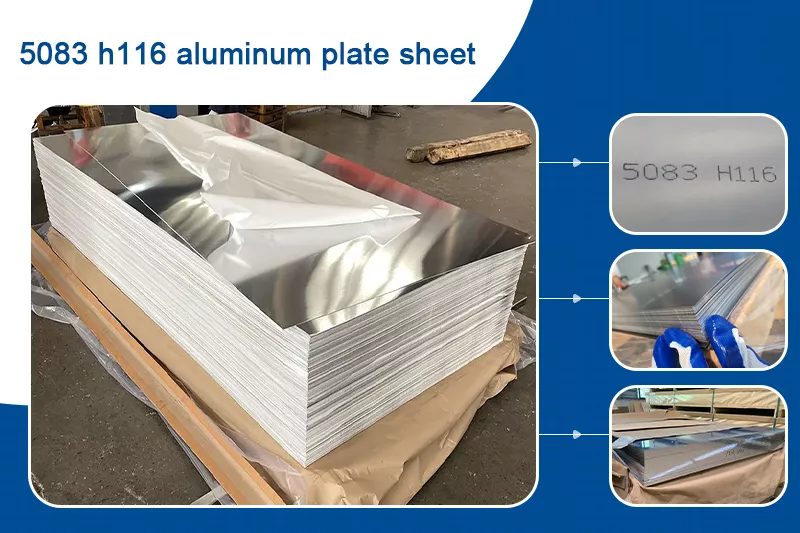
5083 H116 Aluminum Plate Sheet Chemical, Mechanical and Physical Properties
5083 H116 Aluminum Plate Sheet Chemistry Information
| Element | Percentage |
| Al | 92.4 - 95.6 |
| Fe | 0.4 max |
| Cr | 0.05 - 0.25 |
| Cu | 0.1 max |
| Mg | 4 - 4.9 |
| Mn | 0.4 - 1 |
| Ti | 0.15 max |
| Si | 0.4 max |
| Residual | 0.15 max |
| Zn | 0.25 max |
5083 H116 Aluminum Plate Sheet Mechanical Properties
| Alloy | 5083 |
| Temper | H116 |
| Rm(Mpa) Tensile strength | ≥305 |
| Rp0.2(MPa) Yield strength | ≥215 |
| Elongation A(%) | ≥10 |
| Exfoliation corrosion | ≦PB |
| Intergranular corrosion Mg/cm2 | ≦15 |
| Certification | DNV, GL, ABS, CCS, BV, LR |
5083 H116 Aluminum Plate Sheet Physical Properties
| Temper | H116 |
| Density | 0.096 lb/in3 |
| Ultimate Tensile Strength | 47 ksi |
| Yield Tensile Strength | 33 ksi |
| Fatigue Strength | 23 ksi |
| Shear Strength | 28 ksi |
| Shear Modulus | 3, 700 ksi |
| Hardness Rockwell | Brinell | B50 | 83 |
| Elongation at Break Percentage | 12% |
| Modulus of Elasticity | 9, 900 ksi |
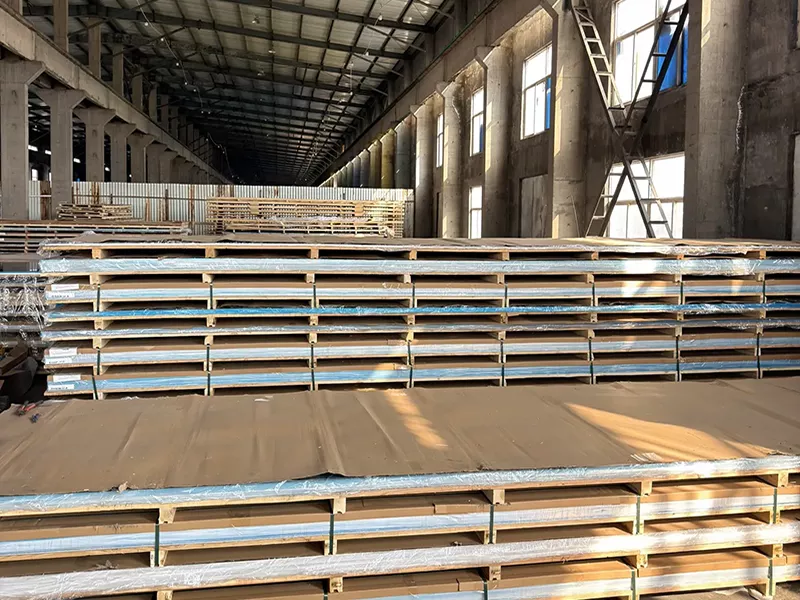
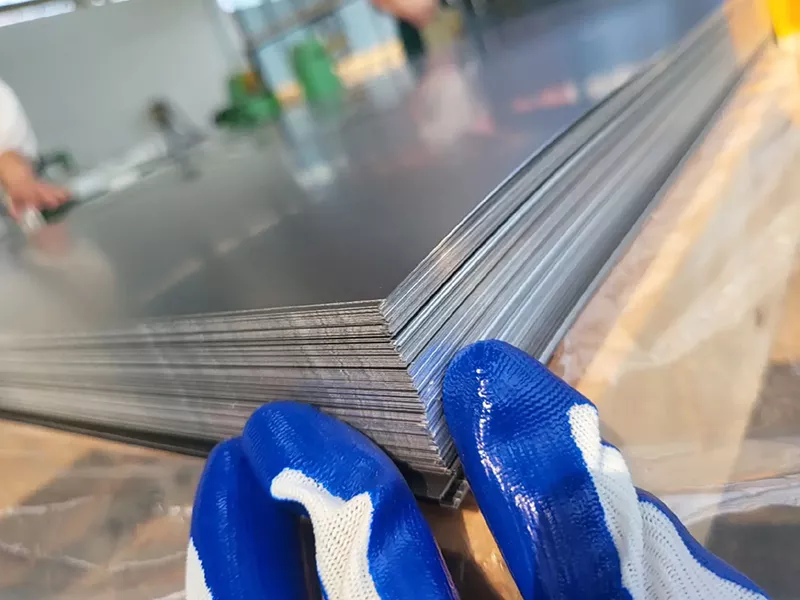
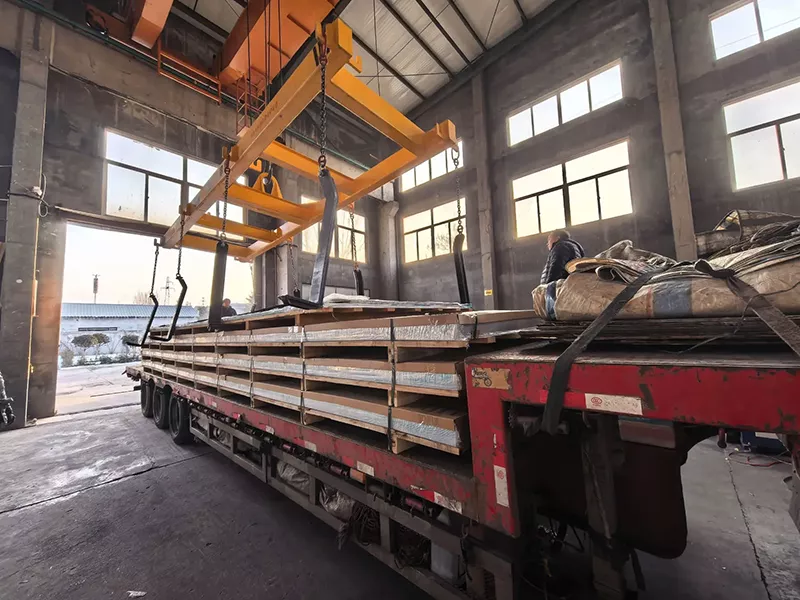
5083 H116 Aluminum Plate Factory and Product Gallery
5083 H116 Aluminum Plate Applications
Shipbuilding
- Hull side plates
- Bottom plates
- Deck plates
- Bulkheads
- Superstructures
- Fishing boats and workboats
- Yachts and passenger vessels
Offshore Engineering
- Offshore platform modules
- Walkways and access structures
- Marine equipment housings
- Floating structures
- Dock and port facilities
- Seawater-exposed components
LNG and Low-Temperature Equipment
- Cryogenic tank structures
- LNG-related equipment
- Low-temperature containers
- Tank truck bodies
- Pressure vessel structures
- Industrial transport equipment
Why Choose 5083 H116 Marine Aluminum Plate?
Seawater Corrosion Resistance
5083 aluminum alloy is widely recognized for good resistance to seawater and salt-spray exposure. The H116 temper is commonly used where corrosion performance is required in marine applications.
Excellent Weldability
Suitable for MIG, TIG and automated aluminum welding processes. It is commonly fabricated into marine hulls, deck structures, tanks and offshore modules.
Low-Temperature Capability
5083 alloy retains useful toughness at low temperatures and can be considered for cryogenic and LNG-related structures where permitted by the applicable design code.
Wide Hot Rolled Plate
Wide plate availability can reduce welding seams in shipbuilding and large marine fabrication, helping improve production efficiency and panel layout.
Fabrication Flexibility
The material can be cut, bent, machined and welded using appropriate fabrication procedures. Bend radius should be determined according to thickness, bend direction and forming method.
Project Documentation Support
MTC, chemical analysis, mechanical testing, ultrasonic testing and third-party inspection documents can be arranged according to the purchase order and project requirement.
5083 H116 Aluminum Plate Marine Certifications
For 5083 H116 aluminum plate used in marine, shipbuilding and offshore applications, Haomei Aluminum can provide quality documentation and inspection records according to project requirements. Available documents may include material certificates, test reports and third-party inspection documents for qualified orders.
Available Documentation May Include
- Mill Test Certificate (MTC)
- Chemical composition report
- Mechanical property test report
- Ultrasonic testing report
- Third-party inspection report
- Classification society certificate
- Certificate of origin
- Packing list and commercial invoice
Certification Compliance Statement
ABS, DNV, BV, LR, CCS and third-party inspection support may be available for qualifying orders. Certification should not be assumed for all stock material or all plate dimensions. Please specify the required classification society, standard, inspection scope, plate dimensions and end-use project when submitting your inquiry.
-
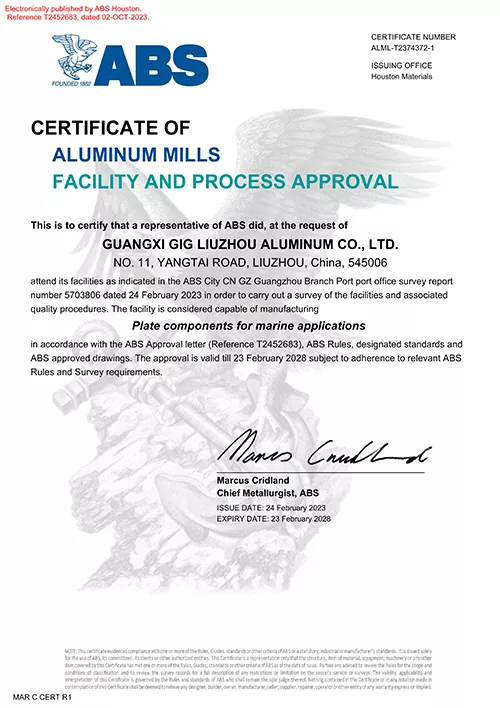
ABS Certificate for Marine Grade Aluminum Sheet -
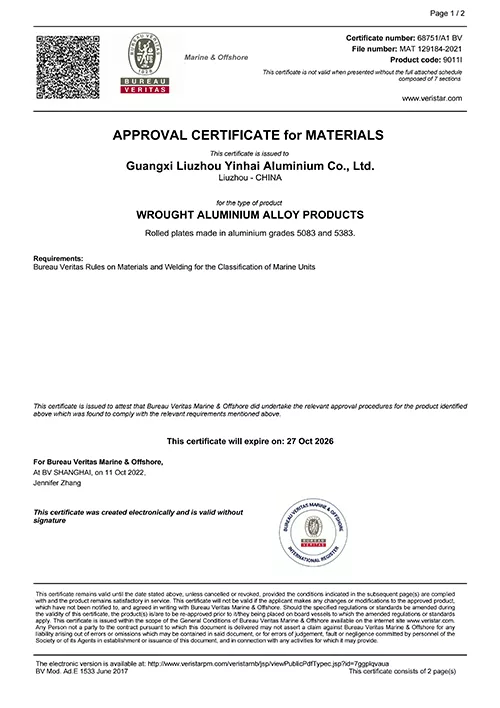
BV Certificate for Marine Aluminum Sheet -
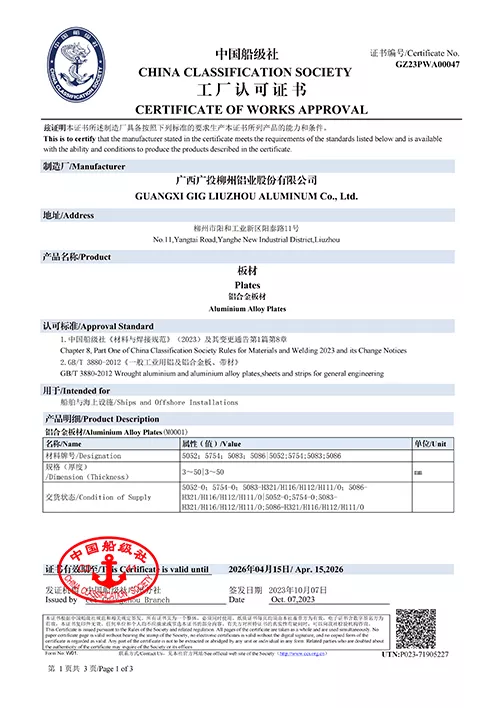
CCS Certificate for Marine Grade Aluminum Plate -
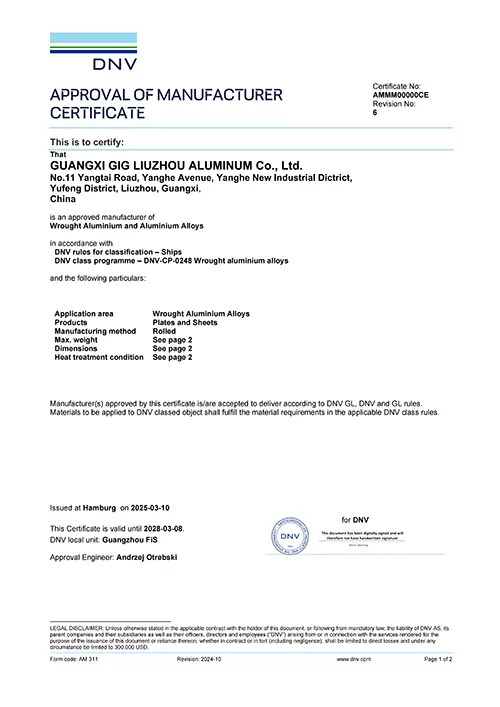
DNV Certificate for Marine Aluminum Sheet -
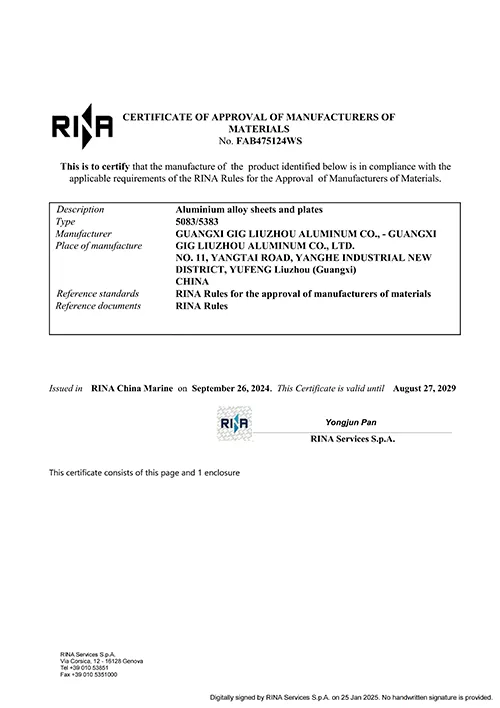
RINA Certificate for Marine Aluminum Plate -
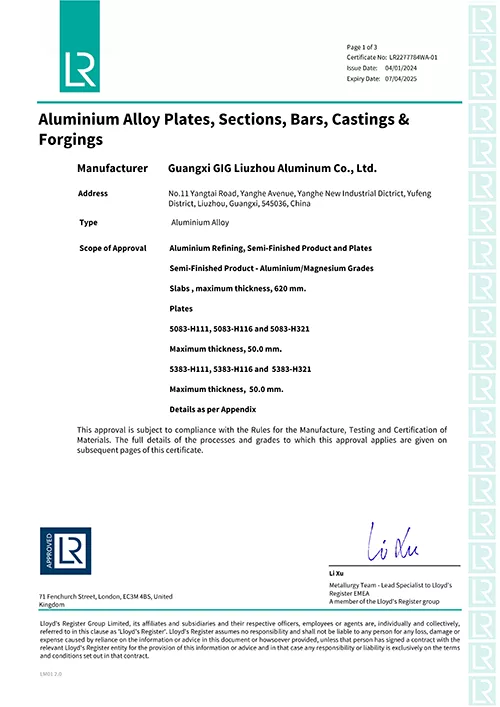
LR Certificate for Marine Grade Aluminum Sheet
Welding Recommendations for 5083 H116 Aluminum Plate
5083 H116 aluminum plate can be welded by conventional aluminum welding processes. The actual welding procedure should be approved according to plate thickness, structural design, service environment, required strength and applicable shipyard or classification society requirements.
Common Welding Processes
- MIG welding
- TIG welding
- Pulsed MIG welding
- Automated aluminum welding systems
- Mechanized welding for large marine panels
Common Filler Alloy Options
- 5183 filler wire
- 5356 filler wire
- 5556 filler wire
- Final selection should follow approved WPS requirements
- Use clean, dry and properly stored filler wire
Before welding, remove oil, moisture, oxide contamination and other surface contaminants. Control heat input and distortion, especially when fabricating large-width marine panels.
5083 H116 Aluminum Plate Manufacturing Capability
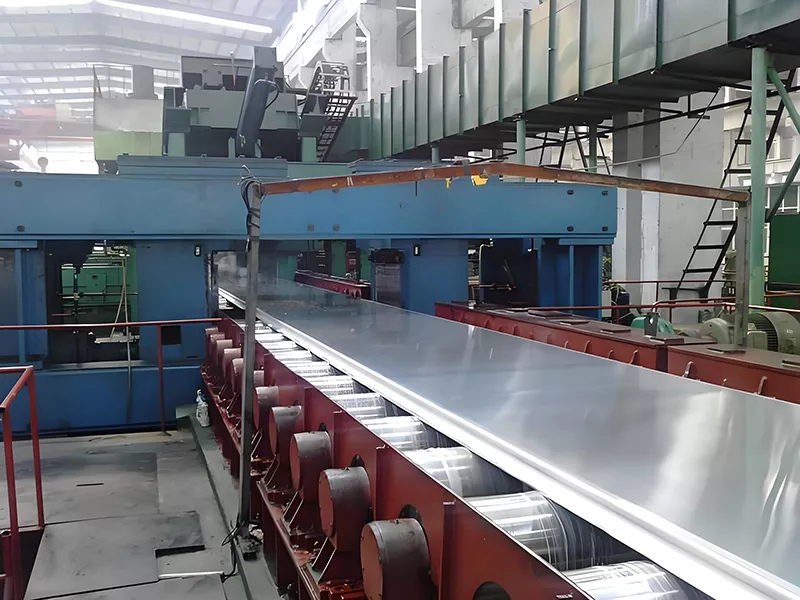
Haomei Aluminum operates advanced hot rolling production lines for marine aluminum plate manufacturing.
We provide stable mechanical performance, precise thickness tolerance and excellent surface flatness for global shipbuilding and offshore engineering projects.
- Ultra-wide marine aluminum plate production
- Maximum width up to 3800mm
- Continuous hot rolling line
- Online flatness control system
- Ultrasonic inspection available
- Marine certification support
5083 H116 Aluminum Plate Surface Quality Control
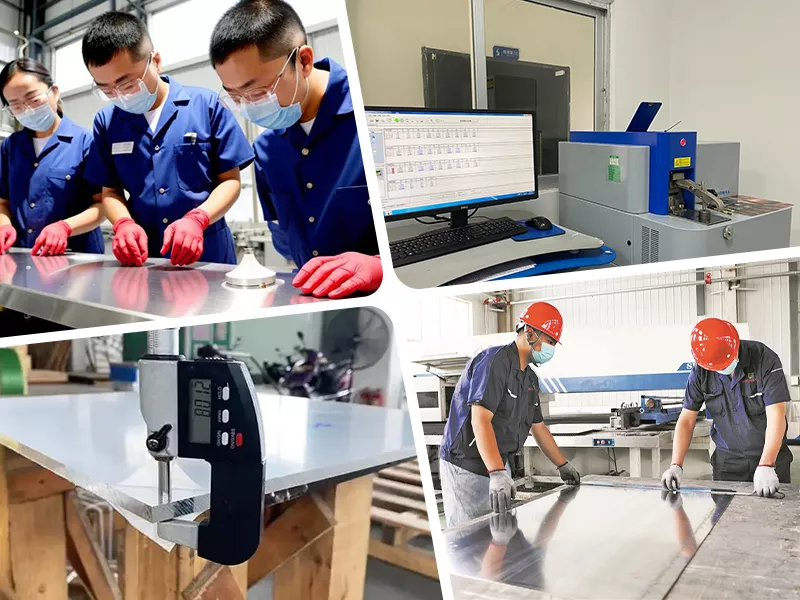
- Chemical composition inspection
- Mechanical property testing
- Ultrasonic flaw detection
- Flatness inspection
- Surface cleanliness control
- No oil stains or cracks
- Stable seawater corrosion resistance
Export Packaging of 5083 H116 Aluminum Plate
Moisture Protection
Waterproof paper and VCI film for sea freight transportation.
Strong Pallet Packaging
Wooden pallet with steel strip reinforcement.
Edge Protection
Corner protection prevents transportation damage.
5083 H116 Aluminum Plate Sheet Inventory
| Description | Temper | Thickness/in | Form |
| 0.125" ASTM B928 5083 H116 Aluminum Sheet | H116 | 0.125" | Sheet |
| 0.160" ASTM B928 5083 H116 Aluminum Sheet | H116 | 0.160" | Sheet |
| 0.190" ASTM B209, ASTM B928 5083 H116 Aluminum Sheet | H116 | 0.190" | Sheet |
| 0.197" ASTM B209, ASTM B928 5083 H116 Aluminum Sheet | H116 | 0.197" | Sheet |
| 0.236" ASTM B209, ASTM B928 5083 H116 Aluminum Plate | H116 | 0.236" | Plate |
| 0.250" ASTM B209, ASTM B928 5083 H116 Aluminum Plate | H116 | 0.250" | Plate |
| 0.313" AMS4056, QQ-A-250/6 5083 H116 Aluminum Plate | H116 | 0.313" | Plate |
| 0.375" ASTM B928 5083 H116 Aluminum Plate | H116 | 0.375" | Plate |
| 0.394" ASTM B928 5083 H116 Aluminum Plate | H116 | 0.394" | Plate |
| 0.472" AMS4056, QQ-A-250/6 5083 H116 Aluminum Plate | H116 | 0.472" | Plate |
| 0.500" AMS4056, QQ-A-250/6 5083 H116 Aluminum Plate | H116 | 0.500" | Plate |
| 0.625" ASTM B209, ASTM B928 5083 H116 Aluminum Plate | H116 | 0.625" | Plate |
| 0.750" AMS4056, QQ-A-250/6 5083 H116 Aluminum Plate | H116 | 0.750" | Plate |
| 1.000" AMS4056, QQ-A-250/6 5083 H116 Aluminum Plate | H116 | 1.000" | Plate |
| 1.375" ASTM B209, ASTM B928 5083 H116 Aluminum Plate | H116 | 1.375" | Plate |
5083 H116 vs. 5083 H321, H111 and H112
All tempers use the same 5083 aluminum alloy chemistry, but their processing conditions, mechanical-property ranges and intended applications differ.
| Temper | Typical Use | Main Selection Consideration | Fabrication Characteristics |
| 5083 H116 | Marine hulls, decks, offshore structures, seawater-exposed components | Commonly specified where controlled corrosion performance is required | Good welding and fabrication performance; suitable for demanding marine service |
| 5083 H321 | Marine structures and fabricated shipbuilding components | Stabilized temper characteristics; selection depends on project specification | Excellent weldability and established marine fabrication performance |
| 5083 H111 | Formed parts, tanks and general fabrication | Often selected where forming requirements are important | Good workability with lower work-hardened condition |
| 5083 H112 | General structural components and further fabrication | Used according to structural and processing requirements | Good fabrication flexibility; properties may vary by production route |
Choose 5083 H116 When:
- The plate will be used in long-term marine or offshore service.
- The project requires corrosion-sensitive marine material selection.
- The buyer requires classification society inspection or documentation.
- The application includes hull plating, decks, bulkheads or offshore modules.
- Wide hot rolled plate and welded structural performance are important.
Consider H111 or H112 When:
- The fabrication process requires more forming flexibility.
- The part is a general structural component rather than a critical seawater-exposed area.
- The design specification does not require H116 or marine corrosion testing.
- The material will be further processed into formed tanks or curved components.
- The project focuses on general industrial use rather than certified marine service.
For detailed temper selection, read: 5083 H116 vs. H321 Aluminum Plate and Aluminium 5083 H111 and H112.
FAQ about 5083 H116 Aluminum Plate
What is the difference between 5083 H116 and H321?
5083 H116 offers stronger corrosion resistance in seawater environments, while H321 provides better structural stability after processing and welding.
Is 5083 H116 aluminum marine grade?
Yes. 5083 H116 is a certified marine-grade aluminum alloy widely used in shipbuilding and offshore engineering industries.
Can 5083 H116 aluminum plate be welded?
Yes. 5083 H116 aluminum plate has excellent weldability and is suitable for large marine structures and ship hull fabrication.
What certifications are available for 5083 H116 aluminum plate?
ABS, DNV, CCS, BV, LR and other marine certifications can be provided according to project requirements.
What is aluminum equivalent to 5083?
Equivalent grades include A95083, AlMg4.5Mn, DIN 3.3547, EN AW-5083, GM41 and Al Mg4.5 Mn0.7.
Can Haomei Aluminum supply ABS or DNV certified 5083 H116 plate?
Certification can be arranged for qualifying orders. The required classification society, plate dimensions, quantity, inspection scope and project standard should be confirmed before production. Certification availability depends on approved mill scope and specific project requirements.
What is the maximum width of 5083 H116 aluminum plate?
Haomei Aluminum can supply wide 5083 H116 hot rolled plate up to 3800 mm in width, subject to thickness, length, certification requirements and production schedule.
Is 5083 H116 suitable for LNG and low-temperature applications?
5083 aluminum alloy has good low-temperature toughness and is used in certain cryogenic and LNG-related structures. Final selection must comply with the applicable design code, operating temperature, pressure vessel requirements and project engineering approval.
Can 5083 H116 plate be cut to custom length?
Yes. Custom cutting lengths can be supplied according to your fabrication requirements, transport limitations, packing method and loading plan.
What information is needed to quote 5083 H116 aluminum plate?
Please provide thickness, width, length, quantity, temper, applicable standard, certification requirement, inspection requirement, destination port and requested delivery date. Drawings and material lists are helpful for marine and offshore projects.
Products you may be interested in
- 5083 Aluminum Plate Sheet
- 5083 H321 Aluminum Sheet and Plate
- 5083 h111 aluminum plate sheet
- 5083 h112 aluminum plate sheet
- 5083 h22 aluminum plate sheet
- 5083 h34 aluminum plate sheet
- 5083 o aluminum plate sheet
- 5083 H131 Aluminum Plate
Further reading
Users viewing this material also viewed the following
- Aluminium Tooling Plate 5083
- 5083 Cast Aluminum Plate
- 5083 Aluminum Armor Plate
- 5083 Marine Aluminum Plate
- 5083 Tanker Aluminum Plate H111/H321 for Fuel Tanker
- 5083 Aluminum Sheet for Auto Body and Automotive Applications
Recommended Content