
When customers ask about 5083 H116 vs H321 aluminum, it usually comes down to one practical concern: which temper performs better in real marine and structural fabrication?
From a manufacturing standpoint, the answer is not absolute.
5083-H116 is commonly selected for highly corrosive marine conditions due to its strong resistance performance, while 5083-H321 is a stabilized temper designed to maintain more consistent mechanical properties and dimensional stability during fabrication and long-term service.
In actual production and supply experience, we rarely recommend one temper as universally superior. The correct choice depends on project design standards, welding requirements, plate thickness, classification rules, and the final service environment.
This comparison is prepared from a supplier’s perspective to help you quickly understand the practical differences between 5083 H116 and H321 aluminum, so you can make a more reliable material decision for your application.
5083 H116 vs H321 Aluminum: What’s the Difference?
Both H116 and H321 are tempers of 5083 aluminum alloy, a high-magnesium, non-heat-treatable alloy known for:
- Excellent seawater corrosion resistance
- High strength compared with many other aluminum alloys
- Good weldability
- Good performance in low-temperature environments
- Wide use in shipbuilding, tanks, pressure vessels, and offshore structures
The difference is not the alloy chemistry.
The difference is the temper, meaning how the plate has been strain-hardened, stabilized, and controlled after rolling.
5083 H116 vs H321 Aluminum Quick Comparison Table
| Item | 5083-H116 | 5083-H321 |
| Temper | Strain-hardened, corrosion-controlled | Strain-hardened, stabilized |
| Corrosion resistance | Very strong | Very strong |
| Strength | Comparable (varies by thickness & standard) | |
| Dimensional stability | Good | Better |
| Typical applications | Marine hulls, offshore plates | Welded structures, decks, bulkheads |
What Is 5083-H116 Aluminum?
5083-H116 is a strain-hardened temper of aluminum alloy 5083, widely used in marine and offshore environments where corrosion resistance matters more than anything else. It is typically supplied in plate form for structural applications such as shipbuilding and coastal engineering.
What makes the H116 temper stand out is its proven resistance to exfoliation and intergranular corrosion, especially under long-term seawater exposure. In practical terms, it performs reliably in harsh chloride-rich environments where many other alloys would degrade over time.
You’ll often find it used in:
- Ship hull structures and plating
- Workboats and patrol vessels
- Marine superstructures
- Offshore platforms
- Storage tanks exposed to saltwater or coastal air
- Coastal and nearshore structural components
For projects exposed to constant seawater, splash zones, or high humidity with salt content, 5083-H116 is generally considered one of the most dependable choices in marine-grade aluminum.
What Is 5083-H321 Aluminum?
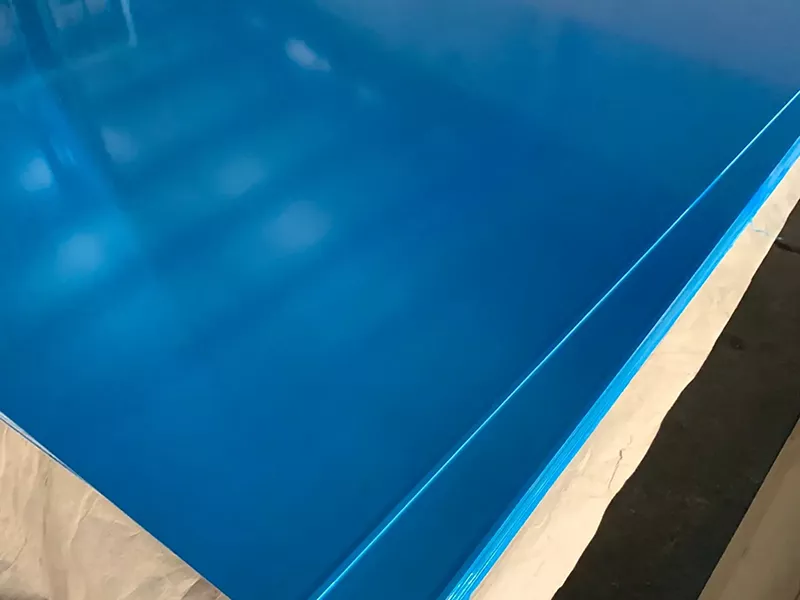
5083-H321 is also a marine-grade temper of 5083 aluminum. It is strain-hardened and then stabilized to achieve controlled mechanical properties and corrosion performance.

The “H3” part means the material has been strain-hardened and stabilized. Stabilization helps reduce changes in properties over time and can improve consistency in fabricated structures.
5083-H321 is commonly used for:
- Welded marine structures
- Ship decks
- Bulkheads
- Offshore structures
- Pressure vessels
- Transportation equipment
- Cryogenic or low-temperature equipment
- Large aluminum plates requiring stable performance
For many marine fabrication projects, 5083-H321 offers a good balance of strength, corrosion resistance, and stability.
Strength Comparison: Is H116 Stronger Than H321?
When it comes to 5083-H116 vs 5083-H321, there is usually no meaningful strength gap in real-world use.
Both tempers sit in the same performance range for a non-heat-treatable alloy, and their mechanical properties are generally very close. In practice, differences in tensile strength, yield strength, and elongation are more often influenced by production and testing conditions than by the temper designation itself.
Key factors that can affect the final results include:
- Plate thickness
- Rolling and production route
- Mill process control
- Test orientation (longitudinal or transverse)
- Applicable certification system
- Standards such as ASTM, EN, ABS, DNV, or Lloyd’s Register
Because of these variables, H116 and H321 often overlap in published mechanical ranges. In most cases, the real deciding factor is the mill test certificate rather than the temper label itself.
Typical 5083 Plate Mechanical Properties
| Temper | Tensile Strength | Yield Strength | Elongation |
| KSI | KSI | % | |
| O (annealed) | 42 | 21 | 14 |
| H112 | 43 | 23 | 10 |
| H116 | 46 | 33 | 10 |
| H321 | 46 | 33 | 10 |
However, for engineering design, always use the values listed in your project standard or material certificate.
Corrosion Resistance: Which Temper Performs Better in Seawater?
Both 5083-H116 and 5083-H321 have excellent corrosion resistance, especially compared with many other aluminum alloys.
But if the main question is seawater exposure, 5083-H116 is often chosen when maximum marine corrosion resistance is the priority.
H116 is specifically associated with marine service and is commonly tested or supplied under standards that control resistance to exfoliation and intergranular corrosion.
That said, 5083-H321 is also widely accepted in marine applications, especially when produced according to marine-grade standards such as ASTM B928 or approved classification society requirements.
Simple rule:
- Choose 5083-H116 for harsh seawater exposure and hull plating.
- Choose 5083-H321 for stable welded structures where controlled properties are important.
- If a drawing or classification society specifies one temper, follow the specification exactly.
Weldability: H116 vs H321
Both tempers weld very well.
5083 aluminum is one of the most commonly welded aluminum alloys in marine construction. It is often welded using filler wires such as:
- 5183
- 5356
- 5556
However, one important point is often missed:
Welding can soften the heat-affected zone of both H116 and H321.
Because 5083 is a non-heat-treatable alloy, its strength comes partly from strain hardening. When it is welded, the heat can reduce some of that strain-hardened strength near the weld.
This does not mean the material is poor for welding. It simply means the design must account for welded mechanical properties.
For boats, ships, pressure vessels, and offshore structures, welding procedures should follow the required code or classification standard.
Formability and Fabrication
5083 aluminum is generally easy to work with in fabrication, though it is noticeably stronger and less ductile than softer alloys such as 5052 or 3003.
When comparing H116 and H321, both are widely used in marine and structural fabrication, but their behavior during processing can feel slightly different.
- H116 is commonly used for bending, cutting, and welding in shipbuilding and marine structures, with predictable forming behavior.
- H321 is often chosen when improved stability after forming is important, especially in welded assemblies.
In large panel fabrication, dimensional stability becomes more noticeable. When parts are cut, welded, or exposed to heat input, H321 is often preferred where maintaining flatness is important.
For bending operations, the minimum bend radius is not fixed and should be checked based on real processing conditions, including:
- Plate thickness
- Temper condition
- Grain direction
- Tooling design
- End-use requirements
In practice, alloy grade alone is not enough—temper condition and thickness usually determine how the material behaves in fabrication.
Marine Applications: Which One Should You Use?
For marine projects, both H116 and H321 can be correct. The final choice depends on the part.
Choose 5083-H116 for:
- Boat hulls
- Ship side plates
- Bottom plates
- Splash-zone components
- Coastal structures
- Applications with constant seawater contact
- Projects where marine corrosion resistance is the first priority
Choose 5083-H321 for:
- Ship decks
- Bulkheads
- Welded marine structures
- Offshore structural parts
- Large fabricated panels
- Pressure vessels
- Applications requiring stable mechanical properties
Cost and Availability
In most cases, the price gap between 5083-H116 and 5083-H321 is relatively small. What tends to vary more is availability, which depends on region, mill production, thickness, and certification requirements.
The final cost is usually influenced by:
- Plate thickness
- Width and length specifications
- Order quantity
- Required certifications
- Surface finish requirements
- Current aluminum market pricing
- Dimensional tolerance (flatness and thickness accuracy)
In some supply markets, H116 is more commonly stocked for hull plate applications, while in others H321 appears more frequently in certified marine inventories.
For procurement, it is better not to judge by price alone. The full technical specification matters more than the temper label.
Typical documents to request from suppliers include:
- Mill test certificate (MTC)
- Alloy and temper verification
- ASTM B209 / ASTM B928 / EN compliance
- Chemical composition report
- Mechanical property data
- Corrosion test results (if required)
Can You Substitute H116 for H321?
In some projects, substitution is possible. In others, it is not—especially when certification or classification rules are involved.
Although 5083-H116 and 5083-H321 belong to the same alloy family and are often used in similar marine structures, they are not always interchangeable in formal specifications.
Whether substitution is acceptable usually depends on:
- Engineering drawings and design intent
- Customer technical requirements
- Classification society rules
- Welding procedure specifications (WPS)
- Project or industry standards
- End-use safety and regulatory constraints
In shipbuilding, offshore structures, or pressure-related applications, even small differences in temper designation can affect approval, inspection results, and compliance status.
For that reason, any substitution should be reviewed and approved before production—not decided only based on material similarity.
So, Which Is Better: 5083 H116 or H321?
If you need a simple answer:
5083-H116 is better for severe marine corrosion resistance, especially hulls and seawater-exposed plates.
5083-H321 is better when you need stabilized properties, good dimensional control, and reliable performance in welded marine structures.
For many marine applications, both tempers perform very well. The better choice is the one that matches your design standard and service environment.
Best choice by requirement
| Application | Recommended Temper |
| Seawater corrosion resistance | 5083-H116 |
| Hull plates | 5083-H116 |
| Marine welded structures | H116 / H321 |
| Dimensional stability | 5083-H321 |
| Offshore structures | H116 / H321 |
| Harsh chloride environments | 5083-H116 |
| Large fabricated panels | 5083-H321 |
FAQ: 5083 H116 vs H321 Aluminum
Is 5083-H116 marine grade?
Yes. 5083-H116 is widely used as marine-grade aluminum plate, especially for hulls and seawater-exposed structures.
Is 5083-H321 also suitable for marine use?
Yes. 5083-H321 is also used in marine and offshore applications. It offers excellent corrosion resistance and stable properties.
Which is stronger, 5083-H116 or 5083-H321?
They are usually very close in strength. The exact mechanical properties depend on thickness, production standard, and mill certification.
Which is better for boat hulls?
5083-H116 is commonly preferred for boat hulls because of its strong marine corrosion resistance. However, some designs may specify H321 depending on the standard.
Can 5083-H116 and H321 be welded?
Yes. Both have excellent weldability. Common filler metals include 5183, 5356, and 5556.
Does welding reduce strength?
Yes. Welding can soften the heat-affected zone because 5083 is a strain-hardened, non-heat-treatable alloy. Design calculations should use approved welded properties.
Can I replace H116 with H321?
Only if your project specification allows it. For certified marine, offshore, or pressure applications, approval should be obtained before substitution.
Final Recommendation
Choose 5083-H116 if your part will face severe seawater exposure, especially hull plates or splash-zone structures.
Choose 5083-H321 if you need a stabilized marine plate for welded structures, large panels, or applications where controlled properties and dimensional stability are important.
Both are excellent marine-grade choices. The best material is not simply the stronger one — it is the one that meets the standard, performs reliably in service, and comes with the right certification.
Products you may be interested in
- 5083 Aluminum Plate Sheet
- 5083 H321 Aluminum Sheet and Plate
- 5083 H116 Aluminum Plate Sheet
- 5083 h111 aluminum plate sheet
- 5083 h112 aluminum plate sheet
- 5083 h22 aluminum plate sheet
- 5083 h34 aluminum plate sheet
- 5083 o aluminum plate sheet
- 5083 Aluminum Coil Supplier
- 5083 H131 Aluminum Plate
Users viewing this material also viewed the following