
If you work with marine aluminium, pressure vessels, transport equipment, or welded structures, you will likely come across two common tempers: Aluminium 5083 H111 and H112.
At first glance, they appear very similar. Both belong to the 5083 aluminium-magnesium alloy family and are known for strong corrosion resistance, especially in seawater environments. They are widely used in plates, sheets, and structural components.
However, in real-world applications, the choice between 5083 H111 and 5083 H112 can influence formability, mechanical stability, welding behavior, and overall project cost.
This article breaks down the practical differences between Aluminium 5083 H111 and H112, where each temper is typically applied, and the key points to consider before ordering.
Aluminium 5083 H111 and H112: Main Differences
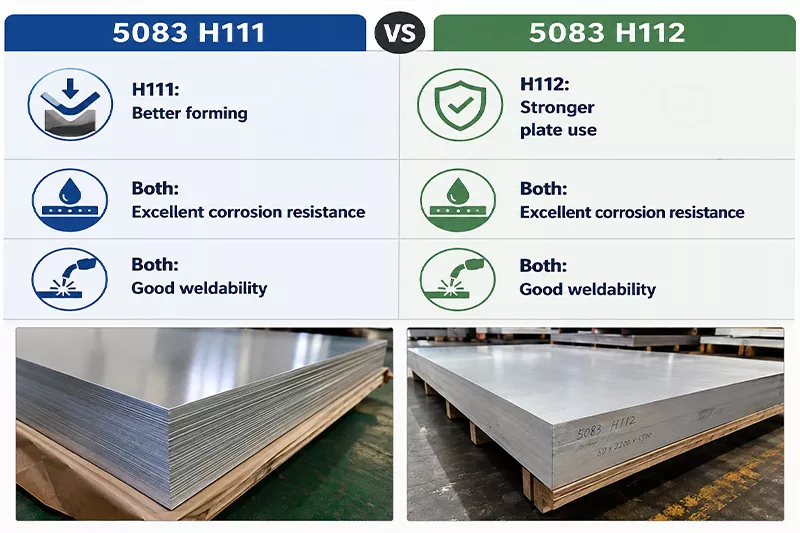
| Item | 5083 H111 | 5083 H112 |
| Temper | Slightly strain-hardened | Strain-hardened (plate processing) |
| Formability | Better for bending & forming | Moderate, less forming-focused |
| Typical Use | Marine sheets, formed parts | Thick plates, structural parts |
| Key Advantage | Excellent fabrication flexibility | Better for heavy-duty plate use |
| Common Features | Excellent corrosion resistance & weldability | |
How to Choose Between Aluminium 5083 H111 and H112
The right temper mainly depends on how the material will be processed and used.
Choose 5083 H111 if:
- You need bending or forming
- Good ductility is important
- The material will be rolled or shaped
- You use sheet or medium-thickness plate
- The structure requires better fabrication flexibility
Choose 5083 H112 if:
- You need thick aluminium plate
- The material will mainly be cut or welded
- Higher structural strength is preferred
- The application involves marine or heavy-duty structures
- Forming work is minimal
In many projects, H111 is preferred for formed components, while H112 is commonly used for thicker structural plates and welded constructions.
What Is Aluminium 5083?
Aluminium 5083 is a high-magnesium aluminium alloy widely used in marine and industrial applications. It is known for excellent corrosion resistance, strong welding performance and good mechanical strength.
Due to its resistance to seawater and harsh environments, 5083 aluminium is commonly used for marine structures, transport equipment and pressure vessels.
Common product names include:
- EN AW-5083
- AA 5083
- 5083 marine grade aluminium
- 5083 aluminium plate
- 5083 aluminium sheet
Typical applications:
- Shipbuilding and boat hulls
- Marine structures and decks
- Pressure vessels and storage tanks
- LNG and cryogenic equipment
- Truck bodies and trailers
- Offshore platforms
- Welded structural components
5083 remains one of the most widely used marine aluminium alloys because it combines strength, corrosion resistance and good fabrication performance.
What Does H111 Mean in Aluminium 5083 H111?
H111 is a lightly strain-hardened temper. Compared with fully hardened tempers, it provides better flexibility and forming performance.
5083 H111 is commonly chosen for applications that require:
- Bending and forming
- Good ductility
- Reliable welding performance
- Strong corrosion resistance
- Stable fabrication properties
Because of its balanced mechanical properties, H111 is widely used for fabricated marine and structural components.
Common Uses of 5083 H111
- Boat hull panels
- Marine structural parts
- Formed aluminium components
- Welded tanks
- Vehicle body panels
- Fabricated structural plates
If the project involves rolling, bending, shaping or welding, 5083 H111 is often a practical choice.
What Does H112 Mean in Aluminium 5083 H112?
H112 is a temper typically supplied after hot working or limited strain hardening. It is commonly used for thicker aluminium plates and structural applications.
5083 H112 is often selected for:
- Thick aluminium plates
- Heavy structural applications
- Machined components
- Marine plate projects
- Large welded structures
Compared with H111, H112 is more commonly used where forming is limited and structural performance is more important.
Common Uses of 5083 H112
- Shipbuilding plates
- Offshore structures
- Pressure vessel plates
- Storage tanks
- Industrial support structures
- Marine equipment bases
For thick plate fabrication and welded structural use, 5083 H112 is a widely used commercial temper.
Mechanical Properties of Aluminium 5083 H111 and H112
The mechanical properties of 5083 aluminium can vary depending on plate thickness, production process and supply standard.
Before purchasing, it is important to confirm the actual test values on the mill test certificate (MTC).
Key properties usually checked include:
- Tensile strength
- Yield strength
- Elongation
- Hardness
- Thickness tolerance
- Flatness and surface quality
In practical applications:
- 5083 H111 is commonly used when bending, forming and higher elongation are required.
- 5083 H112 is more often selected for thick plates and welded structural applications.
For marine, offshore or pressure vessel projects, material selection should follow the required standards and certifications, such as EN, ASTM or classification society specifications.
Mechanical Properties of 5083-H111 vs 5083-H112 Aluminum
| Property | 5083-H111 Aluminum | 5083-H112 Aluminum |
| Brinell Hardness | 75 | 75 |
| Elastic (Young's) Modulus | 68 GPa | 68 GPa |
| Elongation at Break | 13% | 13% |
| Fatigue Strength | 120 MPa | 110 MPa |
| Poisson's Ratio | 0.33 | 0.33 |
| Shear Modulus | 26 GPa | 26 GPa |
| Shear Strength | 180 MPa | 180 MPa |
| Tensile Strength (Ultimate UTS) | 300 MPa | 300 MPa |
| Tensile Strength (Yield / Proof) | 150 MPa | 130 MPa |
Corrosion Resistance in Marine Environments
One of the biggest reasons engineers choose Aluminium 5083 H111 and H112 is corrosion resistance.
5083 performs very well in:
- Seawater
- Coastal environments
- Marine atmospheres
- Industrial conditions
- Low-temperature environments
This makes it a trusted material for shipbuilding, offshore equipment and marine tanks.
However, good corrosion performance also depends on correct fabrication. Poor welding practice, contamination, wrong filler metal or unsuitable surface treatment can reduce service life. For marine projects, it is important to use proper welding procedures and avoid contact with incompatible metals that may cause galvanic corrosion.
Weldability of Aluminium 5083 H111 and H112
Both tempers have excellent weldability. This is one of the major advantages of 5083 aluminium.
Common welding methods include:
- MIG welding
- TIG welding
- Friction stir welding
- Automated aluminium welding
Common filler metals may include:
- 5183
- 5356
- 5556
The right filler depends on strength requirements, corrosion resistance and service environment.
One important point: 5083 is non-heat-treatable. Welding can affect the local mechanical properties around the heat-affected zone, but the alloy still performs well in welded structures when the procedure is correct.
For shipbuilding or pressure vessel applications, welding procedures should be qualified according to the relevant standards.
Which Is Better for Bending: 5083 H111 or H112?
For bending and forming, Aluminium 5083 H111 is usually the better choice.
Why?
Because H111 generally provides better formability and more predictable behavior during fabrication. It is commonly used when plates or sheets need to be bent, rolled or shaped before welding.
That said, successful bending depends on several factors:
- Plate thickness
- Bend radius
- Grain direction
- Tooling condition
- Surface quality
- Bending temperature
- Required final shape
If the bending radius is too tight, cracking can occur even with a suitable temper. For critical parts, testing a sample before mass production is a smart step.
Which Is Better for Thick Plate: 5083 H111 or H112?
For thick aluminium plate, 5083 H112 is very commonly used.
H112 is suitable for heavy plate applications where the material will be cut, machined, welded or assembled rather than deeply formed.
Typical examples include:
- Marine structural plates
- Offshore platforms
- Heavy welded frames
- Tank components
- Machined base plates
- Pressure vessel parts
If your project requires thick plate with good corrosion resistance and weldability, 5083 H112 is often a practical choice.
Aluminium 5083 H111 and H112 in Shipbuilding
Aluminium 5083 is widely used in marine construction because of its excellent resistance to seawater corrosion, high strength and reliable weldability.
Typical marine applications include:
- Hull plating
- Deck structures
- Bulkheads
- Superstructures
- Work boats
- Patrol vessels
- Passenger ferries
- Fishing boats
- Offshore support vessels
In practical fabrication, 5083 H111 is often selected for parts that require bending, rolling or forming. 5083 H112 is more commonly used for thicker structural plates where higher strength is preferred.
Marine aluminium plates may also require approval from classification societies depending on the project specification.
- DNV
- ABS
- Lloyd’s Register
- Bureau Veritas
- CCS
- RINA
For commercial vessels and offshore structures, mill test certificates and traceability documents are usually mandatory.
Our marine grade aluminum sheets are certified by globally recognized classification societies, ensuring compliance with shipbuilding and offshore engineering standards.
-
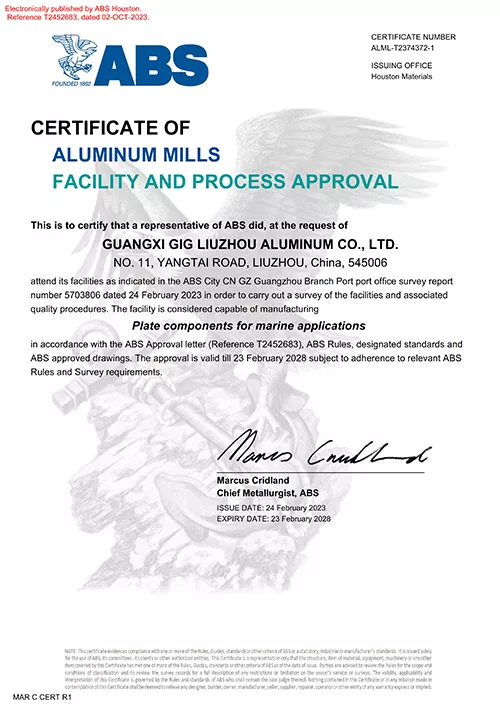
ABS Certificate -
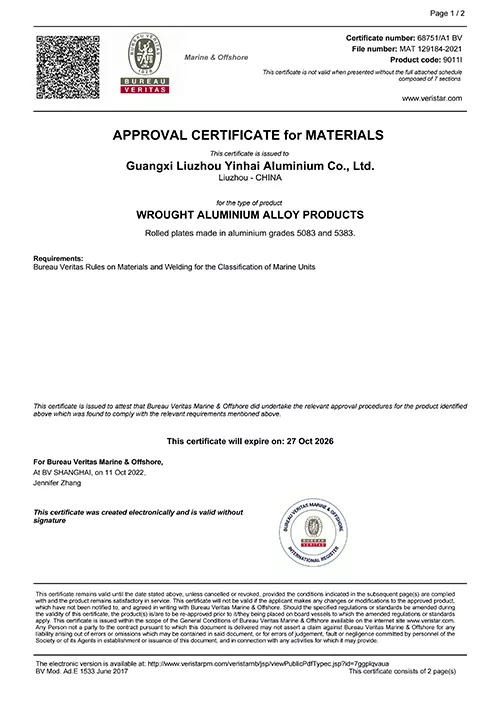
BV Certificate -
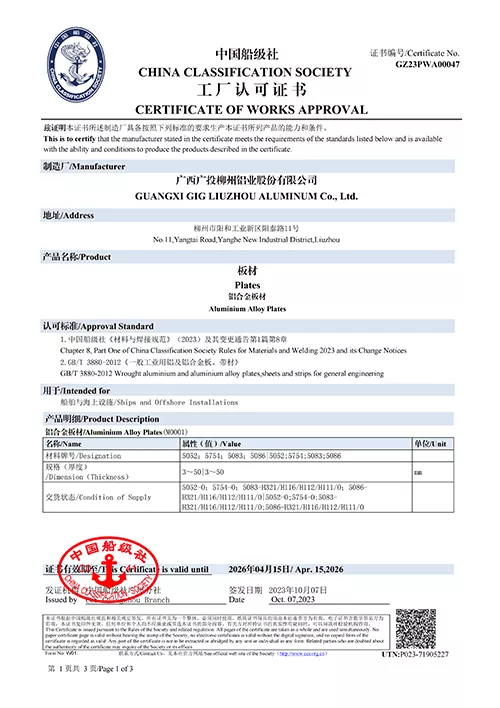
CCS Certificate -
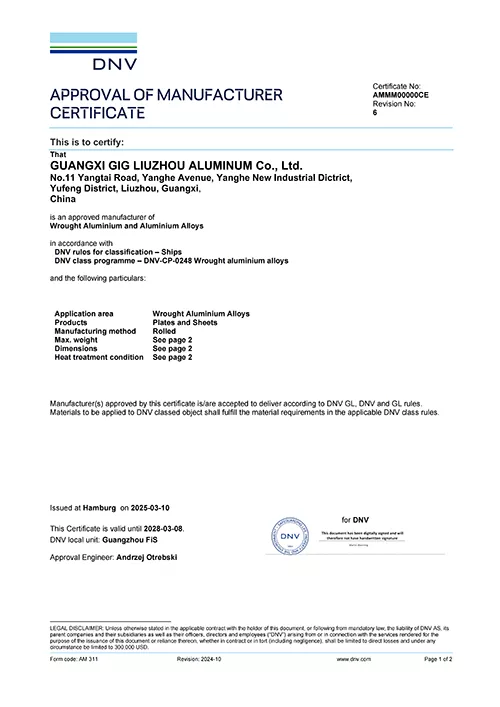
DNV Certificate -
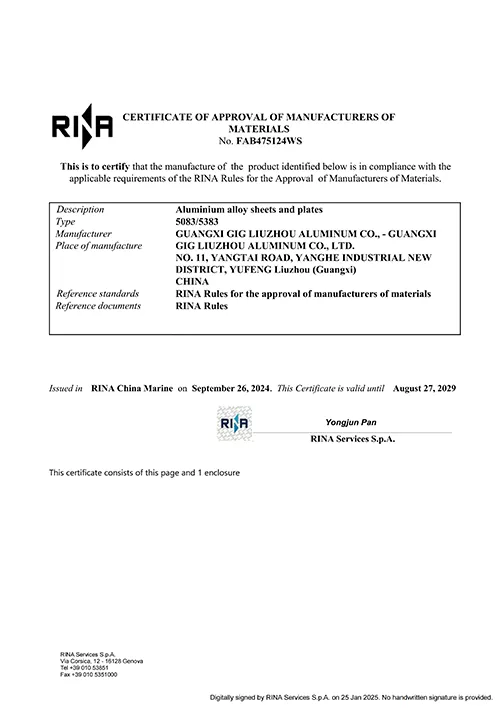
RINA Certificate -
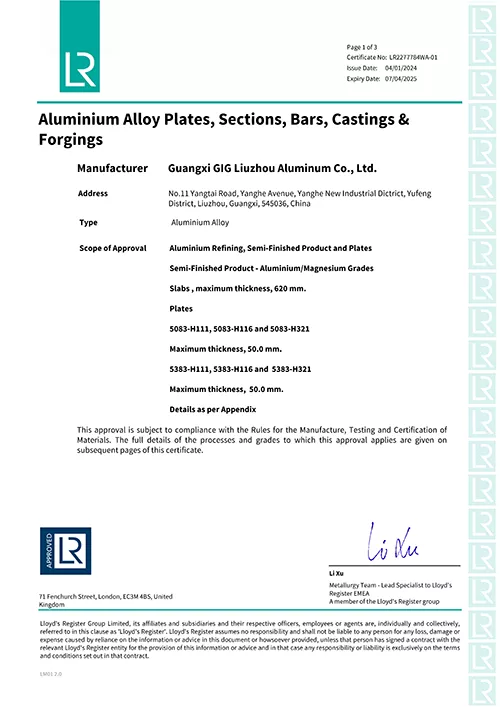
LR Certificate
Aluminium 5083 H111 and H112 for Pressure Vessel Applications
Aluminium 5083 is also used in pressure vessels and storage systems thanks to its combination of strength, corrosion resistance and good low-temperature performance.
Common applications include:
- LNG storage tanks
- Cryogenic vessels
- Chemical tanks
- Fuel tanks
- Road tankers
- Industrial pressure equipment
For pressure equipment, material compliance and certification are usually more important than small price differences between tempers.
Aluminium 5083 H111 and H112 are both excellent choices for marine, structural, tank and welded applications. They share the same alloy base, but their temper differences matter.
If your project needs bending, forming or shaped parts, 5083 H111 is usually the better fit. If you need thick plate, machining or heavy welded structures, 5083 H112 is often the practical choice.
The best decision depends on thickness, fabrication method, standards and service environment. For critical applications, always confirm the material certificate and technical requirements before production.
FAQ: Aluminium 5083 H111 and H112
What is the difference between Aluminium 5083 H111 and H112?
The main difference is the temper condition. 5083 H111 is slightly strain-hardened and is generally easier to form. 5083 H112 is more commonly used for thicker plates and structural parts where higher strength and stability are required.
Is 5083 H111 suitable for marine applications?
Yes. 5083 H111 offers excellent resistance to seawater corrosion and is widely used in shipbuilding, hull structures and marine fabrication.
Is 5083 H112 suitable for welding?
Yes. 5083 H112 has good weldability and is commonly used in welded structures such as tanks, marine frames and heavy plate assemblies.
Which temper is better for bending and forming?
5083 H111 is generally preferred for bending and forming operations because it provides better ductility and elongation compared to H112.
Which temper is more suitable for thick aluminium plates?
5083 H112 is more commonly used for thick plates, especially in structural applications where cutting, welding and machining are required.
Can Aluminium 5083 H111 and H112 be used for pressure vessels?
Yes, but only when the material complies with the required pressure vessel standards. Mechanical properties, thickness requirements, traceability and certification must be confirmed before use.
Products you may be interested in
- 5083 Aluminum Plate Sheet
- 5083 H321 Aluminum Sheet and Plate
- 5083 H116 Aluminum Plate Sheet
- 5083 h111 aluminum plate sheet
- 5083 h112 aluminum plate sheet
- 5083 h22 aluminum plate sheet
- 5083 h34 aluminum plate sheet
- 5083 o aluminum plate sheet
- 5083 Aluminum Coil Supplier
- 5083 H131 Aluminum Plate
Users viewing this material also viewed the following