
5083 tanker aluminum plate is an aluminum alloy material specially used for tanker manufacturing. It features lightweight, corrosion resistance, excellent weldability, and is widely used in oil tankers, liquid tankers, and other transport vehicles.
5083 aluminum plate has become the preferred material for modern tanker manufacturing, especially suitable for liquid transport vehicles with high requirements for safety and durability. Using a 5083 aluminum alloy tanker not only improves fuel efficiency and reduces operating costs, but also extends the vehicle’s service life and reduces maintenance frequency, making it an ideal choice for green logistics and safe transportation.
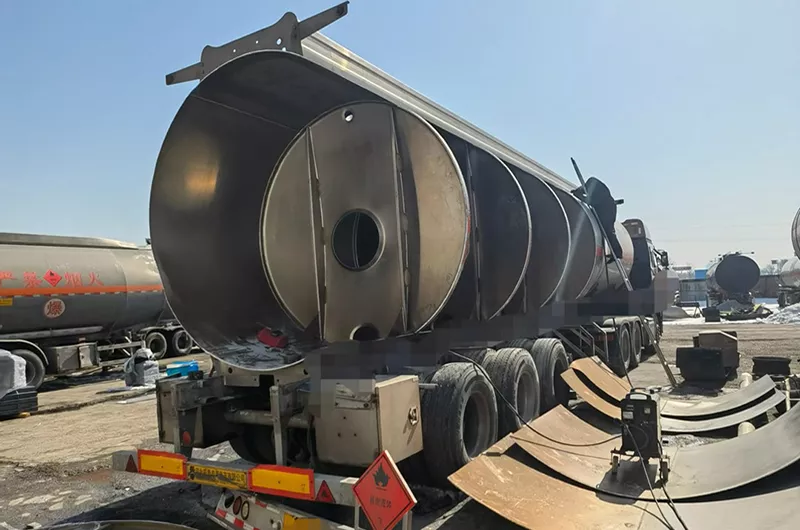
Because 5083 aluminum plate is non-combustible and impact-resistant, it enhances safety. It is particularly suitable for transporting crude oil and other liquids, and its excellent low-temperature toughness makes it an ideal material for transporting liquefied natural gas (LNG).
Why Choose 5083 Aluminum Alloy for Tanker Manufacturing?
During transportation, tankers need to withstand complex dynamic loads, internal medium pressure, and external environmental corrosion, which means extremely high material requirements. 5083 aluminum plate has become the top choice mainly due to its outstanding comprehensive properties:
Excellent Corrosion Resistance
Key point: 5083 belongs to the aluminum–magnesium alloy series, with magnesium as its main alloying element. It has exceptional corrosion resistance in environments such as the atmosphere and seawater, especially exhibiting very good resistance to stress corrosion cracking.
Significance for tankers: It can safely transport various chemical liquids (such as acetic acid, nitric acid, alcohol, etc.), food products (such as beer, milk, juice), and seawater, ensuring both the purity of the medium and the long service life of the tank body.
Medium to High Strength
Key point: 5083 aluminum alloy is a non–heat-treatable alloy that gains strength through work hardening (such as H111, H112, H116, H321 conditions). It has relatively high tensile strength and yield strength.
Significance for tankers: It is strong enough to withstand the sloshing impact (dynamic load) of liquids during transportation and a certain amount of internal pressure, ensuring structural safety.
Excellent Weldability
Key point: 5083 aluminum alloy has very good weldability, offering high welded joint efficiency and low susceptibility to welding cracks.
Significance for tankers: The tank body is a large container made by welding multiple large aluminum plates together. Excellent weldability is a prerequisite for manufacturing and a guarantee of safety.
Good Formability
Key point: In the O (annealed) condition and soft states such as H111, 5083 aluminum plate has very high ductility.
Significance for tankers: It facilitates forming processes such as rolling and stamping to manufacture the curved surfaces, end caps, and other complex shapes required for tank bodies.
Lightweight Advantage
Key point: Aluminum has a density of about one-third that of steel. An aluminum tank body can significantly reduce weight compared to a steel tank body.
Significance for tankers: Under unchanged legal weight limits, a lighter vehicle weight allows for a greater cargo load, directly improving transportation efficiency and economic benefits. This is the core competitive advantage of aluminum tankers.
Specification of 5083 Aluminum Plate for Tankers
| Alloy | Thickness(mm) | Width(mm) | Length(mm) |
| 5083 | 2.0-8.0 | 1000-2000 | 2000-12600 |
Common Tempers of 5083 Tanker Aluminum Plate
- 5083 H111: After annealing, a moderate amount of work hardening (controlled stretching) is applied. It offers a balance between strength and formability and is very commonly used.
- 5083 H112: Condition after hot working, suitable for thicker plates.
- 5086 H116/H321: Specially used for 5xxx series alloys with higher magnesium content, providing excellent seawater corrosion resistance, especially resistance to exfoliation corrosion. This is the preferred temper for marine tankers or for transporting highly corrosive media.
5083-O aluminum plate is in the annealed condition, soft in texture, suitable for bending, and used for tanker heads, covers, and anti-slosh plates.
- 5083-H111 aluminum plate has high strength and good plasticity, able to withstand certain impacts and vibrations, and is commonly used for tanker compartments.
- 5083-H32 aluminum plate has lower strength and hardness than 5083-H111. It can also be used for manufacturing tanker bodies and is usually applied in conditions with lower pressure and load.
- 5083-H321 aluminum plate has excellent resistance to stress corrosion cracking and high strength, making it suitable for high-pressure environments such as oil tanker level gauges, air inlets, and other components.
The most commonly used aluminum plate for tankers is 5083, and sometimes alloys with similar performance such as 5182 or 5454 are also used, but 5083 remains the absolute mainstream.
Advantages of 5083 Tanker Aluminum Plate
- High strength and durability: 5083 aluminum plate has excellent tensile strength and fatigue resistance, maintaining structural integrity even under harsh conditions. After welding, it still retains good strength.
- Corrosion resistance: Its high magnesium content enables effective resistance to corrosive environments such as seawater and industrial chemicals, thereby reducing maintenance costs and extending the service life of the tank.
- Lightweight: Compared with steel, 5083 aluminum plate is much lighter, increasing the effective load capacity of tankers while improving fuel efficiency and handling.
- Higher safety: Since aluminum is non-combustible, it is less likely to produce sparks in accidents. It also has strong impact energy absorption capability, helping prevent cracking and leakage.
- Good weldability: 5083 can be welded using various methods, including gas-shielded welding, TIG/MIG welding, and spot welding, contributing to strong and durable weld seams.
- Low-temperature performance: Certain specific tempers of 5083, such as 5083-H321, exhibit excellent toughness at extremely low temperatures, making them suitable for cryogenic transportation such as liquefied natural gas (LNG).
5083 Tanker Aluminum Plate Chemical Composition
| Element | Composition % |
| Al | REM |
| Si | ≤0.4 |
| Cu | ≤0.10 |
| Mg | 4.0-4.9 |
| Zn | ≤0.25 |
| Mn | 0.40-1.0 |
| Ti | ≤0.15 |
| Cr | 0.05-0.25 |
| Fe | ≤0.40 |
| Note: Single≤0.05; Total≤0.15 | |
5083 Tanker Aluminum Plate Mechanical Performance
| Alloy | Temper | Yield Strength Rp0.2(Mpa) | Tensile Strength Rm(Mpa) | Elongation A50(50%) |
| 5083 | O/H111 | ≥145 | 290-370 | ≥17 |
| H32 | ≥215 | 305-385 | ≥12 |
Applications of 5083 Aluminum Plate in Tankers
The tank body is made of 5083H111 aluminum plate. The tank covers on both sides need to be bent and formed, so 5083-O temper aluminum plate is used. O-temper aluminum plate has lower hardness and is more suitable for bending and forming. Bulkheads (baffles) also use 5083-O temper aluminum plate.
Tanker components: tank body, anti-slosh plates, vehicle skin panels, etc.

- Tank body: The primary material of the tanker.
- Other components: Used for tank covers, partitions, and baffles.
- Structural elements: Can be used for top support plates, guardrails, and walking platforms of the tank.
- Specialized LNG tankers: The H321 temper of 5083 is ideal for liquefied natural gas (LNG) tankers due to its low-temperature performance.
Main Tank Body
- Material: 5083-H111 (lightly work-hardened temper)
- Thickness: 4–8mm (mainstream specification), width up to 2650mm
- Features: Balanced strength and plasticity, suitable for welded tank structures, ensuring sealing and overall strength
End Caps and Anti-slosh Plates
- Material: 5083-O (annealed soft temper)
- Features: Soft and easy to bend, suitable for forming end caps and anti-slosh plates, reducing stress concentration
Applications of 5083 Aluminum Alloy in Diverse Tanker Fields
Fuel Transport Tankers (Oil Tankers)
Used for the safe transport of gasoline, diesel, aviation kerosene, and other fuels. Its non-sparking property greatly enhances intrinsic safety during loading and unloading, as well as transportation, effectively preventing explosion accidents.
Chemical Liquid Transport Tankers
Its excellent acid and alkali corrosion resistance allows it to safely carry various chemical media, from common acid and alkali solutions to a range of organic chemicals, ensuring safety and purity during transportation.
LNG Cryogenic Transport Tankers
At extremely low temperatures of -162℃, 5083 aluminum alloy can still maintain excellent toughness and strength without risk of brittle fracture, making it an ideal liner material for manufacturing liquefied natural gas (LNG) tanks.
Food-Grade Transport Tankers
The material is non-toxic, odorless, and corrosion-resistant, will not contaminate the transported medium, and is easy to clean and sterilize. It fully meets strict food hygiene standards and is widely used for transporting beer, milk, juice, edible oils, and other liquid foods.
Other Heavy-Duty Tankers
Additionally, in fuel tankers, bulk cement tankers, compressed natural gas (CNG) tankers, and other fields, 5083 aluminum alloy is also widely used due to its lightweight, high strength, and durability.
Comparison of 5083 Aluminum Plate with Other Tanker Materials
| Property | 5083 Aluminum Alloy | Carbon Steel | Stainless Steel (304L) |
| Weight (per same volume) | About 4 tons lighter | Baseline (100%) | About 2 tons heavier |
| Load Capacity Increase | About 20% | Baseline (100%) | About 5% |
| Corrosion Resistance | Excellent (no anti-corrosion needed) | Poor (requires regular anti-corrosion treatment) | Good |
| Service Life | 15–20 years | 5–8 years | 10–15 years |
| Overall Cost (including maintenance) | Low | Medium to high | High |
Precautions for 5083 Tanker Aluminum Plate
- High-temperature limitation: 5083 is not recommended for transporting high-temperature materials such as asphalt, because its strength decreases at temperatures above 65°C (149°F).
- Alloy alternatives: For high-temperature material tankers, alloys such as 5454 or 5754 may be more suitable because they have better strength and corrosion resistance at elevated temperatures.
- Weight and strength: Although 5083 has high strength, some tanker designs may choose 5182 to achieve a slightly thinner wall thickness while maintaining similar strength in certain applications.