
When purchasing 5086 aluminum alloy plate, many customers ask: What is the difference between 5086 H32 and 5086 H116? Which one is more suitable for ships or marine environments?
Both have the same basic alloy designation. They are both 5xxx series corrosion-resistant aluminum alloys with magnesium as the primary alloying element, offering good weldability, formability, and corrosion resistance. However, “H32” and “H116” represent different tempers, which affect the plate’s strength, stability, and performance in long-term seawater corrosion environments.
If the project is located in a general industrial environment and requires some stamping or bending, 5086 H32 is usually a practical choice. For applications such as ship hulls, decks, offshore platforms, and marine equipment that are exposed to salt spray or seawater for extended periods, 5086 H116 is generally more purpose-oriented.
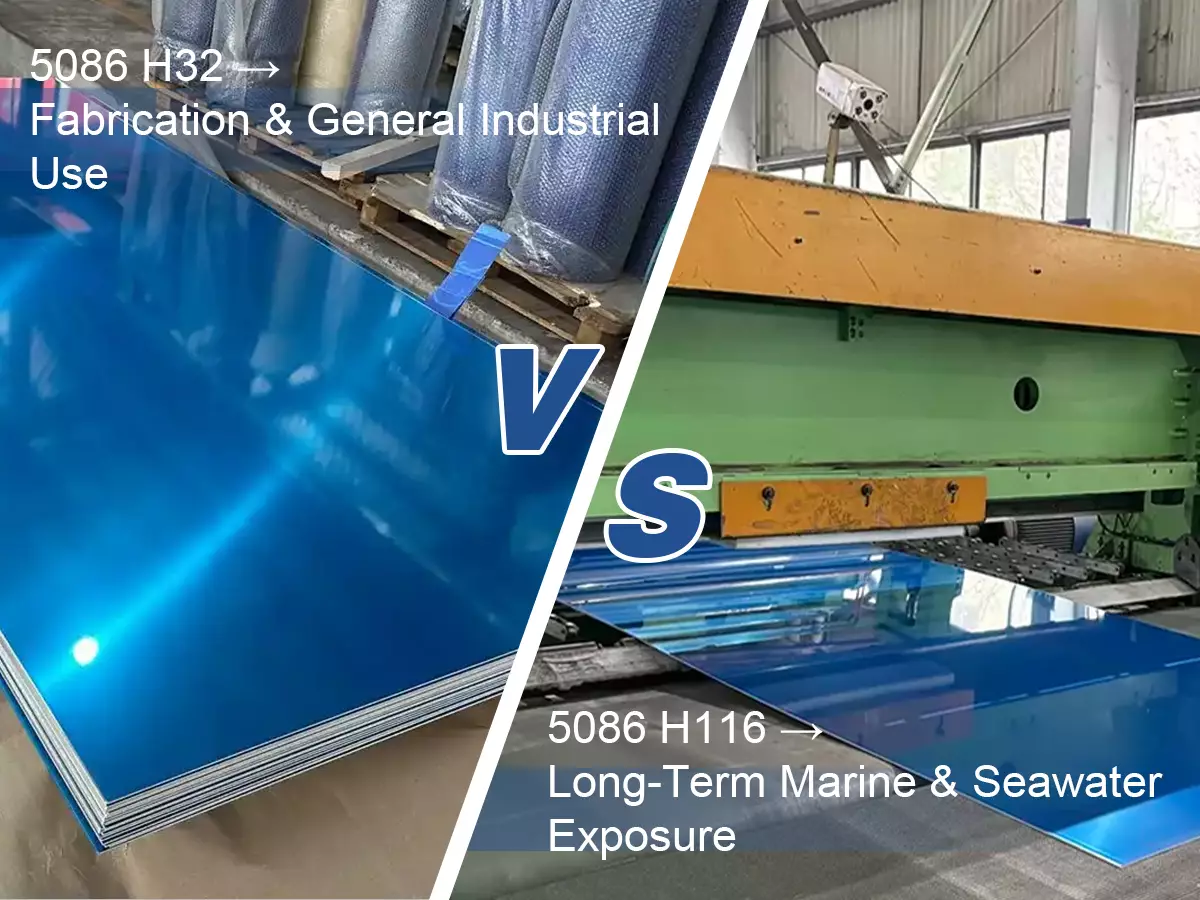
5086 H32 vs H116: Comparison of Differences
| Comparison Item | 5086 H32 | 5086 H116 |
| Alloy Designation | 5086 | 5086 |
| Temper Type | Strain hardened + stabilized, approximately quarter hard | Strain hardened + specially stabilized, intended for corrosion-resistant applications |
| Strength Level | Moderate to relatively high | Typically offers higher structural suitability, depending on thickness and applicable standard |
| Formability | Good | Good, but should be evaluated based on thickness and forming radius |
| Weldability | Excellent | Excellent |
| General Corrosion Resistance | Good | Good |
| Long-Term Resistance to Seawater / Salt Spray | Suitable for general marine environments | Better suited to demanding marine and shipbuilding environments |
| Common Applications | Vehicles, storage tanks, general welded structures, general corrosion-resistant components | Ship hulls, decks, offshore platforms, seawater equipment, marine structures |
What Is 5086 Aluminum Alloy?
5086 is an Al-Mg aluminum alloy with medium-to-high strength, excellent weldability, and good resistance to seawater corrosion. Compared with ordinary aluminum sheets, 5086 is more stable in humid, salt spray, seawater, and certain chemical media environments, so it is commonly used for:
- Ship hulls, side plates, decks, and bulkheads
- Yacht, fishing vessel, passenger ship, and high-speed vessel structures
- Offshore platforms, marine engineering equipment, and port facilities
- LNG tanks, low-temperature containers, and transportation equipment
- Welded structural components, pressure vessels, and corrosion-resistant engineering applications
- Vehicle, military, and heavy machinery components
5086 cannot be significantly strengthened through heat treatment and mainly relies on strain hardening and stabilization treatment to achieve different performance levels. Therefore, when choosing H32, H111, H116, or O temper, you should not look only at the alloy designation; you should also consider whether the material temper meets the actual service environment.
If you would like to learn more about product specifications in different tempers, please see our 5086 Aluminum Plate Product Series.
What Does 5086 H32 Mean?
"H32" is the temper designation for the strain-hardened condition of aluminum alloys.
It indicates:
- H: Indicates a strain-hardened condition;
- 3: Indicates that the material has been strain hardened and then stabilized;
- 2: Typically indicates an approximately 1/4-hard condition.
Simply put, 5086 H32 is a material temper produced by stabilization treatment after a certain degree of cold working and strengthening. It has higher strength than the annealed O temper while still retaining good forming and welding properties.
Characteristics of 5086 H32
- Moderate Strength Compared with 5086 O temper, H32 has higher yield strength and tensile strength, making it suitable for components that require a certain level of structural support.
- Good Formability H32 is not a high-hardness temper, so it still offers good adaptability for bending, stamping, cutting, and conventional forming operations.
- Excellent Weldability 5086 is itself a commonly used weldable aluminum alloy and is suitable for welding processes such as MIG and TIG. It should be noted that the strength of the heat-affected zone may decrease after welding, so post-weld properties should be considered during design.
- Good Corrosion Resistance In general humid environments, industrial environments, and ordinary marine atmospheric environments, 5086 H32 provides good corrosion resistance. However, for projects involving long-term seawater immersion, high salt spray concentrations, or stringent exfoliation corrosion requirements, the H116 temper should be evaluated further.
Our 5086 H32 aluminum plate sheet is suitable for conventional structural components, transportation equipment, welded components, and corrosion-resistant engineering applications that require good formability.
What Does 5086 H116 Mean?
5086 H116 is also a strain-hardened and stabilized temper, but it is not simply a matter of "different hardness".
H116 is typically used for 5000-series aluminum alloy plate products that have specific requirements for resistance to exfoliation corrosion and intergranular corrosion, especially in marine and shipbuilding environments.
For high-magnesium aluminum alloys such as 5086, when the material is used under long-term exposure to high salt spray, seawater immersion, or hot and humid conditions, it is necessary to consider not only strength but also the risks of intergranular corrosion and exfoliation corrosion. The H116 temper is typically controlled and verified for these service conditions.
Characteristics of 5086 H116
- Better Suited to Marine Corrosive Environments H116 is one of the common tempers used for marine aluminum plate and offshore engineering aluminum plate, and is suitable for long-term exposure to seawater, salt spray, and humid environments.
- Emphasis on Resistance to Intergranular Corrosion and Exfoliation Corrosion For components such as ship hulls, decks, outer plates, and bulkheads, long-term exposure to moisture, salt, and stress makes corrosion control more important than short-term strength. H116 is generally better suited to these application requirements.
- Suitable for Classification Society and Marine Engineering Project Requirements Many shipbuilding, marine engineering, and export projects specify 5086 H116 in material standards or technical agreements, and some projects may also require classification society certification or third-party inspection documents.
- Excellent Weldability H116 does not compromise the inherent welding advantages of 5086 alloy and is suitable for manufacturing large welded ship hulls and marine engineering structures.
If the project involves ship outer plates, offshore platforms, seawater tanks, port structures, or equipment used in high-salt-spray areas, we recommend reviewing the specifications and certification details of 5086 H116 aluminum plate sheet first.
Which Has Higher Strength: 5086 H32 or H116?
In actual supply applications, 5086 H116 is typically used for plate products that require both structural strength and marine corrosion resistance, especially thicker shipbuilding plates and marine engineering plates. Its tensile strength and yield strength are affected by plate thickness, production standards, and processing methods.
Therefore, it is not accurate to simply assume that "H116 is always harder than H32" or that "H32 is always easier to process."
A more appropriate way to evaluate them is to:
- Compare the material property data for the same thickness
- Confirm the applicable standard, such as ASTM, EN, AMS, or classification society specifications
- Check the yield strength, tensile strength, and elongation
- For marine projects, confirm whether intergranular corrosion or exfoliation corrosion testing is required
- For welded structures, confirm the required post-weld strength and design safety margin.
Why Is 5086 H116 More Commonly Selected for Marine Projects?
Marine structures are exposed to much more than ordinary indoor corrosion environments. Ship hulls, decks, and external structures are continuously affected by the following factors:
- Seawater immersion
- Salt spray deposition
- Wet-dry cycles
- Temperature changes
- Welding residual stresses
- Vibration, impact, and fatigue loads
- Localized corrosion risks in ship hull gaps and connection areas
After long-term service, 5000-series aluminum alloys may be at risk of intergranular corrosion or exfoliation corrosion if the material temper, chemical composition control, or thermal exposure conditions are inappropriate. Therefore, marine materials need to be more than simply "corrosion resistant"; they also need to provide verifiable long-term corrosion resistance and reliability.
5086 H116 is widely used in shipbuilding and marine engineering for precisely these demanding service conditions. In particular, for ship outer plates, side plates, decks, bottom plates, and components exposed to seawater, H116 can better meet project requirements for seawater corrosion resistance.
What Applications Is 5086 H32 Suitable For?
5086 H32 does not mean that it is "unsuitable for marine environments." Instead, it is better suited to projects that require a combination of good material processability, cost efficiency, and moderate strength.
Common applications include:
- Vehicle and trailer side panels
- Industrial storage tanks and containers
- Welded enclosures and structural supports
- Chemical equipment housings
- General corrosion-resistant plates
- Components requiring bending, stamping, or forming
- Non-critical components used in general marine atmospheric environments
If the project does not involve long-term seawater immersion and does not have classification society or exfoliation corrosion testing requirements, 5086 H32 can generally provide a good balance between performance and cost.
For projects requiring higher formability, 5086 O aluminum plate sheet can also be considered. The O temper is an annealed soft condition suitable for deep drawing, complex bending, and high-elongation forming, but its strength is lower than that of H32 and H116.
What Applications Is 5086 H116 Suitable For?
5086 H116 is better suited to projects with higher requirements for seawater corrosion resistance, material stability, and certification documentation, such as:
- Ship hull plates
- High-speed vessel, yacht, and fishing vessel structures
- Ship decks, bulkheads, and bottom plates
- Supporting structures for offshore wind power
- Offshore engineering platforms
- Seawater desalination equipment
- Seawater tanks and structural components near seawater piping
- Port machinery and coastal corrosion-resistant equipment
- Export projects requiring classification society certification
For thicker marine engineering plates, shipbuilding plates, or structures with high fatigue performance requirements, in addition to the temper, you should also confirm the ultrasonic testing requirements, surface quality, flatness, edge quality, and compatibility with the welding process.
5086 H32 vs H116: How to Choose the Right Temper?
Choosing between 5086 H32 and 5086 H116 depends on the required strength, formability, corrosion performance, service environment, applicable material standard, and certification requirements. Neither temper is universally better; the right choice depends on the actual application and project specifications.
For projects focused on general structural strength, fabrication, formability, and cost control, 5086 H32 aluminum plate is often a practical choice. For shipbuilding, offshore engineering, and other applications with specific requirements for marine corrosion resistance and corrosion testing, 5086 H116 aluminum plate is generally more appropriate.
- General corrosion-resistant and structural fabrication: choose 5086 H32
- Shipbuilding, marine engineering, and demanding seawater environments: consider 5086 H116 first
- Complex stamping, deep drawing, and high-formability applications: consider 5086 O temper
- Applications requiring a balance of moderate forming and general structural performance: consider 5086 H111
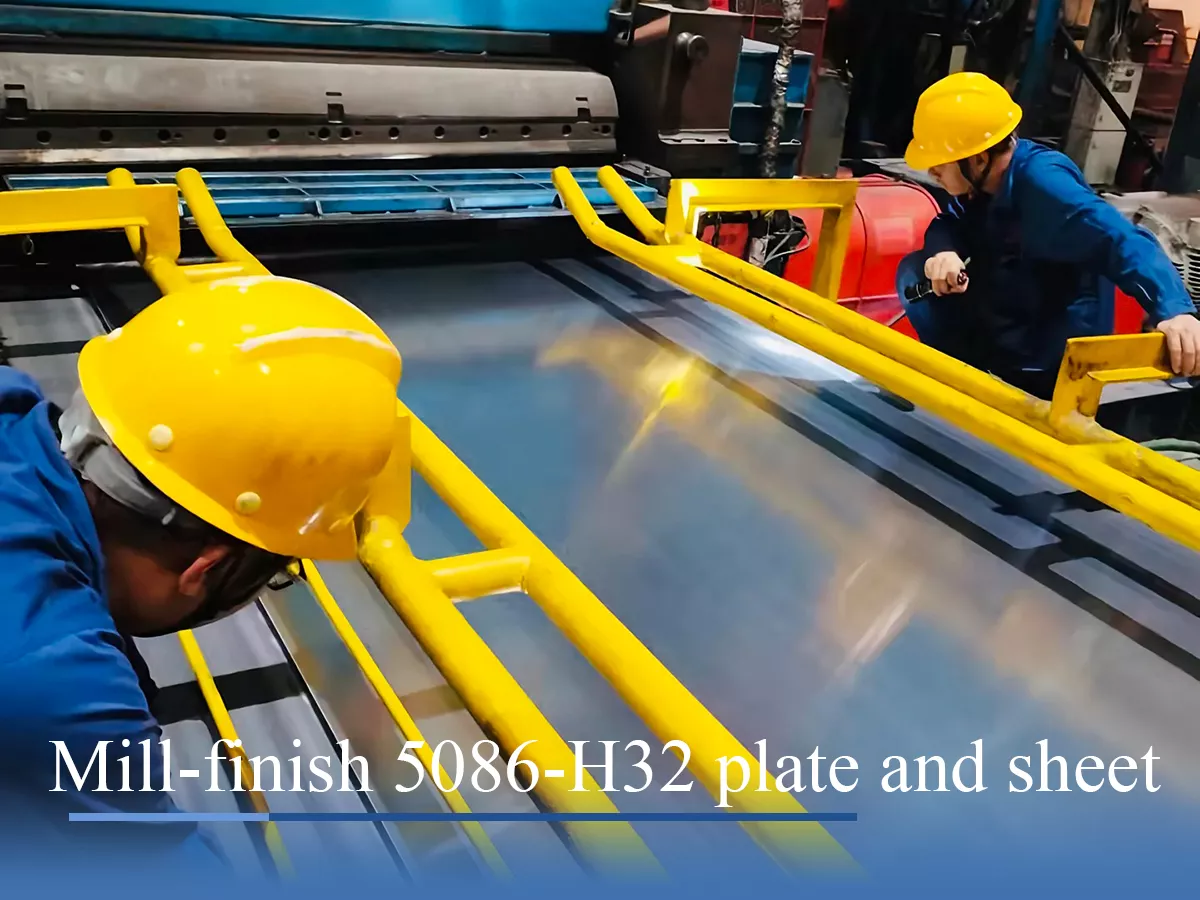
5086 H32 Aluminum Plate & Sheet
- Good balance of strength and formability
- Suitable for bending, cutting, welding, and general fabrication
- Suitable for general industrial, transportation, and structural applications
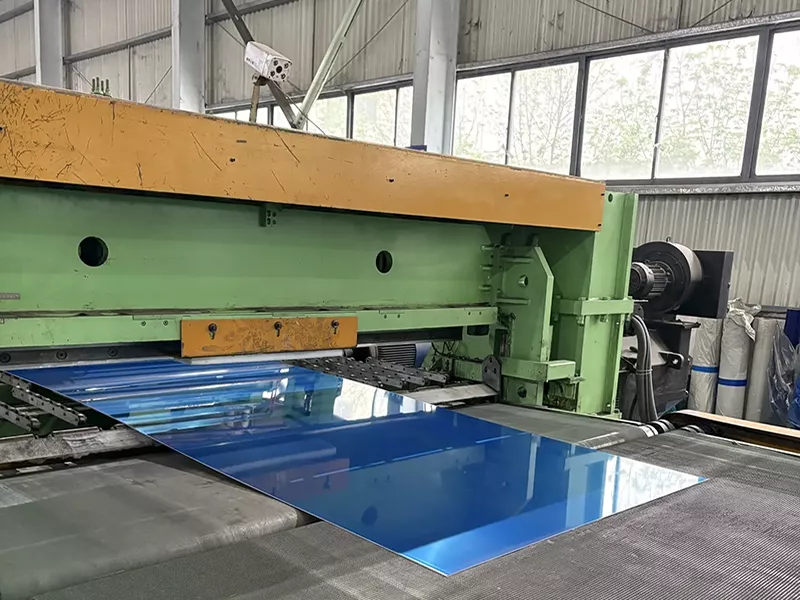
5086 H116 Aluminum Plate & Sheet
- Commonly selected for marine and shipbuilding applications
- Suitable for applications with specific seawater and corrosion-resistance requirements
- Used for ship hulls, decks, offshore structures, and marine equipment
When selecting 5086 aluminum plate or sheet, price should not be the only consideration. The selected temper, applicable standard, corrosion-performance requirements, thickness tolerance, inspection and certification documents, surface quality, and subsequent fabrication process can all affect the material's suitability, reliability, and service life.
What Should You Confirm When Purchasing 5086 H32 or H116?
To avoid selecting the wrong temper, receiving materials without the required certification, or encountering problems during subsequent fabrication, confirm the following items before placing an order:
-
Define the Service Environment
Will the material be used indoors, in an industrial environment, in a coastal area, or under long-term seawater immersion? If the aluminum plate is intended for ship hulls or marine engineering equipment, clearly specify the actual corrosion conditions before ordering.
-
Confirm the Applicable Standard
Common standards may include ASTM, EN, GB/T, AMS, or classification society specifications. Different standards may have different requirements for chemical composition, mechanical properties, dimensional tolerances, and corrosion testing.
-
Confirm Plate Dimensions and Thickness
5086 aluminum plate is commonly supplied in medium and heavy thicknesses as well as wide-width formats. Thickness, width, length, and cut-to-size requirements can affect the production process, lead time, and overall cost.
-
Check Whether Classification Society Certification Is Required
Marine projects may require certification from classification societies such as DNV, ABS, BV, LR, or CCS. Not every 5086 H116 product automatically includes the required certification, so this should be confirmed with the supplier before placing the order.
-
Check Whether a Corrosion Test Report Is Required
For marine engineering, shipbuilding, or high-end export projects, buyers may request relevant corrosion-performance data, material test certificates, and third-party inspection documents from the supplier.
-
Check Whether Surface Protection Is Required
Aluminum plate can be susceptible to scratches, dents, or surface contamination during transportation and fabrication. For visible surfaces or high-standard manufacturing projects, consider protective film, flat stacking, moisture-resistant packaging, or a specified surface quality level.
Need Help Choose 5086 H32 or H116?
Tell us your required temper, thickness, width, length, applicable standard, application, and certification requirements. Our team can help you select the appropriate 5086 aluminum plate or sheet for your project and provide a quotation based on your specifications.
Request a QuoteFrequently Asked Questions
Is 5086 H32 the same as 5086 H116?
No. Both are 5086 aluminum alloy, but H32 and H116 are different temper designations. H116 has additional marine-service requirements related to corrosion performance under ASTM B928/B928M, while 5086 H32 is commonly supplied under ASTM B209/B209M.
Is 5086 H116 marine grade aluminum?
Yes. 5086 H116 is specifically covered by ASTM B928/B928M for high-magnesium aluminum products intended for marine service and similar environments.
Can 5086 H32 be used in seawater?
Yes, 5086 H32 can be used in some marine and seawater applications, but suitability depends on the engineering specification and required corrosion qualification. The applicable alloy, temper and product standard should be confirmed before ordering.
Is H116 stronger than H32?
Not automatically. Mechanical properties depend on thickness, product form and the applicable standard. The main purchasing distinction is that H116 carries additional marine-service and corrosion-related requirements.
Which 5086 temper is best for a boat hull?
For a boat hull or marine structure requiring specific marine-service qualification, 5086 H116 is commonly the more appropriate specification, particularly when ASTM B928/B928M compliance is required.
Products you may be interested in
- 5086 Aluminum Plate Sheet
- 5086 h116 aluminum plate sheet
- 5086 h32 aluminum plate sheet
- 5086 h111 aluminum plate sheet
- 5086 O aluminum plate sheet
Users viewing this material also viewed the following