
Aluminium Circle Disc Anodized
What Is an Aluminium Circle Disc (Anodized)?
An aluminium circle disc is a flat, round aluminum sheet, processed from aluminum coils or plates. After anodizing, its surface undergoes an electrochemical process to enhance the natural oxide layer. Compared to ordinary aluminum discs, anodized aluminum circle discs offer higher durability and performance.
Anodizing treatment of aluminum circles/discs is an electrolytic surface treatment that forms a dense oxide layer on the surface. This layer significantly improves corrosion resistance and wear resistance, increases hardness, and can be dyed in various colors.
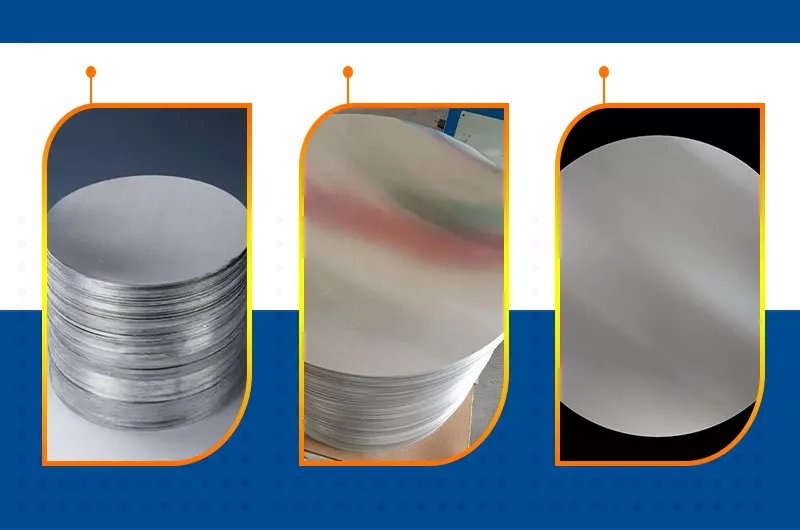
Anodized aluminum circle discs are widely used across industries, from high-end cookware to lighting and electronic products. The anodizing process creates a durable, corrosion-resistant oxide layer on the metal surface, which integrates with the metal itself, unlike paint which merely adheres to the surface.
Anodized Aluminium Circle Disc Specifications
| Feature | Common Options |
| Alloy Series | 1000 series (Pure Al), 3000 series (Mn-added), or 5000 series (Mg-added). |
| Temper | O (Soft), H12, H14, H18, H24. |
| Diameter | Generally ranges from 20mm to 1200mm. |
| Thickness | 0.3mm to 10.0mm. |
| Anodic Film | 5μm to 25μm (depending on indoor vs. outdoor use). |
| Common Colors | Black, Silver, Gold, Red, Blue, Antique Copper, etc. |
| Surface Finish | Matte, Semi-Gloss, High Gloss, Sandblasted, Brushed, etc. |
Anodized Aluminium Circle Alloys & Grades
Depending on the required toughness, formability, and surface smoothness, commonly used alloys include 1050, 1060, 1070, 1100, 3003, 5052, etc.
Thickness and diameter can generally be customized according to industrial needs (from small craft sizes to large industrial blanks).
1050 Anodized Aluminium Circle
The 1050 anodized aluminum circle is made from high-purity aluminum. After anodizing, the surface has uniform color, high smoothness, stable oxide film, and good adhesion. The material itself has excellent ductility, allowing smooth forming. It is suitable for decorative parts, lighting components, and general anodized products where appearance and surface consistency are critical.
1060 Anodized Aluminium Circle
The 1060 anodized aluminum circle excels in thermal and electrical conductivity. The anodizing process forms a uniform and dense film, effectively enhancing surface corrosion resistance and service life. This material is commonly used for cookware bases, lighting reflectors, and structural parts requiring thermal conductivity.
1070 Anodized Aluminium Circle
1070 belongs to the high-purity aluminum series. After anodizing, it has high surface brightness and excellent color consistency, making it particularly suitable for precision applications. With outstanding electrical and thermal conductivity and stable surface treatment, it is widely used in electronic components, lighting reflectors, and high-demand heat dissipation parts.
1100 Anodized Aluminium Circle
The 1100 anodized aluminum circle combines good corrosion resistance and processability. After surface treatment, it has a smooth and fine appearance, suitable for subsequent coloring or decorative processing. Common applications include nameplates, signage, decorative panels, and industrial parts where weight and appearance are important.
3003 Anodized Aluminium Circle
The 3003 anodized aluminum circle maintains good anodizing performance while the addition of manganese provides higher strength and durability. Compared to pure aluminum, it is more suitable for cookware, industrial panels, and decorative parts requiring some structural strength.
5052 Anodized Aluminium Circle
The 5052 anodized aluminum circle is known for high strength and excellent corrosion resistance, especially suitable for humid or corrosive environments. After anodizing, the surface hardness is high and wear-resistant, commonly used in automotive parts, marine components, pressure vessels, and high-end industrial applications.
Anodized Aluminium Circle Features
Excellent Corrosion and Wear Resistance
Anodizing forms a dense and stable oxide film on the surface of the aluminum circle, effectively isolating air, moisture, and various chemical agents. This long-term protection significantly extends product lifespan.
Higher Surface Hardness and Durability
Compared to untreated aluminum, anodized surfaces have significantly higher hardness, offering better scratch and wear resistance. Suitable for frequently handled or long-term applications.
Balance of Lightweight and Good Thermal Conductivity
Even after surface treatment, aluminum retains its lightweight property and excellent thermal conductivity, ensuring strength and durability while reducing overall weight and enhancing heat dissipation efficiency.
Attractive Appearance and Flexible Applications
Anodizing allows for various color treatments with uniform and fade-resistant finishes, meeting decorative needs and enabling functional distinction and product identification.
Why Anodize Aluminium Circle Discs?
The main purpose of anodizing aluminum circle discs is to enhance surface performance and usage stability. During oxidation, a dense and firmly bonded aluminum oxide layer forms on the surface, providing multiple practical advantages.
Significantly Improved Corrosion Resistance
The oxide layer effectively blocks air, moisture, and various chemical agents, showing good resistance to acids, salt spray, and weak alkalis, ensuring stable performance in outdoor or complex environments.
Enhanced Surface Hardness and Wear Resistance
After anodizing, surface hardness is significantly improved, making it less prone to scratches or wear. Particularly suitable for long-term use or repeated contact applications.
Easier Cleaning and Maintenance
The treated surface is smoother and more stable, less likely to attract oil or debris, reducing cleaning and maintenance costs.
Good Electrical Insulation Properties
In some applications, the anodized layer acts as a natural insulating layer, enhancing product safety and reliability.
Combining Functionality and Decoration
Anodizing allows dyeing or coloring treatments, with strong color adhesion and fade resistance, meeting decorative needs and facilitating product identification and functional differentiation.
Anodized Aluminium Circle Applications
Aluminum Circles for Lighting and Reflectors
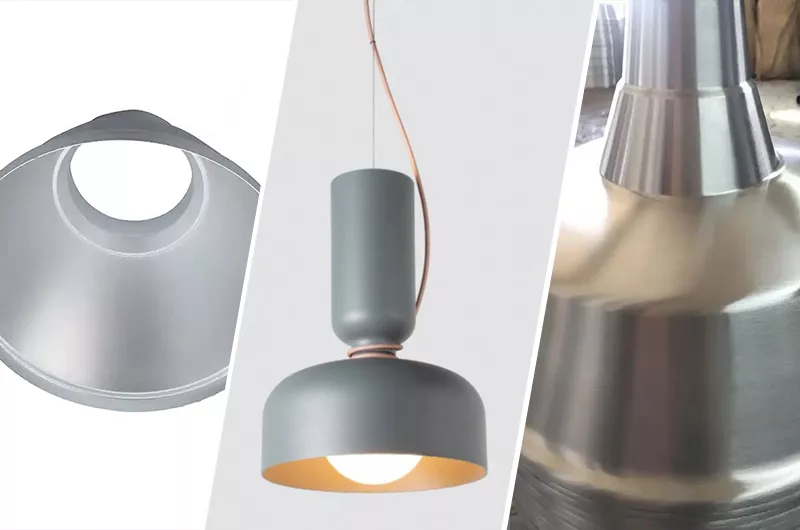
In lamps, industrial lighting, and stadium lighting, aluminum circles are mainly used for reflectors and lampshade components. These products typically use high-purity aluminum alloys such as 1050, 1060, 1070, or 1100 to ensure good reflectivity and forming consistency.
Common diameters range from 100–600 mm, with thicknesses mostly 0.8–2.5 mm, suitable for subsequent spinning or deep drawing. The surface is usually polished before anodizing to achieve a silver or mirror finish. For lighting products requiring glare control, matte or chemically polished anodizing is also used.
Anodized Aluminum Circles for Cookware
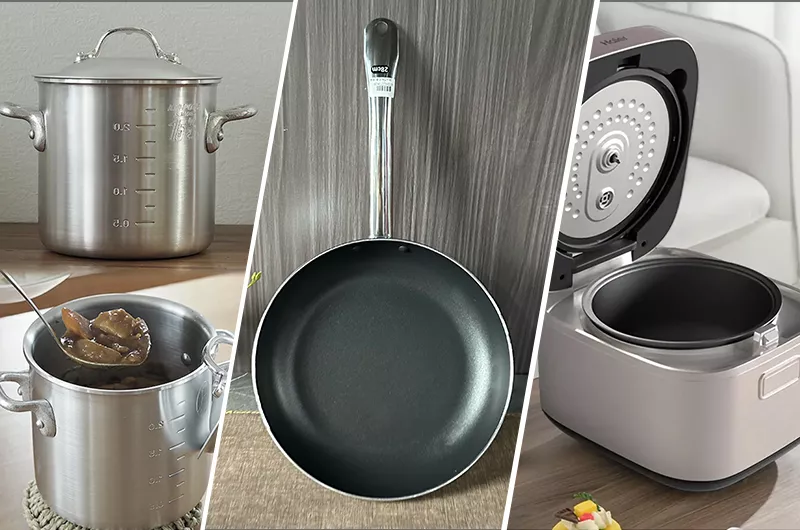
The cookware industry focuses on material strength, durability, and thermal conductivity. Alloys 3003, 3004, or 3104 are commonly used due to their stability in deep drawing and spinning, and resistance to cracking.
Cookware aluminum circle diameters typically range from 200–450 mm, with thicknesses of 1.5–4.0 mm. Pressure cookers or thick-bottomed pans use thicker specifications. Surfaces often undergo hard anodizing for better wear and corrosion resistance, with some products receiving non-stick coating post-anodizing to meet diverse requirements.
Applications in Traffic Signs and Reflective Panels
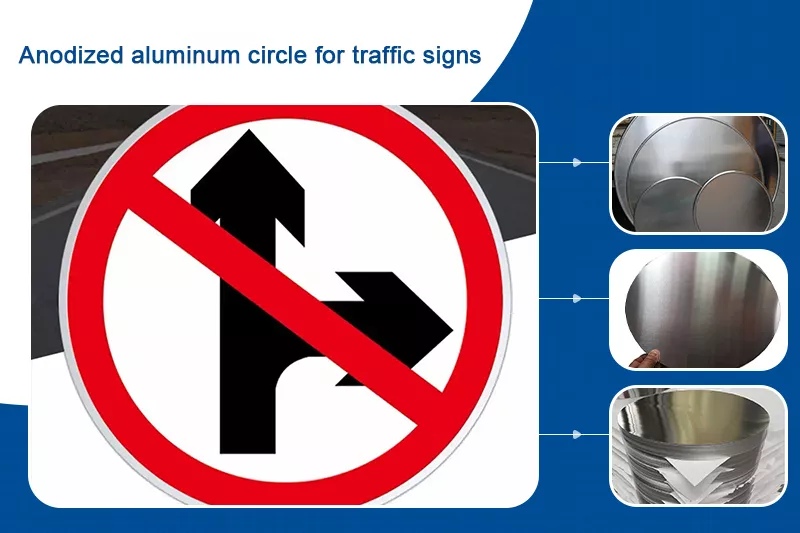
Aluminum circles for traffic signs and reflective panels need long-term outdoor exposure, requiring higher weather resistance and structural strength. Common alloys include 3003 and 5052, balancing strength and corrosion resistance.
Thickness is typically 1.2–3.0 mm, with dimensions customized per sign specifications. Surfaces are anodized, usually silver or light gray, and may be combined with reflective films or screen printing. The focus is on oxide layer adhesion and aging resistance for long-term color stability and durability.
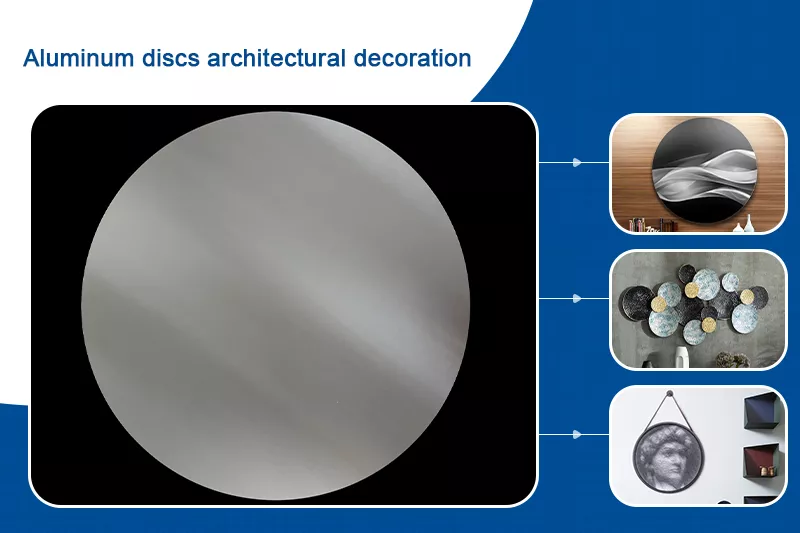
Architectural Decorative Applications
In architecture, anodized aluminum circles are used for ceiling decorations, wall cladding, etc., requiring both aesthetics and long service life. Alloys 3003, 5005, and 5052 are common, balancing formability and surface treatment.
Large-diameter discs are commonly used, typically 300–1000 mm, with thicknesses of 1.0–3.0 mm. Decorative anodizing includes brushed, matte, and various color anodizing, such as champagne, antique copper, or black, with strict control of color difference and surface consistency.
High-Durability Industrial Components
In industrial equipment and functional parts, aluminum circles focus on mechanical performance and lifespan. Alloys 5052, 5083, or 6061 are common, suitable for high strength, wear resistance, and stability requirements.
Specifications are often customized, with diameters of 100–500 mm and thicknesses of 2.0–6.0 mm. Surfaces undergo hard anodizing and sealing to further improve corrosion resistance and insulation. Appearance is secondary to functional reliability in these applications.
Anodized Aluminium Disc Notes
When using anodized aluminum circle discs, proper processing sequence and technology selection are crucial for the final result. Based on practical production experience, the following points should be noted:
Forming Process and Anodizing Sequence
If the aluminum circle needs spinning or deep drawing after anodizing, extra caution is required. The anodized film is hard but brittle, and large-angle bending or severe deformation may cause fine hairline cracks ("crazing"), affecting appearance and performance.
In most cases, it is recommended to complete forming first and then anodize the finished product to avoid damage to the oxide layer.
Edge Treatment
If the disc is stamped or cut directly from anodized aluminum sheet, the cut edges expose the original aluminum color, appearing silver. This may not affect usage in some applications, but if edge protection or color consistency is required, the entire disc should be re-anodized after cutting to ensure uniform protection and appearance.
Surface Finish Selection
The surface finish of anodized aluminum circles can be flexibly chosen based on the final application and design needs. Common treatments include matte, satin, and mirror (high-gloss) finishes, each with differences in visual effect, tactile feel, and fingerprint resistance. It is recommended to define surface requirements during the design stage to match appropriate pretreatment and anodizing processes.
Aluminium Disc Circle Anodizing Process
Anodizing is an electrochemical process that transforms the metal surface into an anodized layer with decorative, durable, and corrosion-resistant properties.
- Hardness: surface hardness is significantly higher than the original aluminum.
- Porous Surface: before sealing, the oxide layer is porous, allowing it to absorb dyes and display vivid metallic colors (gold, black, blue, etc.).
- Bonding: as it is part of the metal, it will not peel or flake off.
Haomei Aluminum Anodized Aluminium Circle Selection Guide
Material Matching
We offer anodized discs in pure aluminum and aluminum alloys: pure aluminum discs are suitable for decorative and heat-dissipating applications, providing good thermal conductivity and attractive surfaces; aluminum alloy discs are suitable for structural and high-strength applications, combining strength and durability.
Film Thickness
Depending on the environment, we provide multiple film thickness options: 10–15μm for indoor decoration, 30μm or more for outdoor or highly corrosive environments, ensuring long-term fade and corrosion resistance.
Sealing Quality
High-quality sealing is key to enhancing corrosion resistance. Haomei Aluminum anodized products are sealed according to ISO 3210 standards, ensuring excellent anti-corrosion performance in various environments.
Surface Treatment
We offer diverse surface finishes based on customer needs: matte for medical, laboratory, or high-precision applications, and high-gloss for decorative, home, or consumer applications, balancing aesthetics and functionality.
Supply Assurance
Haomei Aluminum has a complete anodizing production line, strict quality management, and can provide salt spray tests and other performance reports to ensure stable and reliable material supply for customers.
Differences Between Anodized Aluminium Discs and Ordinary Aluminum Discs
- Processing Technology: The surface treatment of ordinary aluminum discs is not as dense and durable as that of anodized aluminum discs.
- Performance Differences: Ordinary aluminum discs generally have lower corrosion resistance, wear resistance, and surface appearance compared to anodized aluminum discs.
- Cost: The cost and market price of anodized aluminum discs are typically higher than ordinary aluminum discs due to the additional processing and performance enhancements.
FAQs About Anodized Aluminium Discs
Is anodized aluminum good quality?
Anodized aluminum is generally considered to be high-quality material. The anodizing process significantly improves the corrosion resistance, wear resistance, and oxidation resistance of the aluminum. This treatment also enhances the surface hardness of the aluminum, making it more durable. Anodized aluminum is widely used in industries such as construction, aerospace, automotive, and electronics, indicating its excellent performance in practical applications.
What are the pros and cons of anodized aluminium?
Advantages of Anodized Aluminium:
- Strong Corrosion Resistance: The aluminum oxide film formed on the surface of anodized aluminum effectively prevents oxidation and extends its service life.
- High Wear Resistance: The enhanced surface hardness makes it resistant to wear.
- Easy Maintenance: The surface requires minimal maintenance and is relatively easy to clean.
- Environmentally Friendly: The anodizing process does not use harmful chemicals and is environmentally friendly.
- Aesthetic Appeal: Various coloring processes can be used to achieve different colors, increasing visual appeal.
Disadvantages of Anodized Aluminium:
- Higher Cost: Anodizing treatment is more expensive compared to untreated aluminum.
- Increased Brittleness: In some cases, the anodized aluminum surface may be more brittle and susceptible to impact.
- Not Suitable for All Applications: The anodized film may not be durable enough in extreme conditions such as high temperatures or harsh environments.
How long does anodized aluminum last?
The lifespan of anodized aluminum depends on several factors, including the thickness of the anodized film, environmental conditions, and usage. Generally, anodized aluminum can last for many years or even decades under normal conditions. In extreme environments, such as high humidity, high temperatures, or strong acidic or alkaline conditions, its lifespan may be shortened.
Is it safe to anodize aluminum?
Anodized aluminum is generally considered safe. Most of the chemicals used in the anodizing process are removed or neutralized after processing and do not pose a threat to human health. Additionally, anodized aluminum does not release harmful substances, and the treated aluminum has high corrosion resistance and chemical stability.