
3105 Aluminum Plate Sheet
3105 aluminum sheet belongs to the 3000 series aluminum-manganese alloys. It is an optimized grade developed on the basis of 3003 aluminum sheet, featuring excellent corrosion resistance and deep-drawing performance.
3105 aluminum alloy is stronger than 1100 and 3003 alloys. It cannot be hardened by heat treatment and has good corrosion resistance, formability and weldability, good plasticity and processing performance, and good gas welding and arc welding performance.
- 3105 aluminum belongs to the 3000 series aluminum alloy: the main alloying additive is manganese, which improves the strength of the alloy.
- 0.3% copper is added to 3105 aluminum alloy, so it has good conductivity and the conductivity can reach 41%.
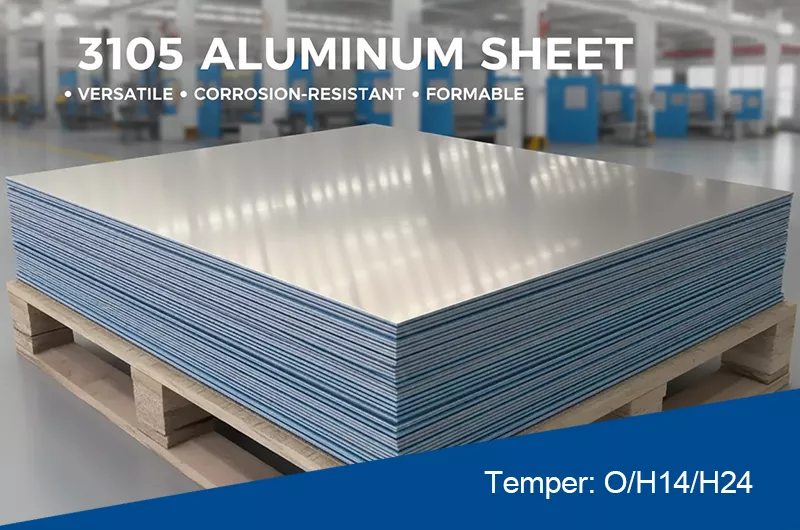
3105 aluminum sheet is often referred to as “rust-proof aluminum.” It contains approximately 98% aluminum, with small additions of manganese (Mn) and magnesium (Mg) to improve strength.
It has excellent atmospheric and chemical corrosion resistance, and its ease of cold forming and welding (gas, arc, and brazing) makes it widely used in building panels, residential sidings, roofing, signage fabrication, and other general sheet metal applications that require painting.
The manganese-magnesium alloy system of 3105 achieves a balance between strength and formability, which cannot be matched by the 1000 series alloys, while still maintaining the non-heat-treatable property.
Specifications of 3015 Aluminium Sheet
| Aluminium alloy | 3015 |
| Material temper | F, O, H12, H14, H16, H18, H19, H22, H24, H26, H28, H112, H114 |
| Thickness (mm) | 0.2-400 |
| Width (mm) | 20-2650 |
| Length (mm) | Customized |
| Typical Products | Residential clapboard, Mobile house, Wine bottle cap, Beverage bottle cap, Cosmetic cap, Coating roll, etc. |
Typical 3105 Aluminum Sheet Tempers
- 3105 O
- 3105 H12
- 3105 H14
- 3105 H22
- 3105 H24
- 3105 H26
- 3105 H28
- 3105 H19
- H12 (1/4 hard): Tensile strength 19–26 ksi, yield strength 15 ksi.
- H14 (1/2 hard): Tensile strength 22–29 ksi, yield strength 18 ksi.
- H18 (full hard): Tensile strength ≥215 MPa, very low elongation.
- O temper (annealed): Soft condition with excellent ductility.
Common Tempers of 3105 Aluminum (Temper)
3105-O Temper (Fully Annealed Condition)
This is the softest condition of the 3105 alloy, achieved through full annealing to eliminate work-hardening stress.
Characteristics: Extremely high ductility and plasticity. It has the lowest tensile strength but the highest elongation.
- Formability: This is the best condition for forming. It is highly suitable for complex deep drawing, stretching, bending, and spinning processes, with a very low risk of cracking.
- Typical applications: Complex stamped parts requiring extremely high deformation, deep-drawn containers, radiator fins, and certain decorative components with low strength requirements but complex shapes.
3105-H14 / H24 (Half-Hard Condition)
This is the most widely used balanced condition. H14 is achieved by strain hardening to a medium degree; H24 is strain-hardened and then partially annealed (stabilization treatment), resulting in more stable properties.
Characteristics: At a “half-hard” level, it achieves an excellent balance between tensile strength and elongation.
- Processing performance: Provides moderate strength while retaining sufficient ductility. It allows for bending and forming to a certain extent while ensuring the finished product has adequate structural strength.
- Typical applications: Building wall cladding, aluminum ceilings, louvers, rain caps, pre-painted aluminum substrates, and general sheet metal parts.
3105-H18 (Full-Hard Condition)
This condition is achieved through intensive cold work hardening.
Characteristics: The highest strength and hardness, but with a significant loss of ductility. Elongation is relatively low (typically only a fraction of that in the O temper).
- Processing performance: Poor formability. When attempting small-radius 90° bending, the material surface is very prone to cracking or fracture.
- Typical applications: Mainly used where high rigidity and strength are required and little to no subsequent bending is needed. Examples include bottle cap stock (tamper-proof caps), nameplates, high-hardness washers, and certain flat support panels.
| Temper | Strength | Ductility | Forming Recommendations |
| 3105 O | Lowest | Highest | Excellent, suitable for complex deep drawing |
| 3105 H14 / H24 | Medium | Medium | Good, suitable for standard bending and stamping |
| 3105 H18 | Highest | Lowest | Poor, only suitable for flat or minimal processing |
3105 Aluminum Sheet Plate Common Surface Finishes
- 3105 Mill Finish Aluminum Sheet Plate: The “as-rolled” condition from the mill, with a natural, semi-reflective silver appearance. While functional, it may show minor manufacturing marks, which is why 3105 is often further processed.
- 3105 Pre-Painted / Color Coated Aluminum Sheet Coil: This is the most common finish for 3105. It is typically roller-coated with polyester or PVDF (fluorocarbon) paints. It is highly valued for its excellent paint adhesion—the coating resists peeling or blistering even when the metal is bent or formed.
- 3105 Brushed Finish Aluminum Sheet Coil: The surface is mechanically processed with abrasive belts to create a unidirectional, satin-like texture. This finish is popular for decorative interior panels and consumer electronics.
- 3105 Embossed (Stucco) Aluminum Sheet Coil: A mechanical process imprints a textured pattern (such as pebble or diamond patterns) onto the surface. This increases surface area, hides scratches, and reduces glare.
- 3105 Anodized Aluminum Sheet Coil: Although less common than painting for this alloy, 3105 can be anodized to form a hard, protective oxide layer that can be clear or dyed in various colors.
Typical Applications by Surface Type
- Residential / Industrial Siding: Usually pre-painted (white, gray, or custom colors) for weather protection.
- Rain Goods (Gutters / Downspouts): High-gloss or matte painted finishes to match building aesthetics.
- Signage: Clean, flat surfaces that easily accept vinyl graphics or direct printing.
- Mobile Homes & Vehicles: Large sheets with consistent color-coated finishes for durability against road debris and sun exposure.
- Bottle Caps & Closures: Specifically processed for deep drawing with food-grade coatings.
3105 Aluminum Plate Standards
- ASTM B209
- EN573
- EN485
- UNS A93015
These standards ensure global consistency in material quality and performance.
3105 aluminum plate characteristics
- Excellent corrosion resistance: Outstanding resistance to corrosion in atmospheric, freshwater, and marine environments.
- Good formability: Excellent stamping, drawing, and bending performance, suitable for deep drawing processes.
- Weldability: Easily welded by gas welding, arc welding, resistance welding, and brazing.
- Non-heat-treatable strengthening: This alloy cannot be strengthened by heat treatment; its mechanical properties are usually adjusted through cold working (such as H14, H24 tempers).
- Surface treatment: High surface flatness, making it highly suitable for pre-painted (coil coating) processing.
- Deep drawing performance: The deep drawing performance of 3105 aluminum alloy sheet in the O temper is better than that of 3105 aluminum alloy sheet in the H26 temper. The deep drawing performance of 3105 aluminum alloy sheet before low-temperature treatment is better than that after 24 hours of low-temperature treatment.
- The plasticity of 3105 aluminum sheet is high in the annealed condition, good in the semi-cold-hardened condition, and low in the cold-hardened condition.
- Good anodizing performance, but relatively poor machining performance, etc.
3105 Aluminum Plate Advantages
Excellent Corrosion Resistance
3105 aluminum plate has outstanding corrosion resistance, especially in humid, marine environments and other chemical media. Its main components include aluminum with small amounts of copper, manganese, and magnesium, which allow 3105 aluminum plate to effectively resist oxidation and corrosion in most common corrosive environments, maintaining long-term stability. It is suitable for marine environments, chemical plants, outdoor buildings, and other areas, effectively extending the product's service life.
Good Mechanical Properties
The mechanical properties of 3105 aluminum plate are very balanced, offering good strength and toughness. Its tensile strength and yield strength allow it to maintain shape stability under moderate mechanical loads, making it especially suitable for manufacturing structural components requiring certain strength. 3105 aluminum plate exhibits good ductility and impact resistance at room temperature, and it performs excellently in both cold and hot working, making it an ideal material choice in manufacturing industries.
Strong Formability and Plasticity
3105 aluminum plate has strong formability and plasticity. It can be processed into the required shapes and sizes through various forming processes (such as stamping, bending, stretching, rolling, etc.). This makes it widely used in fields requiring complex shapes or special designs, such as architectural decoration, appliance enclosures, and automotive parts. 3105 aluminum plate has low processing difficulty during forming and can complete various complex processes without losing its physical properties, ensuring efficient production and product quality.
3105 Aluminum Sheet Corrosion Resistance
3105 has excellent resistance to atmospheric, industrial, and marine environments, comparable to 3003 alloy but with slightly higher strength. Even after bending or forming, its corrosion resistance remains, making it ideal for frequently painted exterior wall and roofing panels.
3105 Aluminum Sheet Processing Characteristics
- Formability (cold working): Excellent; very suitable for bending, stamping, and deep drawing.
- Weldability: Excellent for gas welding, arc welding, brazing, and resistance welding.
- Machinability: Acceptable for light machining; best with sharp tools and moderate feeds to avoid work hardening.
- Surface finish: Milling finish; easy to anodize and evenly accepts paint and coatings.
3105 Aluminum Plate Disadvantages
- No heat treatment except annealing
- Poor machinability in cold hardened state
Equivalents of AA 3105
UNS A93105, ISO AlMn0.5Mg0.5, Aluminium 3105, AA3105, Al3105
3105 Aluminum Plate Performance Informations
| Param | Value |
| Machinability | Machinability of AL 3105 is fair. Oil lubricants should be used for all machining operations. Machinability of the alloy when in the harder (H) tempers is improved over machining in the annealed (O) condition. |
| Forming | The forming characteristics of the alloy are very good by all conventional processes regardless of temper. Bend radii should be in the one thickness to 2 t range for annealed, H12, H14 and H16 tempers. The H18 temper requires bend radii of2 to 7 t, depending upon thickness of the material. |
| Welding | Weldability of this alloy is excellent by all commercial techniques. Arc welding is preferred for the best results. |
| Heat Treatment | A non-heat treatable alloy. |
| Hot Working | The hot working range (as for forging) is 205°C to 372°C. In that range the alloy is easily hot worked. |
| Cold Working | The cold working characteristics of AL 3105 are very good, even in the harder cold worked tempers. Bend radi for sheet up to 1/16″ thick vary from 1/2 to one t for all tempers. |
| Annealing | Annealing from a cold worked condition may be accomplished at 345°C followed by air cooling. |
| Aging | Not applicable to this alloy. |
| Hardening | Hardens as a result of cold working only. |
3105 Aluminum Plate Chemical Composition
| Element | 3105 |
| Silicon | 0.6 |
| Iron | 0.7 |
| Copper | 0.30 |
| Manganese | 0.30-0.8 |
| Magnesium | 0.20-0.8 |
| Chromium | 0.20 |
| Zinc | 0.40 |
| Titanium | 0.10 |
| Aluminum | balance |
| Other Elements (each) | 0.05 |
| Other Elements (total) | 0.15 |
3105 Aluminum Plate Mechanical Properties
| Material | Temper | Tensile Strength (N/mm²) | Yield Strength (N/mm²) | Elongation on 50mm | |||
| 0.5 mm | 0.8mm | 1.3mm | 2.6mm | ||||
| 3105 Aluminum Sheet | 0 | 110-155 | – | 16 | 18 | 20 | 20 |
| 3105 Aluminum Sheet | H12 | 130-175 | 115 | 2 | 3 | 4 | 5 |
| 3105 Aluminum Sheet | H14 | 160-205 | 145 | 2 | 2 | 3 | 4 |
| 3105 Aluminum Sheet | H16 | 185-230 | 170 | 1 | 1 | 2 | 3 |
| 3105 Aluminum Sheet | H18 | 215 min | 190 | 1 | 1 | 1 | 2 |
3105 Aluminum Plate Physical Properties
| Property | 3105 Data |
| Density, lb/in3 | 0.0983 |
| Modulus of Elasticity, psi | 10.0 x 10⁶ |
| Coefficient of Thermal Expansion, 68-212˚F, /˚F | 12.1 x 10⁻⁶ |
| Thermal Conductivity, Btu/ft hr ˚F | 99 |
| Specific Heat, Btu/lb ˚F | 0.214 |
| Electrical Resistivity, Microohm-in | 1.504 |
3105 Aluminum Plate Applications
Typical applications include general sheet metal processing requiring higher strength than 1000 series aluminum alloys, residential exterior siding, residential gutters and downspouts, mobile homes and signage, stormwater conveyance equipment, mobile homes, and bottle caps, beverage closures, and cosmetic closures.
3105 sheets and coils are widely used in:
- Construction: Residential sidings, roofing, gutters, and mobile homes.
- Transportation: Truck bed covers, trailer panels, and car body panels.
- Consumer goods: Bottle caps, signage, and appliance components.
- Industrial: HVAC systems, baffles, and electrical enclosures.
- Signage and billboards: Easy to form and paint.
- RVs and trailers: Lightweight skin with corrosion protection.
| Application Scenario | Main Product Form | Processing Method | Key Temper |
| Building façades / roofing | Pre-painted aluminum coil, corrugated sheet | Roll forming, bending | H24 / H14 |
| Truck body flooring | Five-bar tread plate | Molding, embossing | H114 |
| Beverage bottle caps | Precision aluminum strip / thin sheet | Deep drawing, printing | H14 / H16 |
| Electrical appliance housings | Stamped parts / enclosure sheets | Stamping, drawing | O temper / H24 |
- Architectural decoration: Residential siding, pre-painted aluminum substrates, aluminum curtain wall panels, roofing sheets, downspouts, and gutters.
- Transportation: Box truck body panels, refrigerated truck floors, bus interiors, anti-slip tread plates (commonly 3105 five-bar tread plates).
- Bottle cap stock: Widely used for bottle caps in the liquor, beverage, and cosmetics industries.
- Electronics / electrical appliances: Lamp shades, instrument panels, louvers.
Architectural Decoration Field
3105 Pre-Painted Aluminum Coil / Sheet
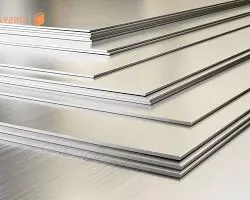
- Due to its excellent coating adhesion, 3105 aluminum sheet most commonly appears in roller-coated pre-painted coil form.
- Residential siding: Typically processed into ribbed thin sheets to increase structural rigidity.
- Rainwater systems (downspouts / gutters): Continuously roll-formed from aluminum coils.
- Common tempers: H14, H24 (moderate strength without cracking during processing).
Transportation Field
3105 Tread / Chequered Aluminum Plate
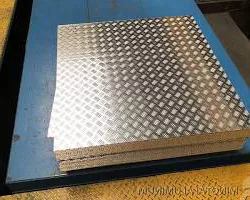
- Anti-slip tread plates: Common patterns include five-bar or pointer patterns, used for refrigerated truck floors or steps.
- Box truck bodies: Large-format flat aluminum sheets used as side panels or roof panels.
- Common tempers: H114 (a dedicated tread plate temper) or H14.
Bottle Cap Stock Field
Deep-Drawn 3105 Aluminum Foil Thin Strip
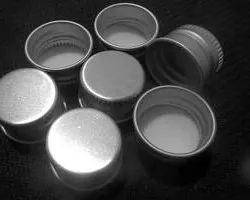
- Bottle cap manufacturing requires aluminum material to undergo multiple drawing and stamping operations.
- 3105 aluminum sheet is slit into narrow strips of specific widths and treated with precision surface lubrication to reduce friction during stamping.
- Common tempers: H14, H16 (requiring high material uniformity).
Electronics / Electrical Field
3105 Anodized Aluminum Sheet
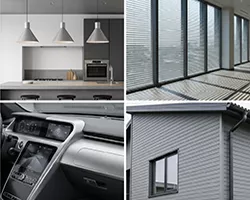
- Lamp shades: Thin sheets formed by spinning or stamping, usually with polished or anodized surfaces.
- Louvers: Aluminum coils slit into very narrow strips, then painted and bent into shape.
- Common tempers: H19, H26.
| Product | Characteristics | Application |
| 3105 Diamond Aluminum Sheet | Diamond pattern, corrosion-resistant, added grip | Flooring, ramps, and walkways where slip resistance is important |
| 3105 Aluminum Plate for Bottle Caps | Excellent malleability, good surface finish, high corrosion resistance | Manufacturing of bottle caps for beverages and other containers |
| 3105 Aluminum Plate for Baking Trays | Non-reactive, excellent thermal conductivity, lightweight | Production of baking trays and pans for even heat distribution |
| 3105 Aluminum Plate for Wine Bottle Caps | Lightweight, good corrosion resistance, suitable for high-end finishes | Production of wine bottle caps for secure sealing and product presentation |
| 3105-H24 Aluminum Plate for Wall Panels | Good mechanical properties, excellent corrosion resistance, moderate strength | Construction of wall panels for aesthetic and protective purposes |
| 3105 Aluminum Plate for Coated Rolls | Excellent surface quality, corrosion-resistant, suitable for coating | Production of coated aluminum rolls for industrial and decorative uses |
| 3105 Aluminum Plate for Corrugated Aluminum Tiles | Lightweight, high durability, good corrosion resistance | Roofing and wall cladding for durability and weather resistance |
| 3105 Aluminum Plate for Dinner Plates and Tableware | Non-reactive, smooth surface, good durability | Production of dinner plates and tableware for dining |
| 3105 Aluminum Plate for Corrugated Boards and Roof Panels | Lightweight, high strength-to-weight ratio, excellent weather resistance | Roofing panels and corrugated boards in construction |
| 3105 Aluminum Plate for Cans | Good formability, lightweight, high resistance to corrosion | Production of beverage cans and aluminum containers |
3105 Aluminum Sheet Manufacturing and Processing
- Formability: High formability, very suitable for bending, stamping, and drawing. Recommended bending radius varies by temper (e.g., 1–2 times the thickness in annealed condition).
- Weldability: Excellent welding performance using TIG, MIG, and resistance welding methods.
- Machinability: Moderate; machinability improves in harder tempers (e.g., H18). Use oil-based lubricants is recommended.
- Heat treatment: Not heat-treatable except through cold working (strain hardening) or annealing (344°C/650°F).
Comparison of 3105 Aluminum with Other Alloys
- Compared to 3003: Higher strength due to increased magnesium content; similar corrosion resistance.
- Compared to 5052: Lower corrosion resistance and strength, but more cost-effective.
- Compared to 6061: Lower strength but better formability; 6061 is heat-treatable.
Differences Between 3105 and 3003
Although both belong to the 3000 series, 3105 has slightly higher strength than 3003. Due to the addition of trace magnesium, its corrosion resistance and surface treatment performance (such as painting) are generally superior.
How to Choose 3105 Aluminum Sheet?
When selecting 3105 aluminum sheet, you may consider the following points:
- Clarify application requirements: Determine the needs for strength, formability, or surface treatment based on the application. For example, deep-drawn bottle caps usually require softer O temper material, while architectural partitions may require higher-strength H18 or H24 tempers.
- Confirm specification range: 3105 aluminum sheet is available in a wide range of specifications. When requesting quotations or designing products, clearly define the required thickness, width, and length, and select the appropriate temper accordingly.
3105 Aluminum Related Questions
What is 3105 grade aluminum?
A 3105 grade aluminum is an aluminum alloy with a small amount of manganese (0.3%) and magnesium (0.3%) added for increased strength.
What is the difference between 5052 and 3105 aluminum?
The difference between 5052 and 3105 aluminum is that 5052 contains higher amounts of magnesium and chromium, offering superior strength and corrosion resistance compared to 3105.
What is the difference between 3003 and 3105 aluminum?
The difference between 3003 and 3105 aluminum is that 3105 contains additional magnesium, providing slightly higher strength than 3003.
What is the price of aluminium 3105?
The price of aluminum 3105 varies depending on market conditions, quantity, and supplier, but generally, it is priced competitively within the range of common aluminum alloys.
What is the difference between 3003 H14 and 3105 H24?
The difference between 3003 H14 and 3105 H24 is that 3003 H14 is strain-hardened and partially annealed, while 3105 H24 is strain-hardened and stabilized, providing better formability and corrosion resistance.
What is 3105 painted aluminum?
3105 painted aluminum refers to 3105 aluminum alloy that has been pre-painted for enhanced aesthetic appeal and additional surface protection.
Products you may be interested in
Further reading
Users viewing this material also viewed the following
- 3105 Aluminum for Wine Bottle Caps
- 3105 Aluminum for Roofing Panels
- 3105 Corrugated Aluminum Sheet
- 3105 Aluminum for Lamp Holders
- 3105 Coated Aluminum Coils
- 3105 Aluminum Coil for Venetian Blinds
- 3105 Aluminum for Beverage Cans
- 3105 Aluminum for Bottle Caps
Recommended Content