
Transformer aluminum strip is widely used as a conductive winding material for oil-immersed transformers, dry-type transformers, power transformers, distribution transformers and reactors. With good electrical conductivity, stable mechanical properties, smooth surface and precise slitting tolerance, aluminum strip is an economical and reliable choice for transformer winding.
Haomei Aluminum supplies high-quality aluminum strip for transformer winding, including 1050, 1060, 1070 and 1350 aluminum strip coils. Custom thickness, width, temper and coil weight are available according to transformer design requirements.
- Available Alloys 1050 / 1060 / 1070 / 1350
- Temper O (Fully Annealed)
- Thickness 0.2mm – 3.0mm
- Width 10mm – 1600mm
- Conductivity Up to ≥ 61.5% IACS
- Edge Treatment Round / Slit / Deburred
- Maximum Burr Height < 0.01mm
- Standard Factory Lead Time 15–25 Days
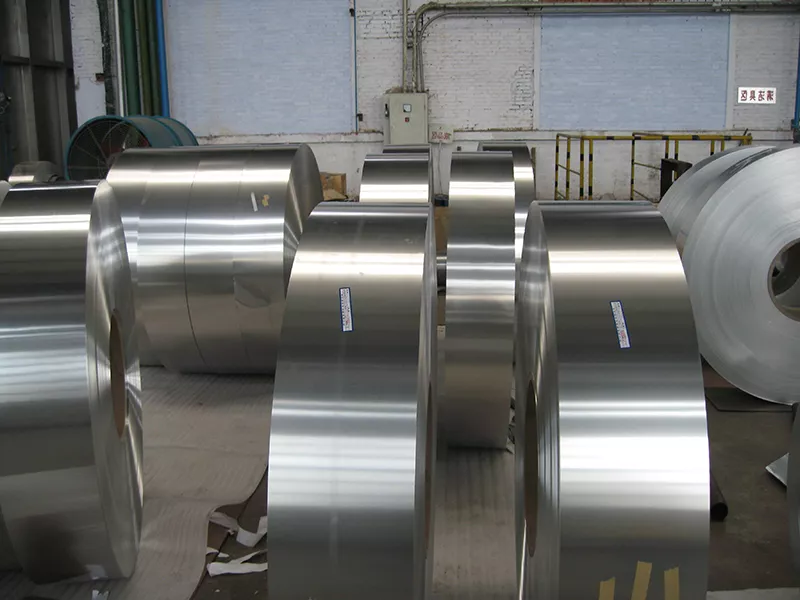
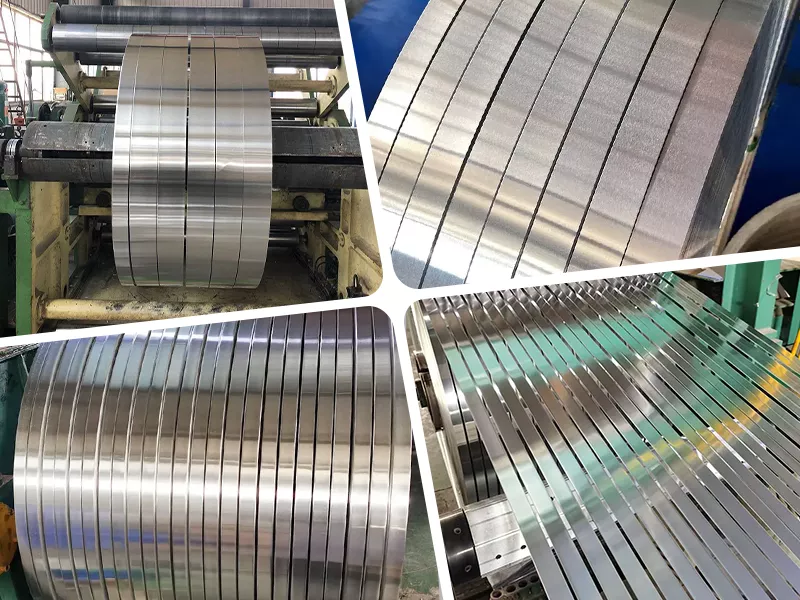
Transformer aluminum strip coil with smooth surface and accurate dimensions.
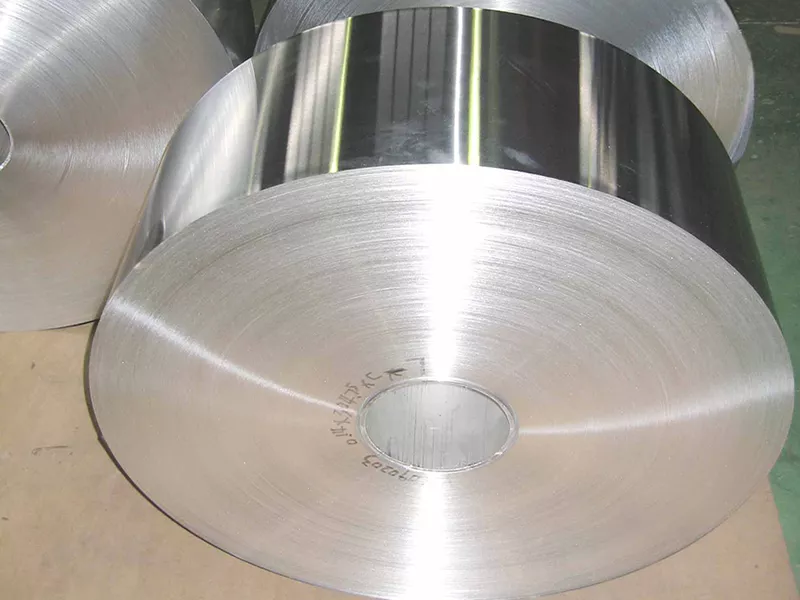
Electrical grade transformer aluminum strip with clean and flat surface.
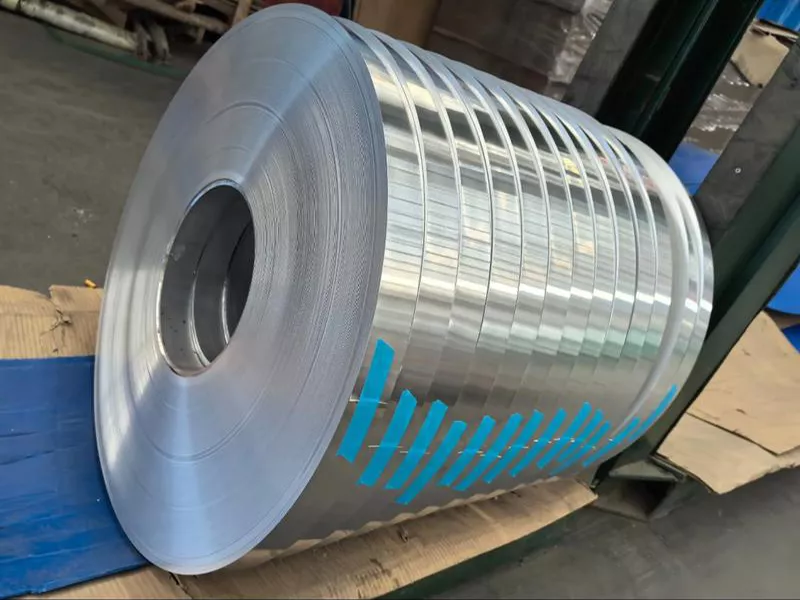
Transformer aluminum strip with precise slitting edge and low burr.
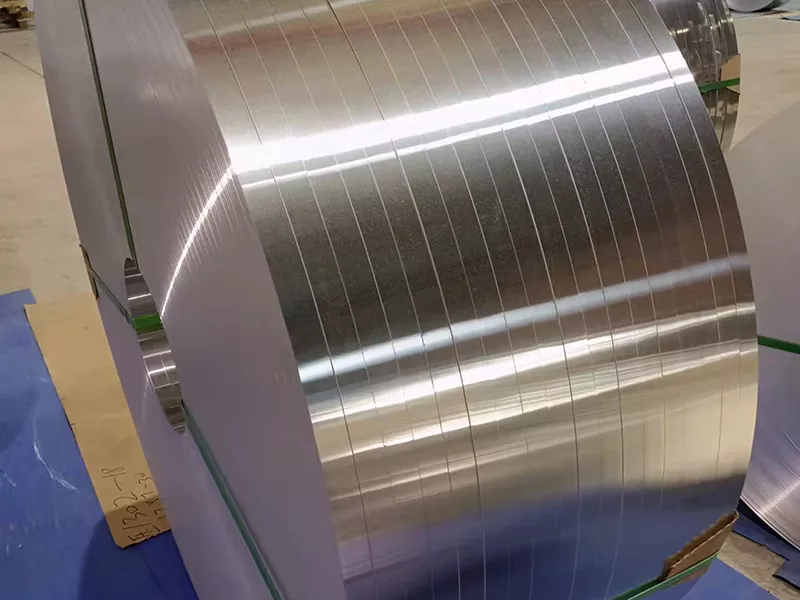
High conductivity aluminum strip for transformer winding material.
What is Transformer Aluminum Strip?
Transformer aluminum strip is a high conductivity aluminum material used for winding coils in electrical transformers. It is widely used in dry type transformers, oil immersed transformers and distribution transformers.
Compared with traditional copper winding materials, aluminum strip provides excellent electrical conductivity, lighter weight and lower cost, making it an important conductor material in modern transformer manufacturing.
Transformer Aluminum Strip Specifications
| Item | Specification |
| Product Name | Transformer Aluminum Strip |
| Material | Aluminum / Aluminium |
| Alloy | 1050, 1060, 1070, 1100, 1350 |
| Temper | O, H12, H14, H16, H18 |
| Thickness | 0.2 mm - 3.0 mm, customizable |
| Width | 10 mm - 1600 mm, customizable |
| Inner Diameter | 300 mm, 405 mm, 505 mm or customized |
| Surface | Bright, clean, smooth, oil-free or lightly oiled |
| Edge | Slit edge, rounded edge available |
| Conductivity | High electrical conductivity, depending on alloy |
| Application | Transformer winding, reactor winding, electrical equipment |
| Packaging | Wooden pallet, wooden case, moisture-proof packaging |
Need high-quality transformer aluminum strip with stable performance and factory price?
Our aluminum strip for transformer winding delivers a perfect balance of performance, durability, and affordability. Contact Haomei Aluminum today for technical support and fast quotation.
Transformer Aluminum Strip Edge Treatment Options
The edge condition of Transformer Aluminum Strip directly affects coil winding efficiency and insulation safety. Rough edges, excessive burrs or poor coil layering may damage insulating paper during winding and increase the risk of partial discharge.
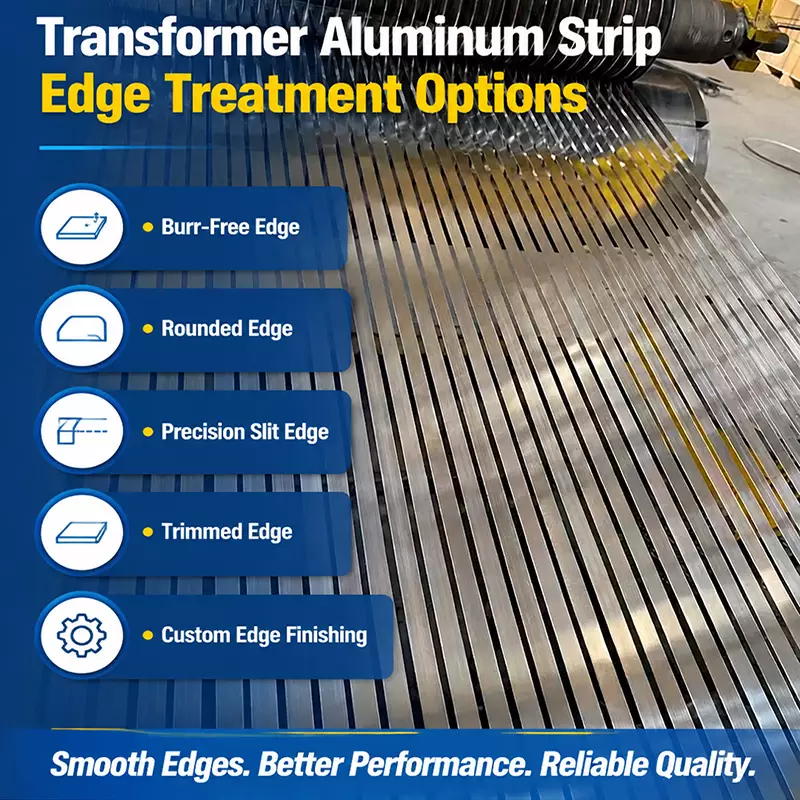
Haomei Aluminum provides different edge treatment options according to transformer manufacturers’ winding equipment, insulation material and technical requirements:
- Burr-Free Edges: Suitable for transformer windings requiring reduced insulation damage.
- Round Edge: Helps prevent scratching or cutting of paper, film and enamel insulation.
- Slit Edge: An economical edge solution for standard transformer winding strip.
- Trimmed Edge: Provides more consistent width and a neat coil appearance.
- Customized Edge Control: Available for high-voltage transformers, dry-type transformers and precision electrical coils.
Before mass production, customers can provide their required edge burr limit, camber requirement, coil layering standard, insulation paper type and winding machine parameters for confirmation.
Common Aluminum Alloys for Transformer Winding
1050 Transformer Aluminum Strip
1050 aluminum has a minimum aluminum content of about 99.50% under commonly referenced material standards. It offers good conductivity and formability and can be considered for electrical strip applications where balanced cost and performance are important.
- High aluminum purity
- Good electrical conductivity
- Good formability
- Available in soft O temper
1060 Transformer Aluminum Strip
1060 aluminum has a minimum aluminum content of about 99.60% under commonly referenced standards. It is widely considered for electrical applications requiring high purity, conductivity and good forming performance.
- Higher purity than 1050
- High electrical conductivity
- Excellent formability
- Suitable for many winding applications
1070 Transformer Aluminum Strip
1070 aluminum has a minimum aluminum content of about 99.70% under commonly referenced standards. Its high purity makes it suitable for applications where electrical conductivity is a major selection factor.
- Very high aluminum purity
- High electrical performance
- Good formability in O temper
- Suitable for conductivity-focused designs
1350 Electrical Grade Aluminum Strip
1350 is an electrical-grade aluminum alloy commonly used for electrical conductors. It is considered when the application places strong emphasis on electrical conductivity and conductor performance.
- Electrical conductor grade
- High conductivity
- Suitable for power equipment applications
- Available according to electrical specifications
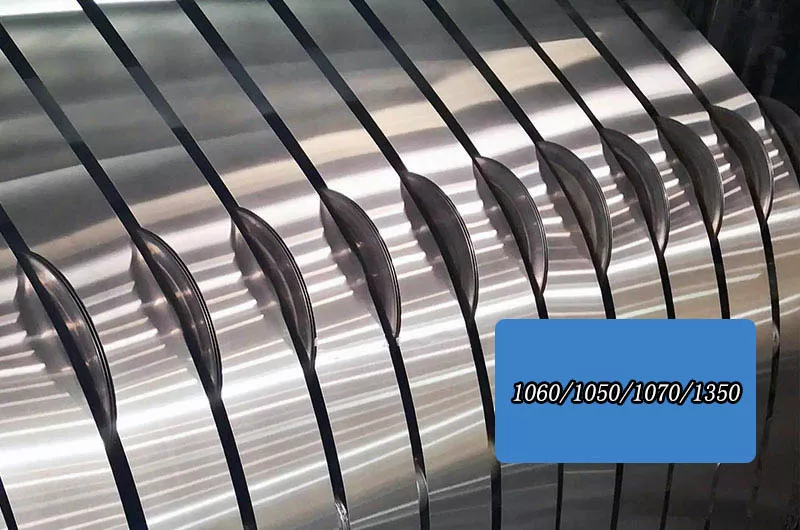
Temper: Almost all are supplied in O temper (soft annealed). After full annealing, the strip offers excellent winding performance and elongation, preventing cracking during coil winding.
| Grade | Aluminum Content | Conductivity | Features |
| 1050 (O) | 99.50% | Good | Moderate cost, well-balanced performance |
| 1060 (O) | 99.60% | Excellent | Slightly higher conductivity than 1050 |
| 1070 (O) | 99.70% | Very High | High purity, low resistivity |
| 1350 (O) | 99.50%+ | Ultra High | Electrical-grade pure aluminum, conductivity close to 62% of copper |
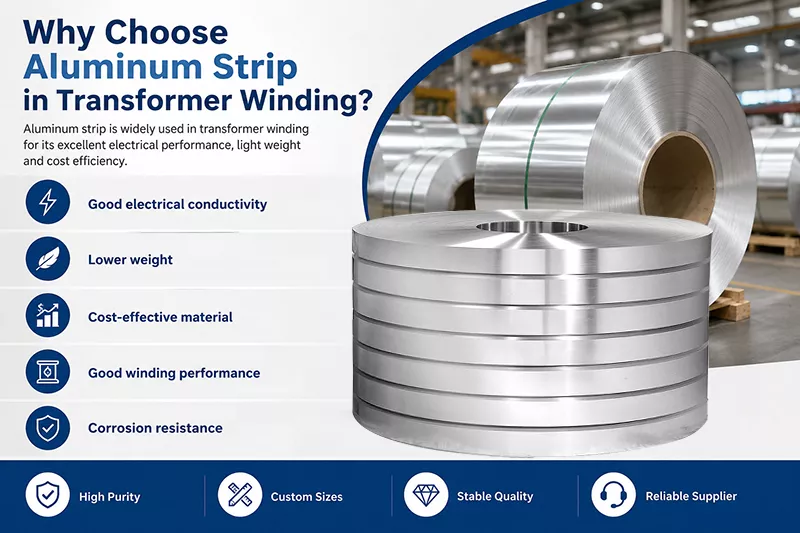
Why Aluminum Strip Is Used in Transformer Winding
Electrical Conductivity
Electrical-grade aluminum provides reliable conductivity for transformer windings. Actual conductivity varies with alloy, temper and applicable standard and should be confirmed by test.
Lower Density
Aluminum has a density of about 2.70 g/cm³ compared with approximately 8.96 g/cm³ for copper. The lower density can help reduce conductor weight, although the final transformer weight depends on the complete design.
Good Formability
O temper aluminum strip provides good ductility and formability, which is useful when the winding process requires controlled bending and layer formation.
Controlled Winding Geometry
Flat strip can be arranged in regular layers and matched with insulation paper or film. Correct strip width and thickness help maintain stable winding geometry.
Corrosion Resistance
Aluminum naturally develops an oxide layer. Surface condition still needs to be controlled when the strip is used with electrical insulation systems.
Cost Control
Aluminum is generally lower in material cost than copper on a mass basis, but purchasing decisions should consider conductivity, conductor cross-section, processing, transportation and the total transformer design.
Transformer Aluminum Strip Chemical Composition
Chemical Composition of 1050 Transformer Aluminum Strip
| Element | Al | Si | Fe | Mg | Zn | Mn | Ti | Cu | V |
| Standard Value | ≥99.5 | 0.0431 | 0.203 | 0.0013 | 0.0093 | 0.0104 | 0.02 | 0.0022 | 0.0039 |
Chemical Composition of 1060 Transformer Aluminum Strip
| Element | Al | Si | Fe | Mg | Zn | Mn | Ti | Cu | V |
| Standard Value | ≥99.6 | 0.0431 | 0.203 | 0.0013 | 0.0093 | 0.0104 | 0.02 | 0.0022 | 0.0039 |
Chemical Composition of 1070 Transformer Aluminum Strip
| Element | Al | Si | Fe | Mg | Zn | Mn | Ti | Cu | V |
| Standard Value | ≥99.7 | 0.0431 | 0.203 | 0.0013 | 0.0093 | 0.0104 | 0.02 | 0.0022 | 0.0039 |
Chemical Composition of 1350 Transformer Aluminum Strip
| Element | Al | Si | Fe | Mg | Zn | Mn | Ti | Cu | V |
| Standard Value | ≥99.5 | 0.0431 | 0.203 | 0.0013 | 0.0093 | 0.0104 | 0.02 | 0.0022 | 0.0039 |
Mechanical Properties of Transformer Aluminum Strip
| Alloy | Thickness /mm | Temper | Tensile strength MPa | Elongation (%) |
| 1050, 1060, 1070, 1350 | 0.08-0.20 | O | 60-95 | ≥20 |
| >0.20-3.00 | ≥25 |
Transformer Aluminum Strip Thickness Tolerance
| Thickness | Thickness Tolerance |
| 0.1-0.2 | +/-8% |
| 0.2-0.4 | +/-0.02 |
| 0.4-0.8 | +/-0.03 |
| 0.8-1.1 | +/-0.04 |
| 1.1-1.4 | +/-0.05 |
| 1.4-2.0 | +/-0.06 |
| 2.0-2.5 | +/-0.07 |
| 2.5-3.0 | +/-0.08 |
Transformer Aluminum Strip Width tolerance
| Thickness(mm) | Width tolerance(%) | ||||
| <100 | 100-300 | 300-500 | 500-1250 | 1250-1500 | |
| >0.1-0.20 | +/-0.15 | +/-0.2 | +/-0.3 | +/-0.5 | +/-0.5 +/-1 |
| 0.20-0.60 | +/-0.15 | +/-0.2 | +/-0.3 | +/-0.75 | +/-0.5 +/-1.25 |
| 0.60-1.0 | +/-0.15 | +/-0.25 | +/-0.5 | +/-0.75 | +/-0.5 +/-1.25 |
| 1.0-2.0 | +/-0.2 | +/-0.35 | +/-0.6 | +/-1 | +/-0.5 +/-1.25 |
| 2.0-3.0 | +/-0.5 | +/-0.5 | +/-0.75 | +/-1 | +/-0.5 +/-1.25 |
Transformer Aluminum Strip Burrs and collapse
| The width of aluminium strip (mm) | Burr’s height (mm) | Collapsed side’s height (mm) |
| <0.2 | 0.01 | ≥0.05-0.1 |
| 0.2-1.0 | 0.015 | |
| 1.1-1.5 | 0.02 | |
| >1.6 | 0.03 |
Transformer Aluminum Strip Applications
Dry-Type Transformer Winding
O-temper aluminum strip is commonly used for dry-type transformer low-voltage windings. Surface cleanliness, low-burr edges, stable thickness and suitable elongation are important for insulation wrapping and continuous winding.
Oil-Immersed Distribution Transformer
Aluminum winding strip may be used in medium- and low-voltage winding structures where the transformer design provides sufficient conductor cross-section and suitable insulation, cooling and connection arrangements.
Reactors and Electrical Coils
Electrical aluminum strip can also be used in reactors, inductive equipment, power components and customized electrical coils requiring flat conductor geometry and controlled coil dimensions.
Renewable Energy Systems
Transformer and electrical winding components used in photovoltaic, wind power and energy storage projects may require lightweight conductor options with stable conductivity and export-ready packaging.
Distribution Transformer Manufacturing
Distribution transformer manufacturers may specify aluminum strip by alloy, conductivity, thickness, width, edge condition, coil weight and winding machine parameters.
Customized Electrical Conductors
Customized aluminum strip coils can be supplied for industrial conductor applications where conventional standard coil dimensions are not suitable for the equipment or production line.
Transformer Aluminum Strip Packaging
Proper packaging is essential to protect aluminum strip during long-distance transportation. Haomei Aluminum provides export-standard packaging solutions to ensure safe delivery.
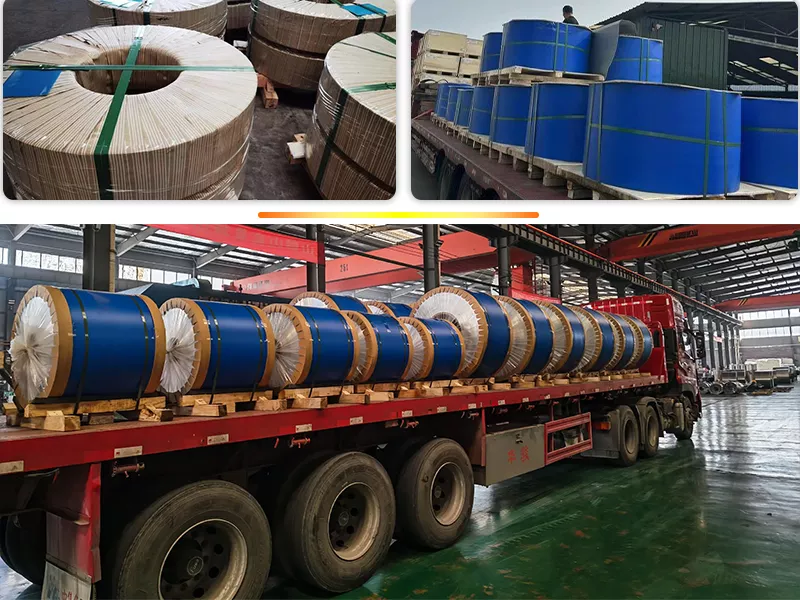
- Moisture-proof paper wrapping to prevent humidity damage
- Plastic film wrapping for surface protection and cleanliness
- Strong wooden pallet base for stable handling and stacking
- Wooden case packaging for enhanced export protection
- Eye-to-wall or eye-to-sky coil packaging options available
- Customized coil weight and packing method according to customer requirements
- Each coil labeled with alloy, temper, thickness, width, coil number, and production batch for easy identification
Haomei Transformer Aluminum Strip Quality Control
Haomei Aluminum carries out quality control inspections throughout raw material selection, rolling, slitting, annealing, packaging and shipment.
Our quality inspection for Transformer Aluminum Strip typically includes:
- Chemical composition inspection: Verification of alloy composition and impurity control.
- Electrical conductivity testing: Conductivity testing according to customer requirements and applicable standards.
- Thickness measurement: Measurement at multiple points across the strip width.
- Width inspection: Confirmation of slit width and width tolerance.
- Surface inspection: Checking for scratches, oil stains, oxidation marks, dents, edge cracks and other defects.
- Burr and edge inspection: Checking edge smoothness and burr condition for insulation protection.
- Mechanical property testing: Tensile strength and elongation testing when required.
- Coil shape and layering inspection: Checking coil tightness, telescoping, camber and winding quality.
- Packaging inspection: Ensuring coils are protected for long-distance sea, land or multimodal transportation.
Customers may request a Mill Test Certificate, third-party inspection, pre-shipment sample or video inspection before delivery.
Transformer Aluminum Strip Production and Inspection
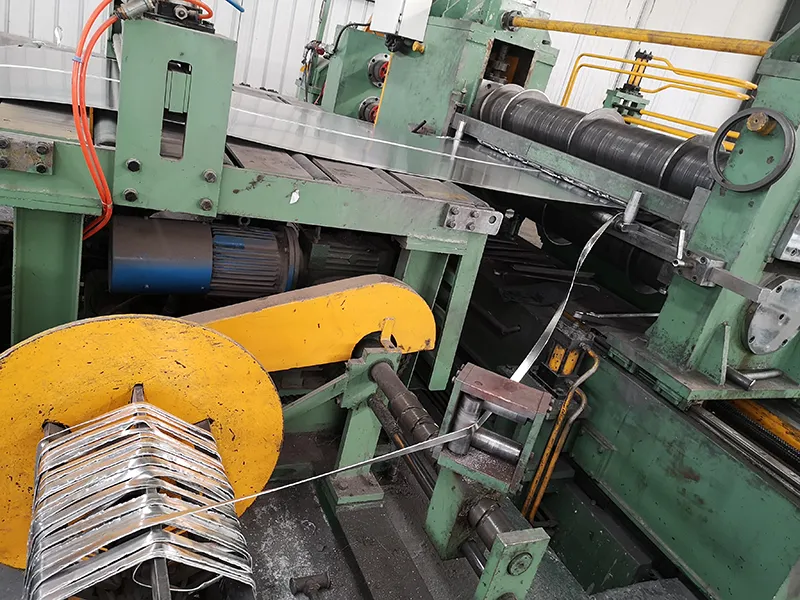
Precision Slitting
Aluminum strip is slit to the specified width with controlled edge quality for transformer applications.
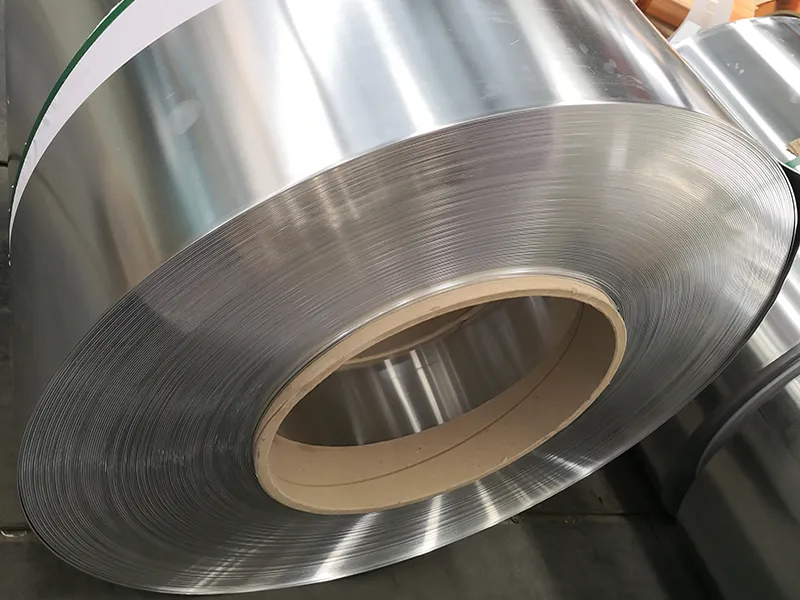
Edge Inspection
Strip edges are inspected for burrs, cracks and other defects that could affect downstream processing.
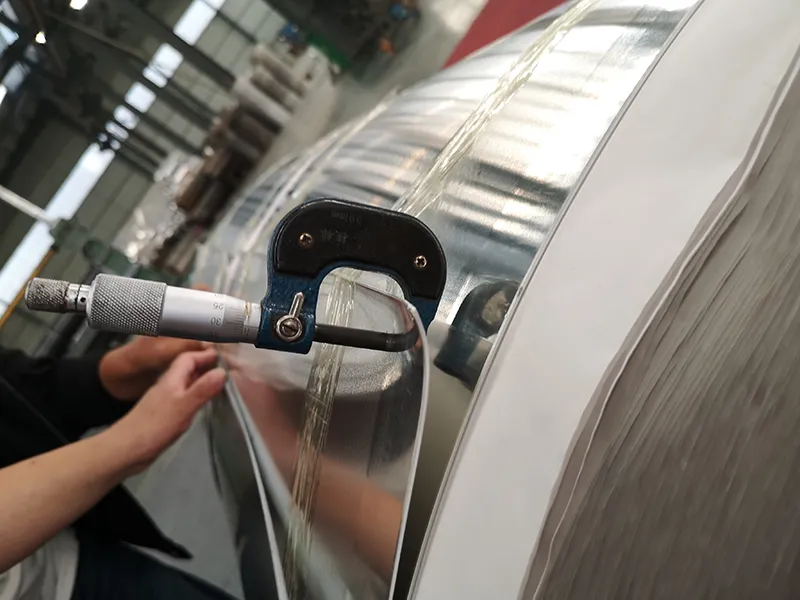
Thickness Testing
Thickness is measured to confirm compliance with the agreed dimensional specification.
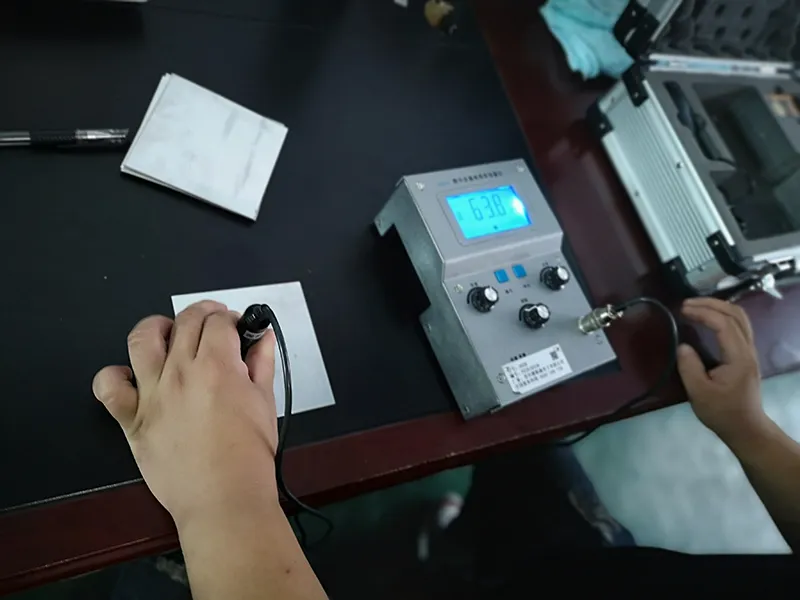
Conductivity Testing
Electrical conductivity is tested according to the specified alloy and applicable quality requirements.
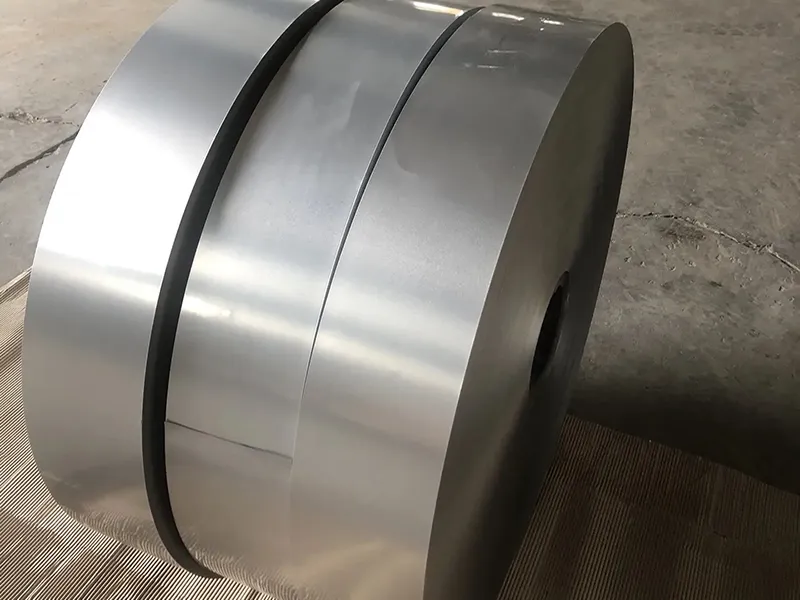
Finished Coil Inspection
Finished coils are checked for winding condition, identification and overall packaging readiness.
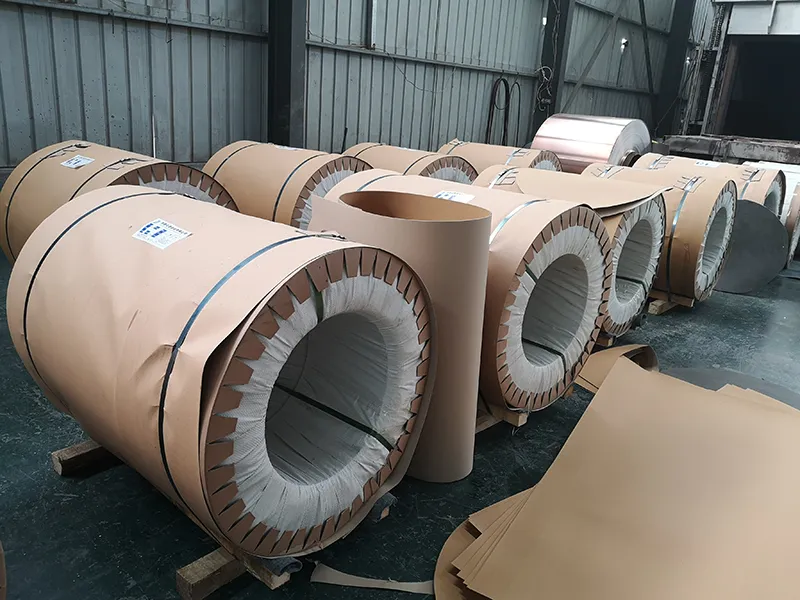
Export Packaging
Coils are protected against moisture, handling damage and movement during international transportation.
Request a Quote for Transformer Aluminum Strip
To receive an accurate quotation for transformer aluminum strip, please share your product requirements with Haomei Aluminum. Our sales team will evaluate the material specifications, production requirements and shipping details to provide a suitable solution.
Quotation details usually include:
- Aluminum alloy grade
- Strip thickness and width
- Temper (O, H12, H14, H18, or customized)
- Coil inner diameter (ID)
- Coil weight and packaging method
- Edge condition requirements
- Electrical conductivity requirements
- Surface quality requirements
- Order quantity or annual demand
- Delivery destination and port
- Special technical specifications
Whether you need aluminum strip for transformer windings, electrical conductors, or customized industrial applications, Haomei Aluminum can provide factory-direct pricing based on your required alloy, dimensions and order volume.
Get Your Transformer Aluminum Strip Quote
Send us your alloy grade, strip size, coil requirements and delivery location. Haomei Aluminum will provide a fast quotation with suitable production options and export packaging details.
Contact Haomei AluminumTransformer Aluminum Strip vs. Copper Strip: What’s the Difference?
| Comparison Item | Transformer Aluminum Strip | Copper Strip |
| Material Cost | Usually lower | Usually higher |
| Weight | Lightweight | Heavier |
| Electrical Conductivity | Lower than copper, requiring a larger cross-section | Higher conductivity |
| Density | Approx. 2.7 g/cm³ | Approx. 8.96 g/cm³ |
| Corrosion Resistance | Good natural oxidation resistance | Good, but may require protection in some environments |
| Winding Design | Requires larger conductor area for equivalent resistance | Smaller area can achieve equivalent resistance |
| Typical Use | Cost-sensitive, lightweight and distribution transformer applications | Compact, high-conductivity and premium transformer designs |
Aluminum and copper are both reliable transformer conductor materials. The final choice depends on transformer capacity, voltage level, temperature rise, space limitations, cost targets and customer standards.
Haomei Aluminum can help customers select suitable aluminum alloy, thickness, width, edge condition and packaging method based on the transformer winding design.
Transformer Aluminum Strip Manufacturing Process
-
Material Preparation
Select aluminum material according to the specified alloy, purity and electrical requirements.
-
Rolling
Roll the material to the target thickness while controlling flatness, surface condition and dimensional consistency.
-
Annealing
Apply appropriate annealing to achieve the specified soft condition where O temper is required.
-
Precision Slitting
Slit the strip to the required width and control burr, edge condition and camber.
-
Rewinding & Inspection
Rewind the strip into customer-specified coils and verify dimensions, surface, edge and coil condition.
Why Choose Haomei Aluminum?
Haomei Aluminum is an experienced aluminum strip supplier from China, specializing in aluminum strip coils for transformer winding and other electrical applications.
- Rich production experience in aluminum strip manufacturing for electrical applications
- Alloy options available: 1050, 1060, 1070, and 1350 aluminum strip
- Custom specifications including thickness, width, and coil dimensions
- Strict slitting and edge control for transformer-grade quality requirements
- Stable performance quality suitable for transformer winding applications
- Competitive factory pricing for global wholesale buyers
- Export-standard packaging ensuring safe international transportation
- Fast quotation and delivery support for urgent project needs
- Mill Test Certificate (MTC) provided for quality assurance
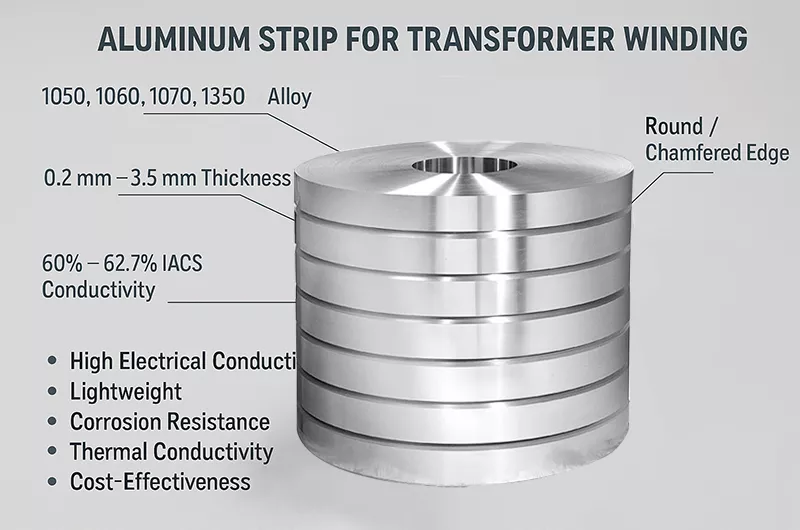
If you are looking for a reliable transformer aluminum strip supplier, Haomei Aluminum can provide customized materials according to your technical requirements and application standards.
Haomei Global Export Markets for Transformer Aluminum Strip
Haomei Aluminum supplies high-quality Transformer Aluminum Strip to transformer manufacturers, electrical equipment producers, wholesalers and engineering contractors worldwide.
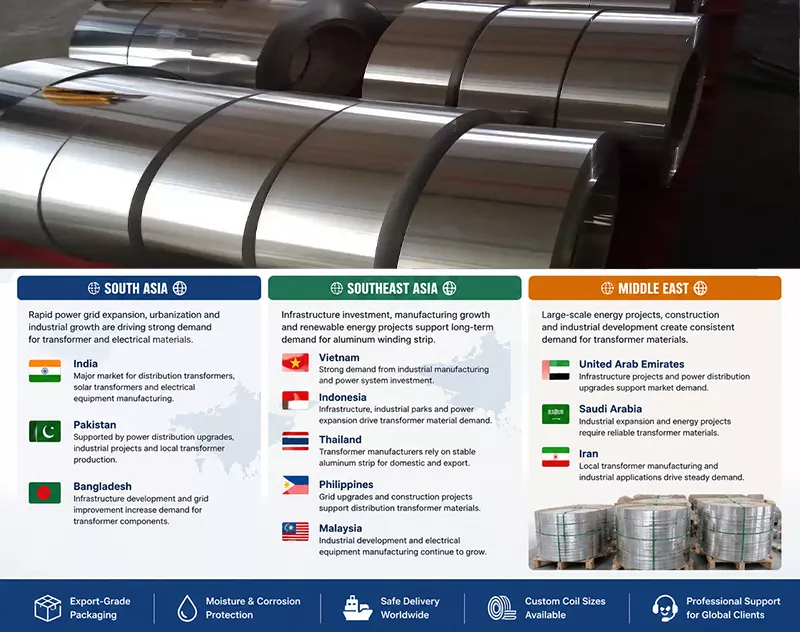
Transformer Aluminum Strip Supply in South Asia
- India
- Pakistan
- Bangladesh
Transformer Aluminum Strip Markets in Southeast Asia
- Vietnam
- Indonesia
- Thailand
- Philippines
- Malaysia
Transformer Aluminum Strip Demand in the Middle East
- United Arab Emirates
- Saudi Arabia
- Iran
FAQ about Transformer Aluminum Strip
Which aluminum alloys are used for transformer winding?
Common alloys include 1050, 1060, 1070, and 1350 aluminum strip. These grades offer high electrical conductivity and stable performance, making them suitable for transformer winding applications.
What is the difference between 1060 and 1350 transformer aluminum strip?
1060 aluminum strip offers good conductivity and excellent formability, making it widely used in general transformer applications. 1350 aluminum strip is an electrical-grade material with higher conductivity, suitable for applications requiring improved electrical performance.
Can aluminum strip replace copper strip in transformer winding?
Yes, in many transformer designs, aluminum strip can replace copper strip. Aluminum provides lower density and better cost efficiency. However, final selection depends on design requirements, conductivity level, and operating conditions.
What thickness is used for transformer aluminum strip?
Common thickness ranges from 0.2 mm to 3.0 mm. The exact specification depends on transformer capacity, winding structure, and customer technical requirements.
Can you provide custom width aluminum strip for transformer winding?
Yes, Haomei Aluminum can provide custom slit widths based on drawings or technical specifications, including thickness, coil weight, and packaging requirements.
What are the surface requirements for transformer aluminum strip?
The surface must be clean, smooth, and free from scratches, oil stains, oxidation, and defects. High surface quality helps protect insulation materials during transformer winding.